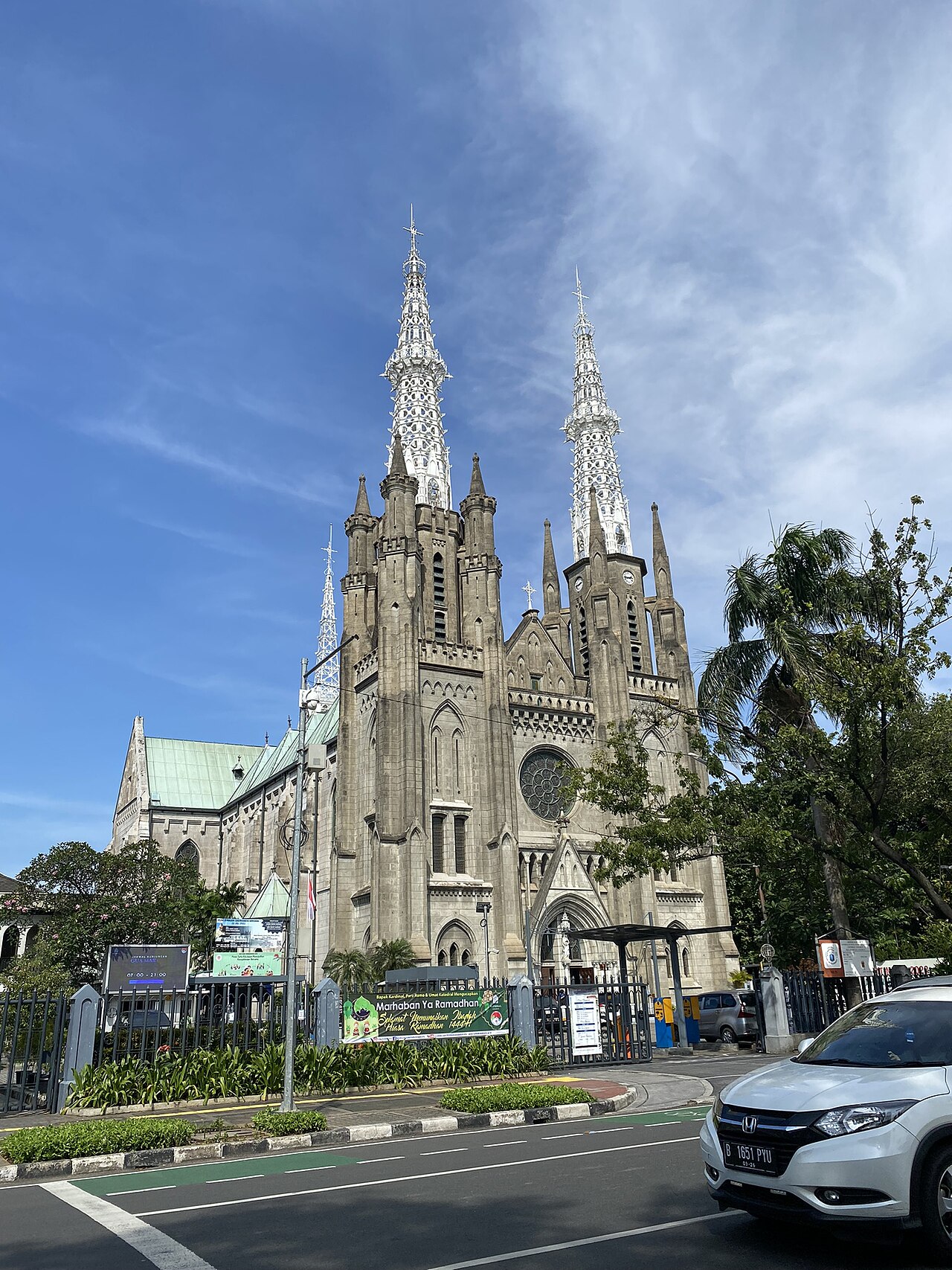
Cathedral of Jakarta
6.1709° S · 106.8254° E · Cathedral
Cathedral of Jakarta is a striking neo-Gothic cathedral completed in 1901, with twin spires and stained glass windows. It is in Central Jakarta, Indonesia. Most visitors spend 30–45 min here. The free Lokali audio guide runs 5 minutes.
✓ Verified August 2026 · how we write these guides
Visitor facts
| Time needed | 30–45 min |
|---|---|
| Lokali audio guide | 5 min · free |
| Type | Cathedral |
| Best for | History |
| Location | Central Jakarta, Indonesia |
| Coordinates | -6.1709, 106.8254 |
| Languages | 45, in the Lokali app |
The story
Cross the road from the great mosque, and the mood shifts at once. Before you rise three sharp spires of dark iron, pointed like pencils against the sky. Step through the doors, and the light turns soft and colored. This is Jakarta Cathedral, a Roman Catholic church that has stood here for more than a century. After the wide, bright hall of the mosque, this place feels close and shadowed.
The full name is long: the Church of Our Lady of the Assumption. Most people simply call it the Cathedral. It serves as the seat of the Catholic archbishop of Jakarta. An earlier church once stood on this very spot, but it fell down, and so the present building was raised in its place.
The cathedral you see today was finished in 1901. It was built in the neo-Gothic style, a way of building that looks back to the tall churches of medieval Europe. Pointed arches, high windows, and slender towers all belong to that older tradition, carried far across the world to this warm and tropical city. The result feels both foreign and strangely at home here.
The church belongs to the time when the Netherlands ruled these islands. For long stretches under earlier Dutch rule, Catholic worship had been held back, then later allowed once more. By the time this cathedral rose, a settled Catholic community had taken root in the old city, and it needed a proper home.
Look closely at the three spires above the front. Each one carries its own name. The tallest, standing at the center, is often called the Tower of David. The two that flank it rise a little lower. They are not built of heavy stone, as you might expect, but framed in iron, which helped them last through the years.
Step inside, and let your eyes slowly adjust. The ceiling lifts high overhead, held up by rows of pointed arches. The air is cooler in here, and far quieter. Rows of wooden pews stretch toward the altar. Light falls through the tall windows, throwing soft patches of color across the floor and the walls. Footsteps echo, and voices drop to a murmur without anyone asking.
The stained glass tells stories. Each window holds a scene from scripture or from the life of the church, painted in deep blues, reds, and golds. As the sun moves across the sky through the day, the colors shift and travel slowly along the stone, never resting in quite the same place twice. Stand in one spot long enough, and the light will reach you too.
Near the front stands the high altar, carved with great care and detail. Above and around it you will find statues, fine woodwork, and quiet corners set aside for prayer. Small side chapels open off the main hall. People come in throughout the day to sit alone for a while, heads bowed, in the calm.
The cathedral also keeps a small museum upstairs. It holds old robes, sacred objects, and records that trace the long story of the Catholic faith in this country. The narrow stairs and the modest rooms reward the curious visitor with a closer and more human view of the church's long past. Photographs from earlier days line some of the walls.
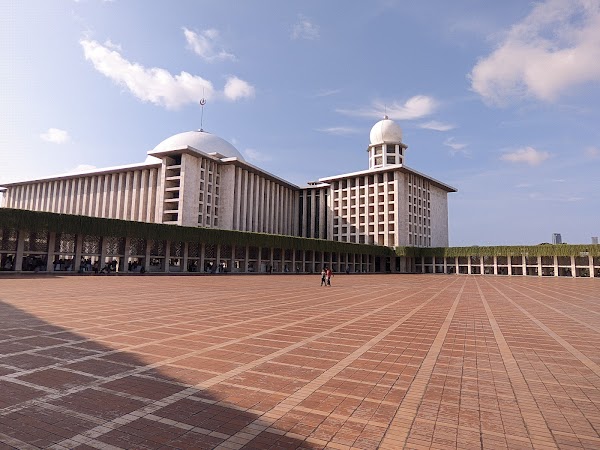
Now think for a moment about where you are standing. Directly across the road rises Istiqlal Mosque, one of the largest in the world. A Christian church and a great mosque, facing each other, almost door to door. The two even share their parking on the busiest days, and help each other during the great festivals.
This neighborly closeness is something the people here speak of with real pride. In a country of many faiths, the sight of church and mosque side by side has become a quiet, daily lesson. A tunnel now runs beneath the road to join the two, built and named as a sign of friendship.
The cathedral is still a living church, not only a sight to visit. Masses are held here throughout the week, and the pews fill on Sundays and on holy days. If you happen to come during a service, step softly, keep toward the back, and let the worshippers have their peace. Outside these hours, you are free to wander and look around quietly.
Before you go, sit for a moment in one of the wooden pews. Listen to the deep hush beneath the high ceiling. For more than a hundred years, people have come to this same cool room to hope, to grieve, and to give their thanks. The colored light moves on, slow and patient, across the stone.
Key facts
What to look for
Practical tips
Common questions
How long do you need at Cathedral of Jakarta?
Plan 30–45 min. That is the time most visitors spend at Cathedral of Jakarta. The free Lokali audio guide adds about 5 minutes of narration you can listen to as you walk, so it fits inside your visit rather than adding to it.
Is there a free audio guide to Cathedral of Jakarta?
Yes — the Lokali app narrates Cathedral of Jakarta free of charge in 50+ languages. It covers the history, what to look for on site and practical tips, and it works offline once downloaded.
Where is Cathedral of Jakarta?
Cathedral of Jakarta is in Central Jakarta, Indonesia, at -6.1709, 106.8254. Tap the map link on this page for directions from where you are.
What should you know before visiting Cathedral of Jakarta?
Step softly and sit at the back during Mass.
What is Cathedral of Jakarta known for?
A Roman Catholic cathedral completed in 1901.
What is the best time to visit Cathedral of Jakarta?
Step inside for the cool, quiet interior and intricate ceiling details.
On the map
Opens directions to Cathedral of Jakarta from your location.
Reference
More to see in Central Jakarta

Hear Cathedral of Jakarta in your language
The full story, narrated, in 50+ languages. Download it before you go and it plays offline, at your own pace, with no ticket and no tour group.