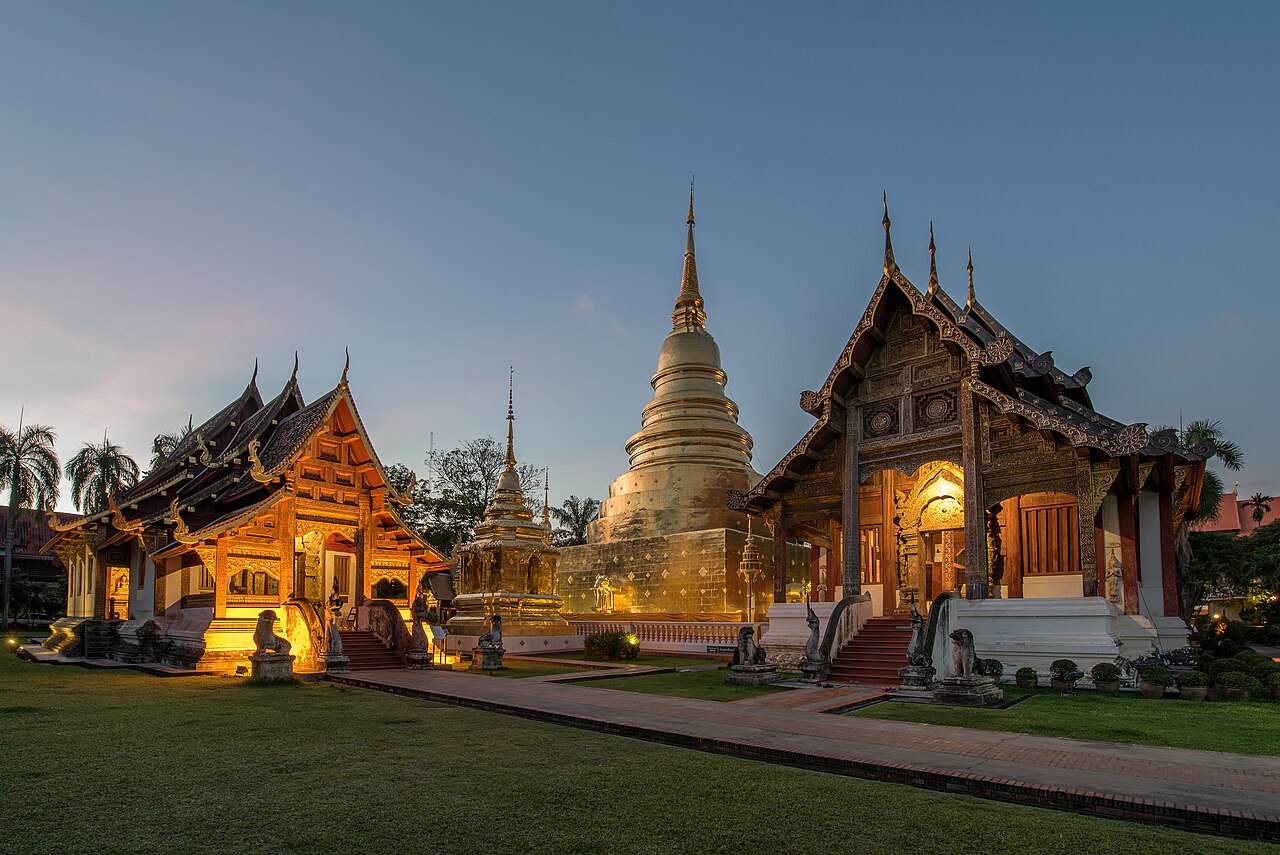
Chiang Mai City Arts and Cultural Centre
18.7883° N · 98.9813° E · Museum
Chiang Mai City Arts and Cultural Centre is a museum in Chiang Mai, Thailand. Modern museum in the Old City documenting Chiang Mai's history from prehistoric times through the Lanna kingdom to the present. Most visitors spend 1–2 hours here. The free Lokali audio guide runs 5 minutes.
✓ Verified August 2026 · how we write these guides
Visitor facts
| Time needed | 1–2 hours |
|---|---|
| Lokali audio guide | 5 min · free |
| Type | Museum |
| Best for | History |
| Location | Chiang Mai, Thailand |
| Coordinates | 18.7883, 98.9813 |
| Languages | 45, in the Lokali app |
The story
You step in from the heat of the square. The air inside turns cool and still. Wooden floors creak softly under your feet. Light falls through tall shuttered windows onto white walls. After the noise of the street, the quiet feels like a held breath. This is the Chiang Mai City Arts and Cultural Centre, a museum that holds the story of the city.
The building itself is part of the story. It is an old colonial-style hall from the early twentieth century, once used for government offices. Its thick walls, shaded verandas, and pale columns were built for a hot climate, long before air conditioning. Look up at the high ceilings and the wooden stairs. The building has been kept and cared for, and now it serves a gentler purpose.
Outside the entrance stands a group of bronze figures, the Three Kings Monument. It honors three rulers who, by tradition, joined together to plan the founding of Chiang Mai. One of them, King Mangrai, chose this spot near the river and the mountain and built his new capital here in 1296. The monument marks the symbolic center of the old city. Many local people stop to pay their respects before they pass.
Inside, the museum walks you through the long life of the city. Room after room tells how Chiang Mai grew, from a small settlement into the heart of a kingdom called Lanna, which means the land of a million rice fields. Maps, models, and old photographs line the walls. You move through time at your own pace.
Much of the museum is given to the culture of Lanna, the northern Thai way of life. You learn how rice was grown and shared, how water was guided through the fields, and how families lived in wooden houses raised on posts. These were not grand kings alone. These were farmers, weavers, and traders, the people who made the city work.
Some rooms use life-size scenes to bring the past closer. Figures stand frozen in old markets and village homes. You see the tools they used, the cloth they wove, the food they cooked. Other displays explain the many temples of the city and the beliefs that shaped daily life. Small details reward a slow eye.
The museum also explains the festivals that still fill the city's year. You learn the meaning behind the lights of Yi Peng, when paper lanterns rise into the night, and the water of Songkran, the new year, when streets fill with laughter and splashing. Knowing the stories behind them makes the celebrations richer when you see them.
Look closely at the everyday things on display. A wooden loom for weaving cloth. Bowls and pots shaped by hand. Tools for farming and for fishing. Northern Thai craft is known for its silverwork, its lacquer, and its woven cotton and silk. These objects were not made for museums. They were used, repaired, and passed down through families. Seeing them gathered here is a quiet reminder that history is built from small, daily acts.
This is a calm, indoor place, well suited to the heat of midday or a rainy afternoon. It is not loud or crowded. You can sit on a bench, watch a short film, and let the history settle. Families come with children. Students come to study. Travelers come to make sense of the city around them.
Behind the main hall lies a quiet courtyard. A few trees offer shade. It is a good place to pause between rooms, to rest your feet and let your thoughts catch up. The sounds of the square return only faintly here.
When you leave, the old city makes more sense. The square moat and the brick walls around the center are no longer just old stones. You understand why they were built, and what they once protected. The temples you pass carry names and meanings you now recognize.
The centre is one of a small group of museums gathered around this square, each telling a part of the northern story. Together they form a quiet cultural heart, set apart from the markets and the busier streets. You can visit one, or linger across several, as your time allows.
A city is more than its buildings. It is the memory of the people who shaped it. This museum gathers that memory and offers it to you, gently, room by room. When you step back out into the sun, you carry a little of it with you. The streets feel less like a map and more like a place with a long, lived life.
Key facts
What to look for
Practical tips
Common questions
How long do you need at Chiang Mai City Arts and Cultural Centre?
Plan 1–2 hours. That is the time most visitors spend at Chiang Mai City Arts and Cultural Centre. The free Lokali audio guide adds about 5 minutes of narration you can listen to as you walk, so it fits inside your visit rather than adding to it.
Is there a free audio guide to Chiang Mai City Arts and Cultural Centre?
Yes — the Lokali app narrates Chiang Mai City Arts and Cultural Centre free of charge in 50+ languages. It covers the history, what to look for on site and practical tips, and it works offline once downloaded.
Where is Chiang Mai City Arts and Cultural Centre?
Chiang Mai City Arts and Cultural Centre is in Chiang Mai, Thailand, at 18.7883, 98.9813. Tap the map link on this page for directions from where you are.
What should you know before visiting Chiang Mai City Arts and Cultural Centre?
Come at midday to escape the strongest heat.
What is Chiang Mai City Arts and Cultural Centre known for?
The museum sits inside an early twentieth century hall.
What is the best time to visit Chiang Mai City Arts and Cultural Centre?
The second-floor Lanna history section has beautiful displays of traditional textiles and woodcarving tools.
On the map
Opens directions to Chiang Mai City Arts and Cultural Centre from your location.
Reference
More to see in Chiang Mai



Hear Chiang Mai City Arts and Cultural Centre in your language
The full story, narrated, in 50+ languages. Download it before you go and it plays offline, at your own pace, with no ticket and no tour group.