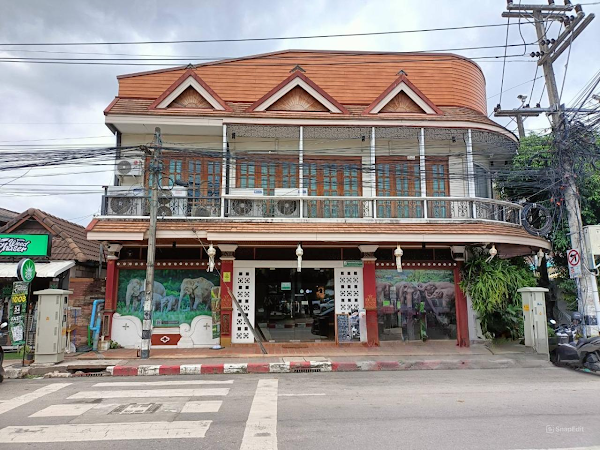
Old City is the historic heart of Chiang Mai, enclosed by a moat and remnants of ancient walls. It is in Chiang Mai, Thailand. Most visitors spend 2–3 hours here. The free Lokali audio guide runs 9 minutes.
✓ Verified August 2026 · how we write these guides
Visitor facts
| Time needed | 2–3 hours |
|---|---|
| Lokali audio guide | 9 min · free |
| Type | Neighborhood |
| Best for | Local life |
| Location | Chiang Mai, Thailand |
| Coordinates | 18.7883, 98.9853 |
| Languages | 45, in the Lokali app |
The story
The cobblestones under your feet are worn smooth by centuries of footsteps — uneven, warm in summer, slippery after rain. You are standing in the oldest quarter of Tbilisi, where wooden balconies lean over narrow lanes and the smell of fresh bread drifts from doorways. The light here is different from the rest of the city — softer, filtered through vines and washing lines strung between buildings.
This maze of streets grew organically over more than fifteen hundred years, shaped by the Mtkvari River curving below and the fortress ridge rising above. There was no grand plan, no grid — just families building onto older foundations, merchants opening workshops in ground-floor arches, neighbours sharing walls. The result is a district that feels less like architecture and more like geology, as if the city grew from the ground itself.
Look up at the balconies — those wooden galleries with carved railings and coloured glass. They are a Tbilisi signature, added mostly in the nineteenth century when the city was a prosperous crossroads on the trade route between Persia and Russia. Families would sit out here in the evenings, watching the street below, calling to neighbours across the lane. Many are still inhabited today. You will see laundry hanging, potted herbs, a cat stretched in the sun.
The churches tucked into these lanes are small, sometimes barely wider than a single room. Sioni Cathedral, a short walk from here, has stood since the sixth century, though it has been rebuilt after fires and invasions more times than anyone can count. Anchiskhati Basilica, the oldest surviving church in the city, dates to the sixth century as well — its brick walls are plain, almost austere, a reminder that early Christian Tbilisi was a modest settlement, not yet a capital.
Wander toward the sulfur baths at the lower edge of the Old City, near the river. The district takes its name from these baths — Tbilisi means warm place, after the hot springs that bubble up here. The domed brick bathhouses you see now are mostly from the seventeenth and nineteenth centuries, but people have been bathing in these waters since the city was founded. The air smells faintly of sulfur, sharp and mineral. Some of the baths are still working — locals come for a scrub and a soak, not as a tourist ritual but as a weekly routine.
The Old City was not always picturesque. For much of the twentieth century it was neglected, crumbling, home to the poorest families. Buildings collapsed. Balconies rotted. After independence in the early nineteen-nineties, there was no money for restoration. Only in the past two decades has the district been slowly, unevenly repaired — some streets gentrified with cafes and galleries, others still patched with corrugated iron and peeling plaster. This unevenness is part of the texture now. You will see a lovingly restored facade next to a building held together with wooden props.
Pay attention to the small details as you walk. A stone lion carved above a doorway. A cast-iron grate over a cellar window. A wooden door painted turquoise, its paint cracked in a pattern like dry riverbeds. These are the things that make the Old City specific, not generic — the accumulation of a thousand small human decisions over centuries.
The best time to explore is early morning or late afternoon. Midday sun in summer makes the stone lanes hot and airless, and the narrow streets offer little shade. In the golden hour before sunset, the light catches the balconies and turns the wooden railings amber. The stone glows. Shadows stretch long across the cobbles.
As you leave, notice how the Old City does not end abruptly — it frays at the edges, blending into the nineteenth-century neighborhoods that surround it. A wooden balcony here, a narrow lane there. The city has always grown this way, layering new on old, never quite erasing what came before. You are walking through fifteen centuries of that process, still unfolding.
Key facts
What to look for
Practical tips
Common questions
How long do you need at Old City?
Plan 2–3 hours. That is the time most visitors spend at Old City. The free Lokali audio guide adds about 9 minutes of narration you can listen to as you walk, so it fits inside your visit rather than adding to it.
Is there a free audio guide to Old City?
Yes — the Lokali app narrates Old City free of charge in 50+ languages. It covers the history, what to look for on site and practical tips, and it works offline once downloaded.
Where is Old City?
Old City is in Chiang Mai, Thailand, at 18.7883, 98.9853. Tap the map link on this page for directions from where you are.
What should you know before visiting Old City?
Visit early morning or late afternoon for best light.
What is Old City known for?
District grew organically over fifteen hundred years.
What is the best time to visit Old City?
Walk the quiet sois (side streets) at dawn before tour groups arrive.
On the map
Opens directions to Old City from your location.
Reference
More to see in Chiang Mai


Hear Old City in your language
The full story, narrated, in 50+ languages. Download it before you go and it plays offline, at your own pace, with no ticket and no tour group.