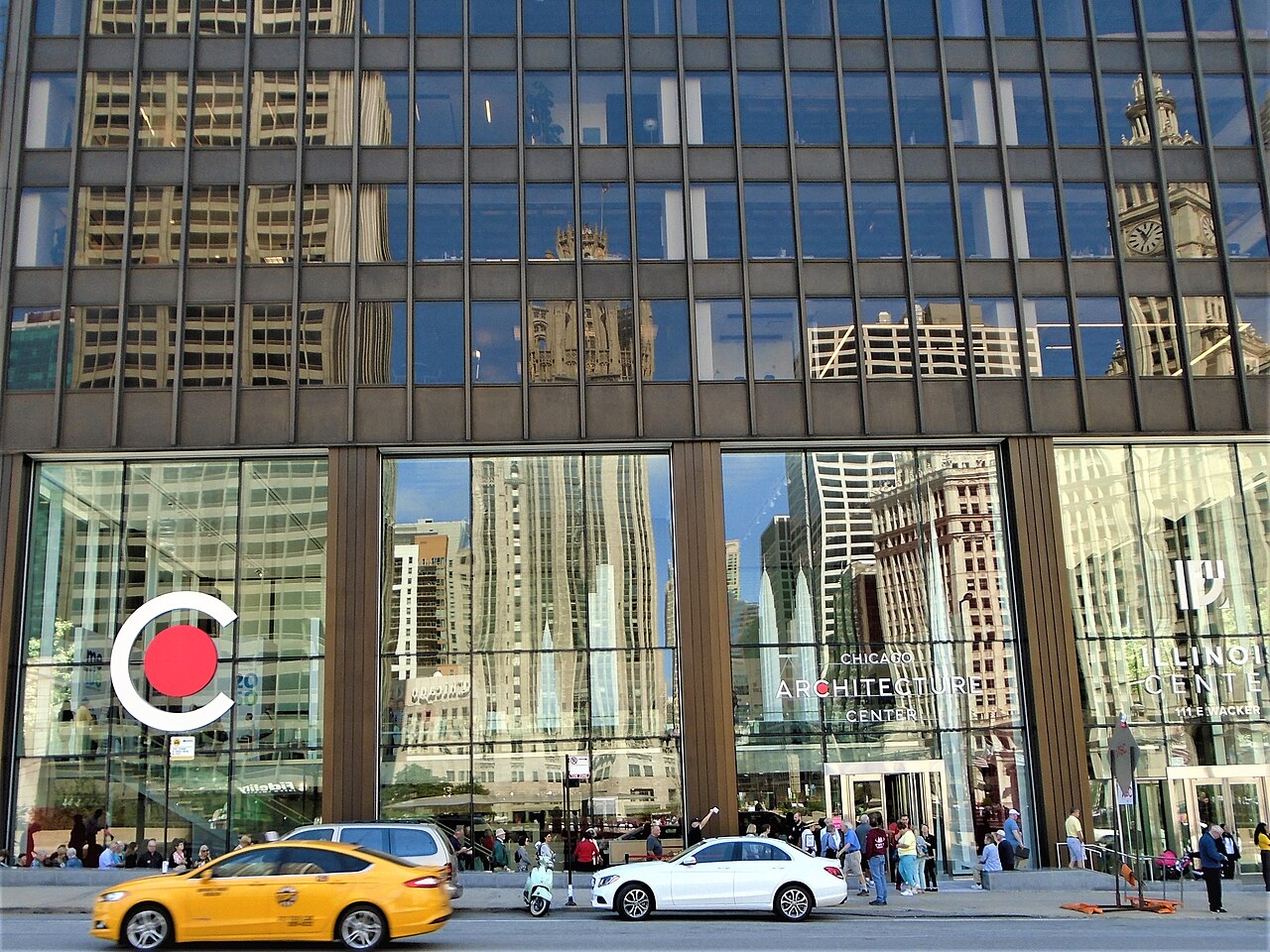
Chicago Architecture Center River Cruise
41.8881° N · 87.6205° W · Viewpoint
Chicago Architecture Center River Cruise is a viewpoint in Chicago, United States. Guided boat tours along the Chicago River and Lake Michigan, departing near Navy Pier. Most visitors spend 1–2 hours here. The free Lokali audio guide runs 5 minutes.
✓ Verified August 2026 · how we write these guides
Visitor facts
| Time needed | 1–2 hours |
|---|---|
| Lokali audio guide | 5 min · free |
| Type | Viewpoint |
| Best for | Editors' pick |
| Location | Chicago, United States |
| Coordinates | 41.8881, -87.6205 |
| Languages | 45, in the Lokali app |
The story
The engine hums. Water slaps against the hull. The boat slides out from the dock, and glass towers rise on both sides until the sky narrows to a bright ribbon overhead. Cameras lift. The docent clears her throat at the microphone. For the next ninety minutes, Chicago will explain itself from the water.
This is the river cruise run by the Chicago Architecture Center, aboard the Chicago's First Lady fleet. It departs from the Riverwalk dock beside the Michigan Avenue bridge. The Center began in 1966, when preservationists organized to save a historic mansion from demolition, and it has been teaching this city's buildings ever since. Its trained docents lead every sailing.
The river is the reason Chicago exists. It connected the Great Lakes to portage routes leading toward the Mississippi River system. Canoes came first, then barges, then everything else. Furs, lumber, and grain moved along this water, and a muddy trading post grew into one of the fastest-growing cities the world had seen. The water came first. The towers followed.
The river also carries one of engineering's strangest stories. The young city dumped its waste here, and the current carried it into Lake Michigan, the source of the city's drinking water. People sickened. So in 1900, engineers finished a canal that reversed the river. The water turned around and flowed away from the lake. It still flows backward today, and the docent will point out that almost nobody on board can tell.
Then there is the fire. In 1871, flames destroyed the wooden heart of Chicago. The city rebuilt in brick and stone, and then in steel. In 1885, the Home Insurance Building rose on a steel frame, and many historians call it the first skyscraper. The tall building was born in this city, and this cruise is a ride through its family album.
The route covers all three branches of the river: the main stem, the north branch, and the south branch. Along the way, the docent points out around fifty buildings. The boat slips beneath one low bridge after another, close enough that first-time riders duck. You do not need to remember every name. A few buildings will introduce themselves and stay with you.
Near the Michigan Avenue bridge, the Wrigley Building shines in white terra cotta, scrubbed and glowing like a wedding cake. Across the street stands Tribune Tower, finished in the 1920s after an international design competition drew entries from around the world. Its stone crown copies a French cathedral tower, all lace and buttresses against the sky.
Around the bend wait the twin round towers of Marina City, designed by the architect Bertrand Goldberg and built in the early 1960s. Apartments spiral above open parking decks, and the pair looks like two ears of corn standing on the riverbank. Goldberg planned them as a city within a city, with shops, a theater, and boat slips at the base.
Where the river turns, 333 West Wacker follows the curve in a single sheet of green glass, finished in 1983, mirroring the water it stands beside. Farther along rises the Merchandise Mart, opened in 1930, once the largest building on earth by floor area, with around four million square feet inside.
The modern giants close the show. Willis Tower, finished in 1973, held the title of world's tallest building for more than two decades. Aqua Tower, completed in 2009, ripples with curving white balconies, the work of architect Jeanne Gang. Her later design, the St. Regis, finished in 2020, stands as the tallest tower in the world from a woman-led firm.
The docents are volunteers. They train for months before their first tour, and it shows. They talk about style and steel, but also about money, politics, and luck. Why one tower is short and its neighbor tall. Why one facade is stone and the next is glass. Every building turns out to be an argument its era had with itself.
Boats run from spring into late fall, several times a day in summer. The upper deck is open to the sky, and there is a bar on board. Bring a light jacket even in July. The river makes its own cool wind between the towers.
Near the end, the boat swings back toward the dock, and the whole canyon of buildings stacks up in one long view. A century and a half of ambition, standing shoulder to shoulder above the water that started everything. The river carried lumber once. Now it carries people, looking up.
Key facts
What to look for
Practical tips
Common questions
How long do you need at Chicago Architecture Center River Cruise?
Plan 1–2 hours. That is the time most visitors spend at Chicago Architecture Center River Cruise. The free Lokali audio guide adds about 5 minutes of narration you can listen to as you walk, so it fits inside your visit rather than adding to it.
Is there a free audio guide to Chicago Architecture Center River Cruise?
Yes — the Lokali app narrates Chicago Architecture Center River Cruise free of charge in 50+ languages. It covers the history, what to look for on site and practical tips, and it works offline once downloaded.
Where is Chicago Architecture Center River Cruise?
Chicago Architecture Center River Cruise is in Chicago, United States, at 41.8881, -87.6205. Tap the map link on this page for directions from where you are.
What should you know before visiting Chicago Architecture Center River Cruise?
Book tickets online ahead; summer sunset sailings sell out.
What is Chicago Architecture Center River Cruise known for?
The Chicago Architecture Center was founded in 1966.
What is the best time to visit Chicago Architecture Center River Cruise?
The river tour reveals how the skyline composes from the water — a perspective most visitors miss from the street.
On the map
Opens directions to Chicago Architecture Center River Cruise from your location.
More to see in Chicago


Hear Chicago Architecture Center River Cruise in your language
The full story, narrated, in 50+ languages. Download it before you go and it plays offline, at your own pace, with no ticket and no tour group.