
Photo: Zol87 from Chicago, IL, USA · CC BY-SA 2.0 · Wikimedia Commons
Chicago Water Tower is a water tower. It is in Chicago, United States. Completed in 1869 as part of Chicago's water system. The free Lokali audio guide runs 7 minutes.
✓ Published October 2026 · how we write these guides
Visitor facts
| Lokali audio guide | 7 min · free |
|---|---|
| Type | Tower |
| Location | Chicago, United States |
| Coordinates | 41.8972, -87.6244 |
| Languages | 50+, in the Lokali app |
The story
Put your hand flat against the stone. It is rough, pale, almost the colour of old butter, and it feels cool even on a warm afternoon. Around you, the traffic of North Michigan Avenue hums and brakes and honks. Glass towers rise on every side. And here, in the middle of it all, stands a small limestone castle that looks as if it walked in from another century... because it did.
This is the Chicago Water Tower. It was completed in 1869, when Chicago was a young, fast-growing city with a serious problem. The city needed clean water, and it needed a way to move that water through its pipes without dangerous surges in pressure. The tower was the answer to both. It is a piece of engineering dressed up as a fortress, and that combination is the first surprise of this place.
The architect was William W. Boyington, who designed many buildings across Chicago in this period. He chose the Gothic Revival style. That style borrows from the churches and castles of medieval Europe, with pointed arches, slim towers, and decorative turrets. Look up at the tower now. See the narrow windows, the small battlements, and the little pointed spires at the corners. None of them were needed for the water. They were there to make a utility look noble.
So what was hidden inside all that decoration? A tall iron pipe, called a standpipe. Water arrived from the pumping station across the street and rose up through this pipe. The column of water helped steady the pressure in the city's mains. Without it, the pumps would push water in pulses, and pipes could crack. In other words, this graceful tower once held a very practical, very plain piece of iron at its heart.
The water itself came from Lake Michigan, but not from the dirty shoreline. Engineers dug a tunnel far out under the lake to an intake structure called a crib, where the water was cleaner. The engineer Ellis Chesbrough led this ambitious system. At the time, people travelled to see it. Turn east for a moment, toward the lake. Somewhere out beyond the buildings, that idea of reaching deep into the lake still shapes how Chicago drinks today.
Now, the story most visitors come for. In October 1871, the Great Chicago Fire tore through the city. It burned for about two days and destroyed a huge part of the downtown and the North Side. Wooden houses, shops, and churches were lost by the thousands. Yet this tower, built of heavy limestone, survived. It was one of very few structures in the burned district still standing when the smoke cleared.
That survival changed what the tower meant. Before the fire, it was a handsome piece of city plumbing. After the fire, it became a symbol. People looked at this pale stone, standing among the ashes, and saw proof that Chicago could endure. The city rebuilt with remarkable speed. Over the decades that followed, the tower stayed, while almost everything around it was replaced, again and again.
Not everyone loved it, though. A sharp remark is often attributed to the writer Oscar Wilde, who visited America in the early 1880s. He is said to have mocked the tower as a castle covered in pepper pots. Whether he said exactly those words is hard to confirm. But the joke stuck, because you can see what he meant. Those little turrets really do look like a row of pepper shakers on a table.
There is also a darker tale, and this one belongs to folklore, not to the record. Locals say that during the fire, a worker stayed at his post inside the tower to keep the pumps running. As the flames came closer, the story goes, he took his own life rather than face them. Some visitors claim to see a figure in an upper window. No historical evidence supports it, but the legend has followed the tower for generations.
In the twentieth century, the tower faced a quieter danger. As Michigan Avenue widened and grew into a grand shopping street, some people wanted the old building gone. It stood in the way of traffic and looked out of place. Each time, Chicagoans pushed back. The tower had become too important to lose. In 1969, it was named the first American Water Landmark, a title that honours historic water structures across the country.
Cross the avenue and you will find its partner, the Chicago Avenue Pumping Station, built of the same pale stone in the same style. Here is the second surprise. The pumping station still works. It still helps deliver water to part of the city. And it shares its space with a theatre company, so on some evenings, drama and water pumps live under one roof. Few working utilities anywhere have a stage inside them.
The tower itself no longer holds water. Today it houses a small city gallery, which often shows work by Chicago photographers and artists. Inside, the space is compact and quiet, a soft contrast to the street outside. The small park around the base gives you benches and a bit of green. It is a good place to sit for a few minutes and simply watch the city move around this old stone.
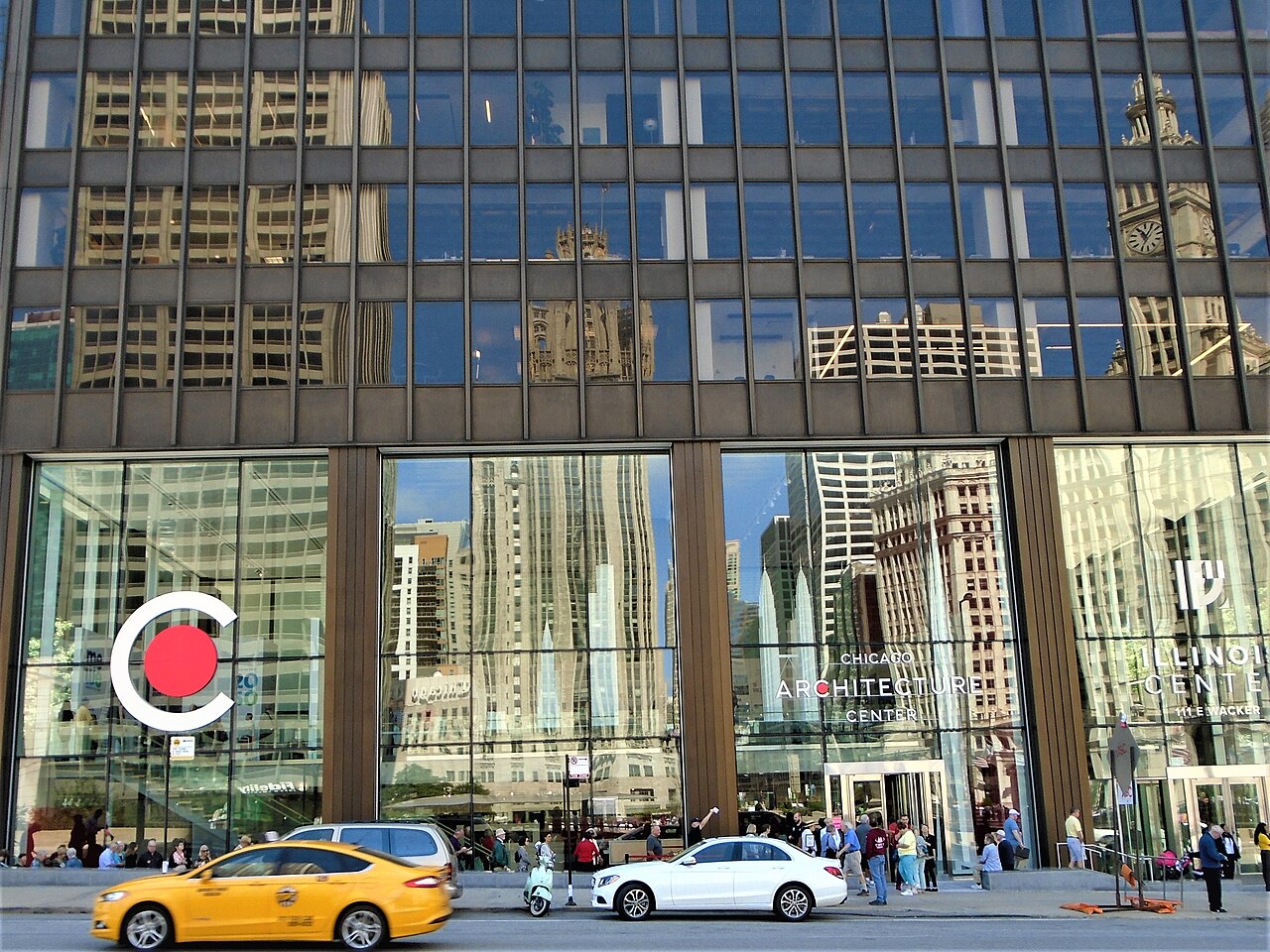
Take a step back now and look at the whole scene. The tower is small, much smaller than the shopping centres and skyscrapers that surround it. The glass of the newer buildings reflects its turrets. Shoppers pass with bags. Buses roll by. Few of them look up. But you are standing beside one of the oldest buildings on this avenue, a survivor of the fire that shaped modern Chicago.
Before you walk on, touch the stone one more time. Feel how worn and uneven it is, how it holds the warmth of the sun or the chill of the lake wind. As you head down the avenue, glance back once. Watch how the pale tower catches the light between the dark glass. It is easy to miss in a city this tall... and that is exactly why it is worth remembering.
Key facts
What to look for
Practical tips
Common questions
Is there a free audio guide to Chicago Water Tower?
Yes — the Lokali app narrates Chicago Water Tower free of charge in 50+ languages. The guide runs about 7 minutes, covers the history, what to look for on site and practical tips, and works offline once downloaded.
Where is Chicago Water Tower?
Chicago Water Tower is in Chicago, United States, at 41.8972, -87.6244. Tap the map link on this page for directions from where you are.
What is Chicago Water Tower known for?
Completed in 1869 as part of Chicago's water system. Designed by architect William W. Boyington in Gothic Revival style.
What should you look for at Chicago Water Tower?
Small pointed turrets that resemble a row of pepper pots. Pale yellowish limestone with a rough, weathered surface. Tiny battlements along the top edges of the walls.
What should you know before visiting Chicago Water Tower?
Cross the street to see the matching Pumping Station. Step inside the tower to visit the small city gallery.
When is the best time to visit Chicago Water Tower?
Visit early morning for a quieter avenue around the tower.
On the map
Opens directions to Chicago Water Tower from your location.
More to see in Chicago



Hear Chicago Water Tower in your language
The full story, narrated, in 50+ languages. Download it before you go and it plays offline, at your own pace, with no ticket and no tour group.