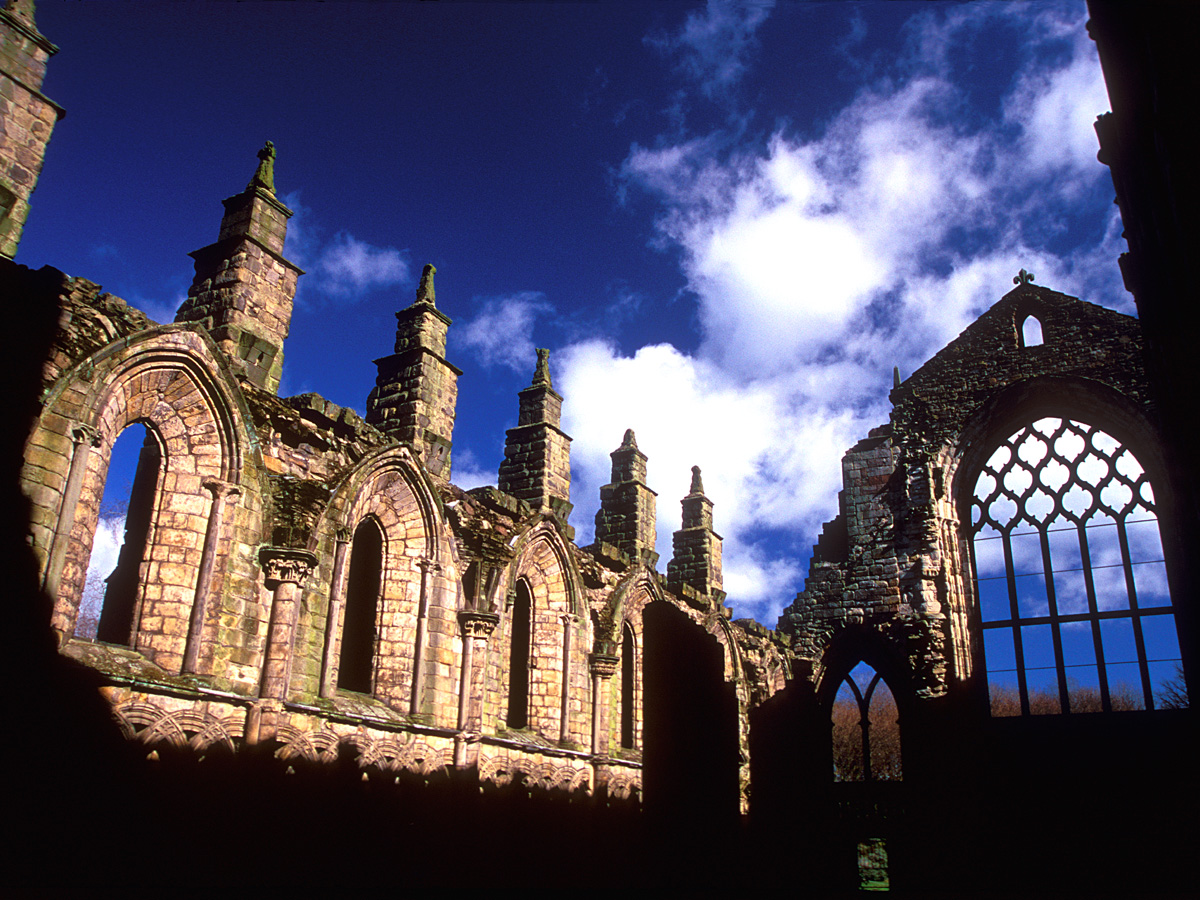
Holyrood Abbey
55.9532° N · 3.1716° W · Archaeological Site
Photo: LASZLO ILYES from Cleveland, Ohio, USA · CC BY 2.0 · Wikimedia Commons
Holyrood Abbey are monastery ruins in Holyrood, City of Edinburgh, Scotland, UK. Founded by King David the First in 1128. The free Lokali audio guide runs 6 minutes.
✓ Published October 2026 · how we write these guides
Visitor facts
| Lokali audio guide | 6 min · free |
|---|---|
| Type | Archaeological Site |
| Location | Edinburgh, United Kingdom |
| Coordinates | 55.9532, -3.1716 |
| Languages | 50+, in the Lokali app |
The story
Listen for a moment. Wind moves through empty window frames above you. Pigeons settle on ledges where a roof once stood. Underfoot, the grass is soft, and the old floor stones are cool and uneven. You are standing inside a church that has no ceiling, only the grey or blue Edinburgh sky, depending on the day. This is Holyrood Abbey. For almost nine hundred years, this place has drawn kings, pilgrims, artists and, today, you.
The story begins in 1128. That year, King David the First of Scotland founded an abbey here, at the foot of the hills east of the castle rock. He gave it to the Augustinian canons. These were priests who lived together under a shared rule, a little like monks, but who also served the wider community. The abbey grew wealthy and powerful. In time, it became one of the most important religious houses in the kingdom.
Now, the name. Holyrood means holy cross. Rood is an old English and Scots word for the cross of Christ. And here we reach a story that locals still enjoy telling. Legend has it that David the First went hunting in this forest on a holy day. A great stag charged and threw him from his horse. As the animal turned on him, a cross appeared between its antlers, and the stag fled. In gratitude, the king founded the abbey on this spot.
That is the legend. The more grounded explanation involves a real object. David's mother was Saint Margaret, a queen remembered for her deep faith. She owned a precious relic, said to be a fragment of the true cross. It was known as the Black Rood of Scotland. Many historians believe this relic, rather than any stag, gave the abbey its name. Either way, the cross sits at the very heart of this place.
Look around at what survives. Most of what you see is the nave, the long main body of the church, where ordinary worshippers once stood. Much of it dates from a rebuilding in the late twelfth and thirteenth centuries. The style is Gothic. Gothic, in simple terms, means tall pointed arches, narrow windows and stone that reaches upward toward the light. Even in ruin, you can feel that upward pull.
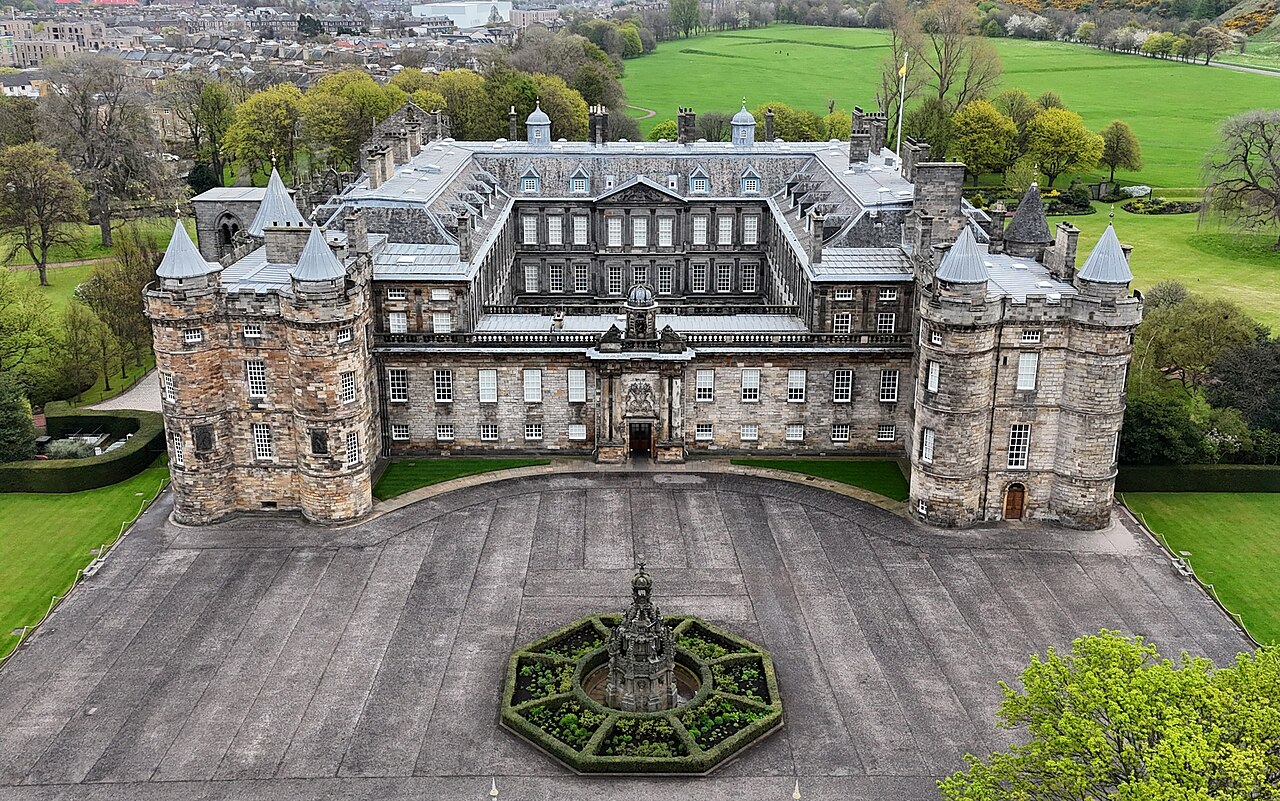
Here is the first surprise. The abbey was not only a church. It was also a royal guesthouse. Scottish kings found it far more comfortable than the cold, windy castle at the other end of the Royal Mile. They stayed here often. Over time, the guest lodgings grew into a palace of its own. That palace stands right beside you now, the Palace of Holyroodhouse. Today, it is still the official residence of the monarch in Scotland.
Because kings lived next door, the abbey became a stage for royal life. James the Second was crowned here, and later married here. James the Third married Margaret of Denmark within these walls. In 1503, James the Fourth married Margaret Tudor, the daughter of the English king. That marriage would one day bring the crowns of Scotland and England together under a single monarch. In 1633, Charles the First was crowned king of Scotland in this church.
The abbey also suffered. In the 1540s, English armies invaded Scotland in a campaign later nicknamed the Rough Wooing. The English king wanted to force a royal marriage, and his soldiers burned and damaged much of Edinburgh. The abbey was badly hit. Then came the Scottish Reformation, when the country turned from Catholic to Protestant worship. The canons were gone. The eastern parts of the church were pulled down, and only the nave was kept for use.
That surviving nave became the Chapel Royal for the palace. In the 1680s, King James the Seventh, a Catholic, turned it into a chapel for the Order of the Thistle, Scotland's great order of knighthood. It did not last. In 1688, as James lost his throne, an Edinburgh mob broke in and wrecked the interior. Even the royal tombs were disturbed. Faith and politics were tangled together here, and the building paid the price.
And now, the second surprise. The roof did not fall in war. It fell because of a repair. In the eighteenth century, builders added a heavy stone roof to the old walls. The walls were simply not strong enough. In 1768, the roof collapsed. Nobody rebuilt it. From that moment, the abbey became the open ruin you see now, a church roofed by sky.
Strangely, the ruin made the abbey more famous. Artists of the Romantic age loved crumbling Gothic walls under moonlight. In 1829, the young German composer Felix Mendelssohn visited this chapel. He later wrote that he found here the beginning of his Scottish Symphony. He even jotted down a musical idea on the spot. So a broken roof in Edinburgh helped give the world a piece of orchestral music still performed today.
Take a slow walk now. Toward the southeast corner is the Royal Vault. Several Scottish monarchs and royal figures were laid to rest here, among them David the Second, James the Second and James the Fifth. Lord Darnley, the second husband of Mary, Queen of Scots, was also buried in this vault. Then turn toward the great west doorway, where pilgrims once entered. Its carved arches still carry the marks of skilled medieval masons.
Before you leave, stand still in the middle of the nave and lift your eyes. Beyond the empty windows, you may see the rough green slopes of Arthur's Seat and the cliffs of Salisbury Crags. Those hills were here long before the stag, the king and the canons. Listen again to the wind in the stone. As you walk back toward the palace gardens, notice how quiet it becomes. Then let the city slowly return.
Key facts
What to look for
Practical tips
Common questions
Is there a free audio guide to Holyrood Abbey?
Yes — the Lokali app narrates Holyrood Abbey free of charge in 50+ languages. The guide runs about 6 minutes, covers the history, what to look for on site and practical tips, and works offline once downloaded.
Where is Holyrood Abbey?
Holyrood Abbey is in Edinburgh, United Kingdom, at 55.9532, -3.1716. Tap the map link on this page for directions from where you are.
What is Holyrood Abbey known for?
Founded by King David the First in 1128. Holyrood means holy cross in old Scots.
What should you look for at Holyrood Abbey?
The carved arches of the great west doorway. The Royal Vault in the southeast corner. Empty lancet windows framing the hills beyond.
What should you know before visiting Holyrood Abbey?
Visit as part of the Palace of Holyroodhouse experience. Check ahead, as the palace closes during royal visits.
On the map
Opens directions to Holyrood Abbey from your location.
More to see in Edinburgh



Hear Holyrood Abbey in your language
The full story, narrated, in 50+ languages. Download it before you go and it plays offline, at your own pace, with no ticket and no tour group.