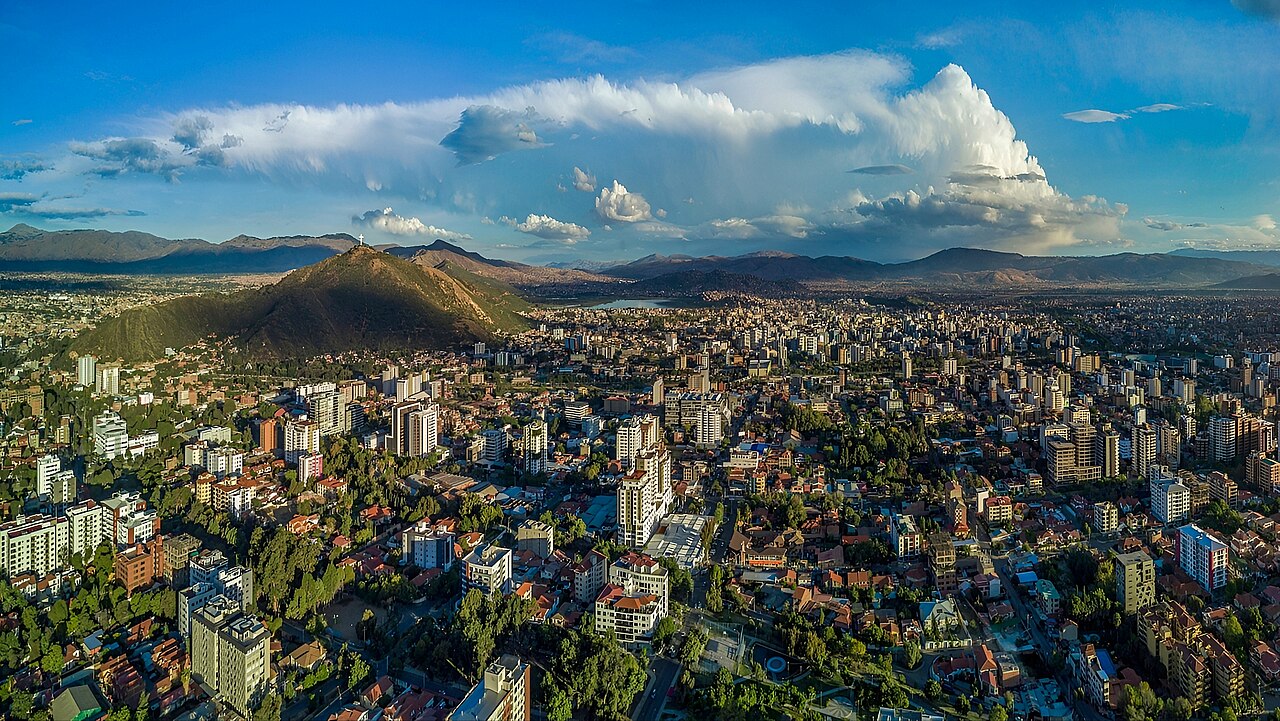
Plaza 14 de Septiembre
17.3931° S · 66.1513° W · Square
Plaza 14 de Septiembre is the heart of Cochabamba's historic centre, ringed by the Cathedral, colonial arcades, and government buildings. It is in Cochabamba, Bolivia. Most visitors spend 30–45 min here. The free Lokali audio guide runs 6 minutes.
✓ Verified August 2026 · how we write these guides
Visitor facts
| Time needed | 30–45 min |
|---|---|
| Lokali audio guide | 6 min · free |
| Type | Square |
| Best for | Local life |
| Location | Cochabamba, Bolivia |
| Coordinates | -17.3931, -66.1513 |
| Languages | 45, in the Lokali app |
The story
You step out of a narrow street and the space suddenly opens. Trees, benches, and the steady sound of water from a fountain. Pigeons lift and settle, then lift and settle again. Old men sit reading newspapers in the shade. Shoeshine boxes wait in a row along the paths. This is Plaza 14 de Septiembre, the central square of Cochabamba, and the calm green heart of the old city.
Spanish settlers laid out this square in the sixteenth century, when they first planned the town. The settlement was founded in 1571, under the name Villa de Oropesa. It was founded a second time in 1574, and that later date is the one the city now counts as its birthday. The planners drew a tidy grid of straight streets around this central plaza. Remarkably, that original plan still shapes the city today.
The square takes its name from a single date. On the fourteenth of September, 1810, the people of Cochabamba rose up against Spanish rule. A local leader named Francisco de Rivero helped lead the uprising in the streets around this very plaza. It was one of the early sparks in a long and difficult struggle for independence across the region. The square has carried that date, and that memory, ever since.
Stone arches line parts of the square. Beneath them run covered walkways, cool and shaded even at midday. Small shops and cafes open onto these arcades, their tables spilling out under the arches. People meet here, talk here, and let the hours pass. The rhythm of the plaza is unhurried. It is a place that asks you to sit down rather than pass quickly through it.
On one side stands the cathedral, the oldest religious building in the whole valley. Its pale bell tower rises above the surrounding rooftops and anchors the square. Its own long history belongs to another guide, but even from here it shapes the space. The bells mark the hours across the tiles, a slow and steady sound that has measured out life on this square for a very long time.
A monument stands at the center, ringed by gardens, low hedges, and crossing paths. Palm trees and flowering plants soften the open ground. The benches around it fill in the late afternoon, once the worst of the heat has lifted. Families come out to sit together. Children chase the pigeons in wide loops. Vendors push small carts along the edges, selling ice cream and warm salteñas wrapped in paper.
The buildings that frame the square wear the colors of an older Cochabamba. Pale plaster walls, dark wooden balconies, and roofs of red clay tile. Some have been carefully restored to their former state. Others show their age honestly, with faded paint and worn shutters. Together they form a frame that has held its rough shape for centuries, even as the modern city grew up and outward all around it.
This is a working square, not a museum piece. Government offices and banks share these blocks with the cafes and the shops. People cut across the plaza on their way to work in the morning. They stop to meet friends under the arches at noon. They drift back again in the evening. The plaza belongs to ordinary daily life, and it is that daily use that keeps it genuinely alive.
Find an empty bench and simply stay a while. The plaza rewards patience far more than a quick photograph. Sit long enough and you begin to notice the small things. A shoeshine man bent over his careful work. Two women laughing together over coffee. The slow way the afternoon light moves across the cathedral wall as the sun drops behind you. The square reveals itself only gradually.
In the evening the plaza changes character entirely. The day's heat finally lifts from the stones. Strings of warm lights switch on in the cafes under the arches. The benches stay full long after dark. This is the hour when the whole city seems to gather here together, in the cool night air, beneath the trees, inside the soft and constant murmur of many quiet overlapping conversations.
Around the four edges of the square, streets run off in dead-straight lines, exactly as the Spanish planners first drew them. Follow any one of them and you find more of the old city waiting. Crowded markets, quiet churches, and shaded interior courtyards behind heavy wooden doors. The plaza is the still center from which the rest of Cochabamba steadily unfolds in every direction.
Squares like this one hold the long memory of a city. People have gathered on this exact ground for more than four hundred years now. They have traded and prayed here. They have argued and celebrated here. They once fought for their freedom here. Sit on a bench, watch the evening light slowly fade from the tower, and you quietly join a very long line of people who have done the very same thing.
Key facts
What to look for
Practical tips
Common questions
How long do you need at Plaza 14 de Septiembre?
Plan 30–45 min. That is the time most visitors spend at Plaza 14 de Septiembre. The free Lokali audio guide adds about 6 minutes of narration you can listen to as you walk, so it fits inside your visit rather than adding to it.
Is there a free audio guide to Plaza 14 de Septiembre?
Yes — the Lokali app narrates Plaza 14 de Septiembre free of charge in 50+ languages. It covers the history, what to look for on site and practical tips, and it works offline once downloaded.
Where is Plaza 14 de Septiembre?
Plaza 14 de Septiembre is in Cochabamba, Bolivia, at -17.3931, -66.1513. Tap the map link on this page for directions from where you are.
What should you know before visiting Plaza 14 de Septiembre?
Sit on a shaded bench in the late afternoon.
What is Plaza 14 de Septiembre known for?
Cochabamba was first founded in 1571 as Villa de Oropesa.
What is the best time to visit Plaza 14 de Septiembre?
Sit under the arcade on the east side in late afternoon when the sun rakes the Cathedral's façade gold.
On the map
Opens directions to Plaza 14 de Septiembre from your location.
More to see in Cochabamba


Hear Plaza 14 de Septiembre in your language
The full story, narrated, in 50+ languages. Download it before you go and it plays offline, at your own pace, with no ticket and no tour group.