
National Museum of Denmark
55.6747° N · 12.5747° E · Museum
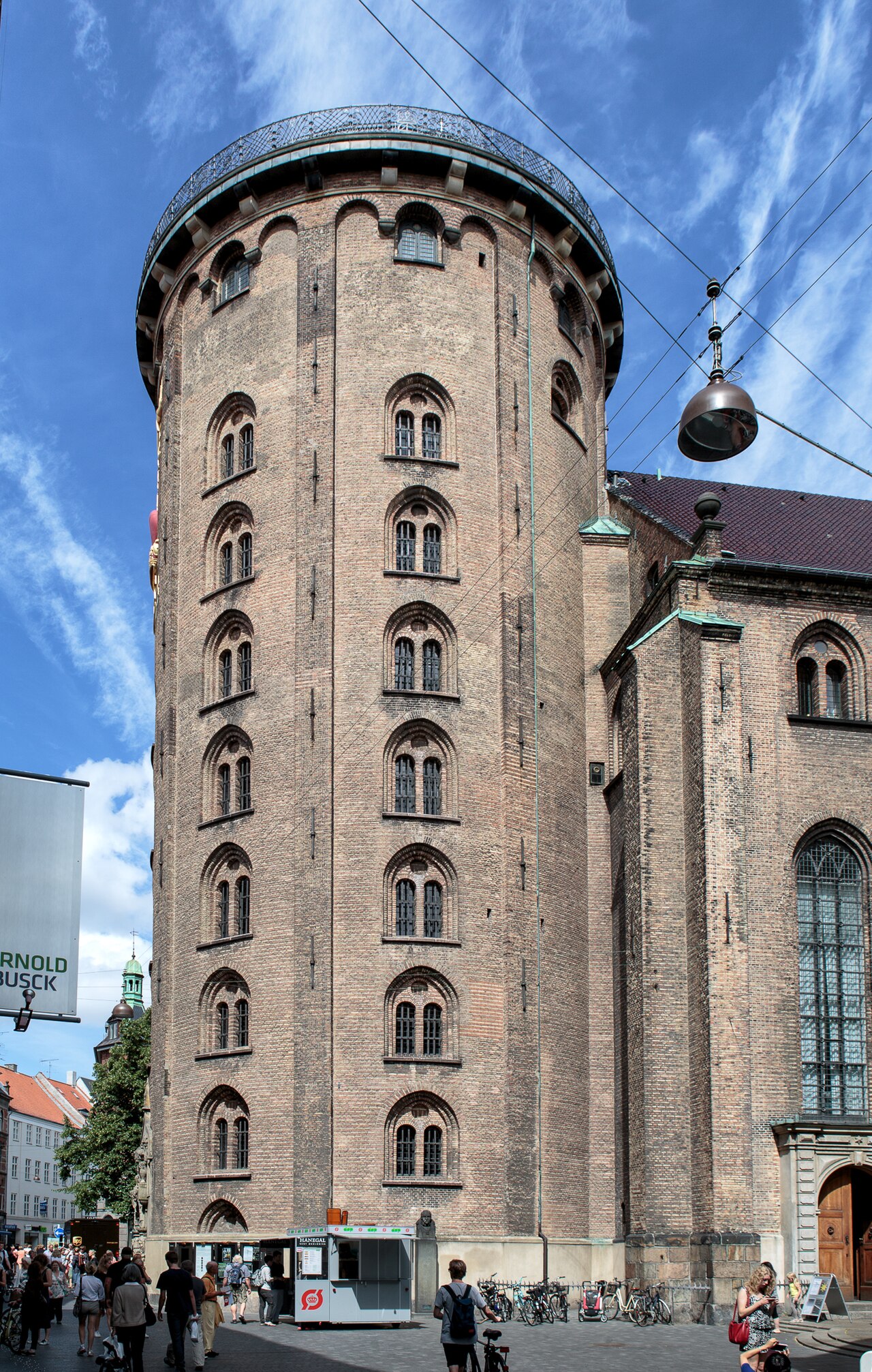
Photo: No machine-readable author provided. Nico-dk assumed (based on copyright claims). · CC BY-SA 3.0 · Wikimedia Commons
National Museum of Denmark is a Denmark’s largest museum of cultural history. It is in Copenhagen, Denmark. Housed in the eighteenth-century Prince's Mansion palace. The free Lokali audio guide runs 7 minutes.
✓ Published October 2026 · how we write these guides
Visitor facts
| Lokali audio guide | 7 min · free |
|---|---|
| Type | Museum |
| Location | Copenhagen, Denmark |
| Coordinates | 55.6747, 12.5747 |
| Official website | nationalmuseet.dk |
| Languages | 50+, in the Lokali app |
The story
Push open the heavy door and the city noise drops away. The air inside is cool and still, with a faint smell of old wood and polished stone. Somewhere a floorboard creaks. Outside, the water of Frederiksholm Canal moves past quietly. In here, the light falls in long grey bands across glass cases. Behind that glass sit some of the oldest stories this country has ever told about itself.
Welcome to the National Museum of Denmark. You are standing in a building that was not made for museums at all. This is the Prince's Mansion, an eighteenth-century palace built for royalty. It was remodelled in the soft, decorative rococo style of that era. Notice how the outside is calm and orderly, while the rooms behind it twist and open in unexpected ways. The museum grew into this house slowly, room by room, over many generations.
The collection itself is older than the building's role as a museum. Its roots go back to the Royal Kunstkammer — a cabinet of curiosities — that Danish kings began gathering in the seventeenth century. A cabinet of curiosities was a royal room of wonders. It held coins, shells, carvings, strange animals, and objects from distant lands, all side by side. Over time, scholars began to sort that jumble into order. And that act of sorting changed how the whole world thinks about the past.
Here is the first surprise. In the early nineteenth century, a curator here named Christian Jürgensen Thomsen faced a problem. How do you arrange objects when nobody knows their dates? His answer was simple and powerful. He grouped them by material — stone, then bronze, then iron. That idea became the Three-Age System. Today, museums and textbooks across the planet still speak of the Stone Age, the Bronze Age, and the Iron Age. That framework took shape inside this collection.
So it feels right to begin with the prehistory galleries. Walk among the flint tools first. Some are rough, some are polished until they shine like glass. Then the bronze arrives, and the objects suddenly glow. Look for the lurs — long, curving bronze horns, often found in pairs. They were buried in bogs as offerings. Their thin tubes twist like the horns of an animal. Some have been played in modern times, and they can still make sound.
Now find the object that many Danes know from their schoolbooks — the Trundholm Sun Chariot. A farmer turned it up while ploughing a bog in 1902. It shows a bronze horse pulling a large disc on wheels. One side of the disc is covered in gold. The other side is darker. Many scholars read this as the sun travelling across the sky by day, and returning through darkness at night. Walk around the case. Both faces matter.
Nearby lies one of the most human moments in the building. The Egtved Girl was buried in an oak coffin during the Bronze Age, more than three thousand years ago. The waterlogged ground kept her clothing, her hair, and her belt with a round bronze disc. Her short corded skirt surprises many visitors. It looks almost modern. Stand close and you are looking at what a young woman actually wore, not an artist's guess.
The bogs of Denmark preserved more than bronze. They also kept people. In these galleries you may meet the Huldremose Woman, an Iron Age bog body found with her woollen garments still intact. The acidic, airless peat slowed decay for centuries. It can be a quiet, serious room. Many visitors lower their voices without noticing. That is a good instinct. These were real lives, and the museum displays them with care.
And then — silver. The Gundestrup Cauldron was found in a peat bog in northern Jutland in the late nineteenth century. Its panels show gods, warriors, animals, and a figure with antlers sitting cross-legged. Nobody agrees fully on who made it or where. Some details point far to the south and east of Denmark. That puzzle is part of its pull. Take your time with the inner panels, where the procession of soldiers marches in a line.
Here is the second surprise. Look for the two curved Golden Horns of Gallehus. The horns you see are copies. The originals were ancient gold, found in southern Jutland in the seventeenth and eighteenth centuries. In 1802, a thief broke into the royal collection, stole them, and melted them down. The gold was gone forever. Only drawings survived, and from those drawings the replicas were made. You are looking at a memory of an object, rebuilt on paper.
Move forward in time and the Viking Age arrives. Here are swords, jewellery, and everyday tools — combs, keys, small weights for trading silver. The Vikings were raiders, yes, but they were also farmers, traders, and craftspeople. Look closely at the brooches. The animal patterns twist and interlock until it is hard to see where one creature ends. Beyond the Vikings, the medieval galleries open up, with church carvings and painted wooden figures brought in from village churches.
The building does not stop at Danish borders. Upstairs, the ethnographic collections hold objects from Greenland, the Pacific, Asia, Africa, and the Americas. Many came through the old royal cabinet, and some through Denmark's colonial history. The museum now talks more openly about how those objects arrived here. If you have young people with you, the children's museum lets them dress up and play inside reconstructed rooms. There is also a preserved Victorian apartment nearby, usually seen only on a guided tour.
Before you leave, pause in the main hall. Listen for a moment. Footsteps on stone. A child asking a question. The soft hum of the cases. Outside, the canal still runs past the palace walls, and the copper roofs of the city wait. You have just walked from flint to silver to the Viking sea. As you step back into the street, notice the ground under your feet. Denmark's past is still in that soil.
Key facts
What to look for
Practical tips
Common questions
Is there a free audio guide to National Museum of Denmark?
Yes — the Lokali app narrates National Museum of Denmark free of charge in 50+ languages. The guide runs about 7 minutes, covers the history, what to look for on site and practical tips, and works offline once downloaded.
Where is National Museum of Denmark?
National Museum of Denmark is in Copenhagen, Denmark, at 55.6747, 12.5747. Tap the map link on this page for directions from where you are.
What is National Museum of Denmark known for?
Housed in the eighteenth-century Prince's Mansion palace. Collection grew from the seventeenth-century Royal Kunstkammer.
What should you look for at National Museum of Denmark?
The gilded side versus the dark side of the sun disc. The corded skirt and bronze belt disc of the Egtved Girl. The antlered seated figure on the Gundestrup Cauldron.
What should you know before visiting National Museum of Denmark?
Start with the prehistory galleries while your energy is fresh. Plan at least half a day for the main collections.
On the map
Opens directions to National Museum of Denmark from your location.
More to see in Copenhagen


Hear National Museum of Denmark in your language
The full story, narrated, in 50+ languages. Download it before you go and it plays offline, at your own pace, with no ticket and no tour group.