
Monasteries on the Slopes of Popocatépetl
18.9347° N · 98.8978° W · World Heritage Site
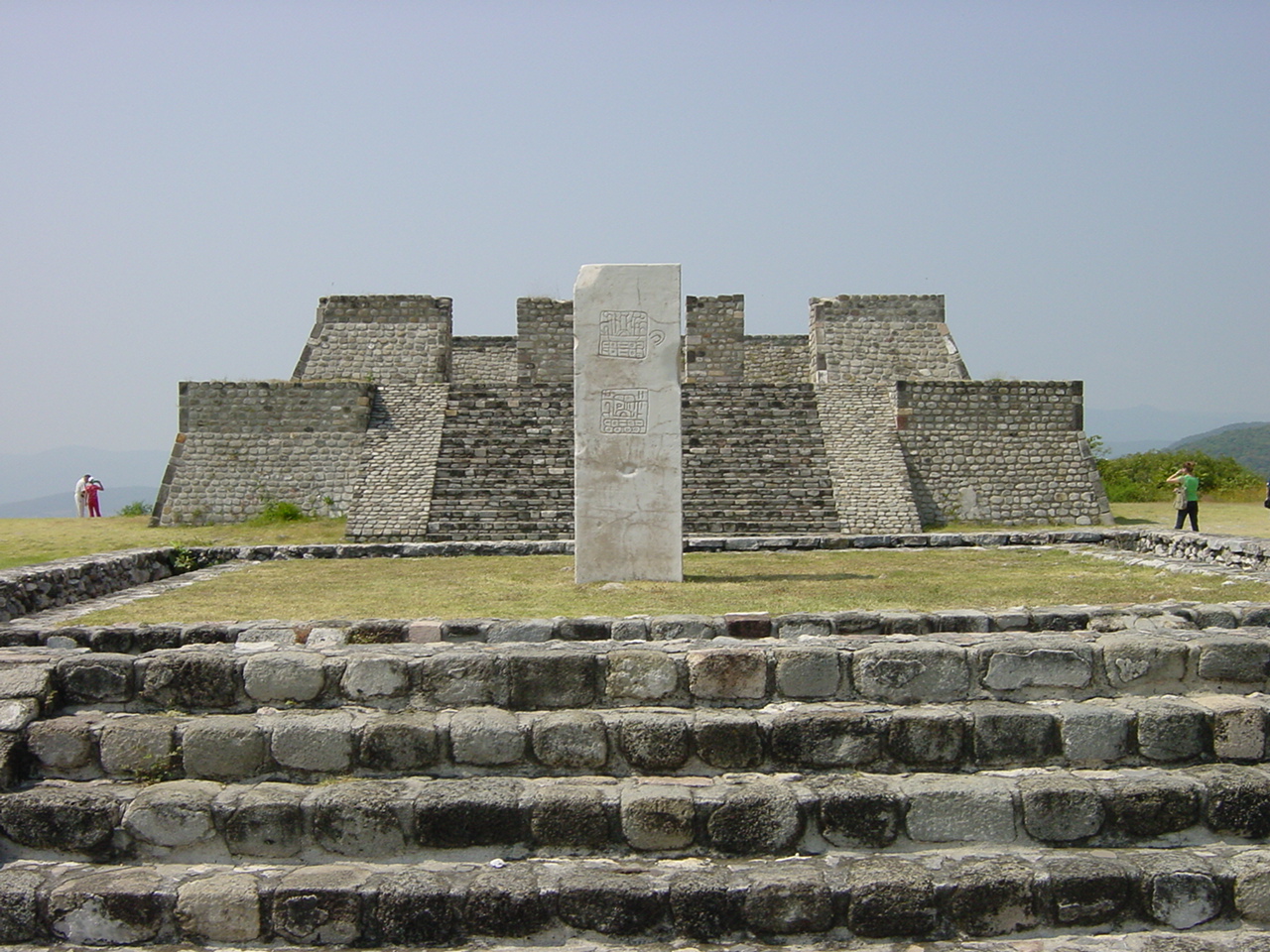
Photo: Thelmadatter · CC BY-SA 3.0 · Wikimedia Commons
Monasteries on the Slopes of Popocatépetl is a human settlement. It is near Cuernavaca, Mexico. UNESCO listed the fourteen monasteries as World Heritage in 1994. The free Lokali audio guide runs 7 minutes.
✓ Published October 2026 · how we write these guides
Visitor facts
| Lokali audio guide | 7 min · free |
|---|---|
| Type | World Heritage Site |
| Location | Cuernavaca, Mexico |
| Coordinates | 18.9347, -98.8978 |
| Languages | 50+, in the Lokali app |
The story
Stand still for a moment and feel the stone under your feet. It is warm in the sun and cool in the shade, worn smooth by nearly five centuries of sandals, bare feet and church shoes. Above the walls, if the sky is clear, a white cone rises on the horizon. Sometimes a thin plume of smoke drifts from its summit. That is Popocatépetl, whose Aztec name means the smoking mountain. Across its slopes lies a chain of fortress-like monasteries that helped shape what Mexico became.
These buildings are not one site but a family of sites. UNESCO listed them together as a World Heritage Site in 1994. The group has fourteen monasteries. Eleven stand here in the state of Morelos and three lie across the border in Puebla. Some sit in busy towns, such as Cuernavaca and Tepoztlán. Others sit in quiet farming villages where the church is still the largest building for miles around. Each one tells part of the same story.
That story begins in the 1520s, only a few years after the fall of the Aztec capital, Tenochtitlan. Spanish friars arrived with a single goal. They wanted to convert the Indigenous peoples of central Mexico to Christianity. Three religious orders led the work. They were the Franciscans, the Dominicans and the Augustinians. They spread out across the valleys south of the volcano and built missions in the towns they found there. Most of the monasteries you see today rose during the sixteenth century.
The friars had a practical problem, and it shaped the architecture. They were few, and the people they hoped to reach were many. A small European church could not hold the crowds. So the builders created something new. In front of each church they enclosed a huge walled courtyard, called an atrium. Thousands of people could gather there in the open air. In a sense, the sky itself became the roof of the congregation.
Look for the other pieces of this outdoor design. Many sites have an open chapel. This is an arched space facing the atrium, where a priest could say Mass to the crowd outside. In the corners of the courtyard, some monasteries kept small chapels known as posas. Processions paused at each one. In the centre there was often a tall stone cross. Historians see this layout as a bridge between two worlds. The Indigenous peoples of the region already held their ceremonies in large open plazas.
Now look up at the walls. They are thick and heavy. Many are topped with notched battlements, like the edge of a medieval castle. It is easy to imagine soldiers on the roofline. Scholars still debate how much of this was real defence and how much was symbolism. The battlements may have marked the church as a fortress of faith. Either way, the effect is clear. These buildings were meant to look permanent and powerful in a newly conquered land.
Here is something many visitors miss. The friars designed these monasteries, but they did not build them alone. Indigenous workers cut the stone, burned the lime and raised the walls. Indigenous painters filled the cloisters with murals. Look closely at the paintings, and sometimes you will notice plants, animals or patterns that do not come from Europe at all. Local hands left local traces inside a foreign religion. Those details make these buildings truly Mexican, not simply Spanish.
In Cuernavaca, the old Franciscan monastery became the city's cathedral. It holds one of the great surprises of the whole route. During a renovation in the twentieth century, workers removed later layers of paint from the walls. Underneath, they found long murals that show the martyrdom of Christian missionaries in Japan. Among them is Saint Philip of Jesus, who was born in Mexico. Seeing Japanese scenes in a Mexican church reminds us that this region was once part of a trading world that reached across the Pacific.
Tepoztlán offers a very different mood. The Dominican monastery sits in a valley ringed by steep, rust-coloured cliffs. High on one of those ridges sits a small pre-Hispanic temple called El Tepozteco. Locals link it to Tepoztécatl, a god of pulque, the fermented drink made from the agave plant. So the town holds two sacred sites in one view, an older temple on the mountain and a newer church below it. Many visitors climb to the temple and then come down to the cloister.
Further east, toward the volcano, the monasteries grow quieter and more rural. In towns such as Yecapixtla, Tlayacapan and Atlatlahucan, the churches rise above fields and low houses. The air is cooler and drier. Roads climb gently toward the mountain. These villages make up the heart of what locals call the Route of the Convents. Travelling it slowly lets you compare how each order put its own mark on the same basic plan.
These walls have survived a lot, but not everything. This region lies in an active earthquake zone. On September 19, 2017, a powerful earthquake struck central Mexico. Several of these monasteries suffered serious damage. Bell towers cracked. Domes and vaults fell. Restoration work has continued for years, and some sites may still have scaffolding or closed areas when you visit. That is part of the living story. These are not frozen ruins. People still repair them, worship in them and care for them.
The volcano is part of that story too. Popocatépetl is one of the most active volcanoes in Mexico. Its eruptions sometimes drop fine grey ash on nearby towns. For the people who live here, the mountain is beautiful and dangerous at the same time. Many local communities still treat it with deep respect. Some call it Don Goyo, an affectionate nickname, and speak of it almost as a neighbour. The monasteries have stood in its shadow for nearly five hundred years.
Before you leave, walk once around the edge of the atrium. Listen to the sounds. You may hear church bells, children playing, a vendor calling out, or a dog barking in a nearby street. Look at the uneven stone, patched and repaired over generations. Then turn toward the volcano, if the clouds allow. The friars, the builders and the villagers all looked at that same mountain. Now you are part of that long line of people standing here, looking up.
Key facts
What to look for
Practical tips
Common questions
Is there a free audio guide to Monasteries on the Slopes of Popocatépetl?
Yes — the Lokali app narrates Monasteries on the Slopes of Popocatépetl free of charge in 50+ languages. The guide runs about 7 minutes, covers the history, what to look for on site and practical tips, and works offline once downloaded.
Where is Monasteries on the Slopes of Popocatépetl?
Monasteries on the Slopes of Popocatépetl is near Cuernavaca, Mexico, at 18.9347, -98.8978. Tap the map link on this page for directions from where you are.
What is Monasteries on the Slopes of Popocatépetl known for?
UNESCO listed the fourteen monasteries as World Heritage in 1994. Eleven monasteries are in Morelos, three are in Puebla.
What should you look for at Monasteries on the Slopes of Popocatépetl?
Notched battlements running along the top of church walls. The arched open chapel facing the large atrium. Small posa chapels set in the corners of the courtyard.
What should you know before visiting Monasteries on the Slopes of Popocatépetl?
Visit in the early morning for clear volcano views. Dress modestly because many churches still hold daily services.
When is the best time to visit Monasteries on the Slopes of Popocatépetl?
Visit in the early morning for clear volcano views.
On the map
Opens directions to Monasteries on the Slopes of Popocatépetl from your location.
More to see near Monasteries on the Slopes of Popocatépetl

Hear Monasteries on the Slopes of Popocatépetl in your language
The full story, narrated, in 50+ languages. Download it before you go and it plays offline, at your own pace, with no ticket and no tour group.