
Photo: Matt Brown · CC BY 2.0 · Wikimedia Commons
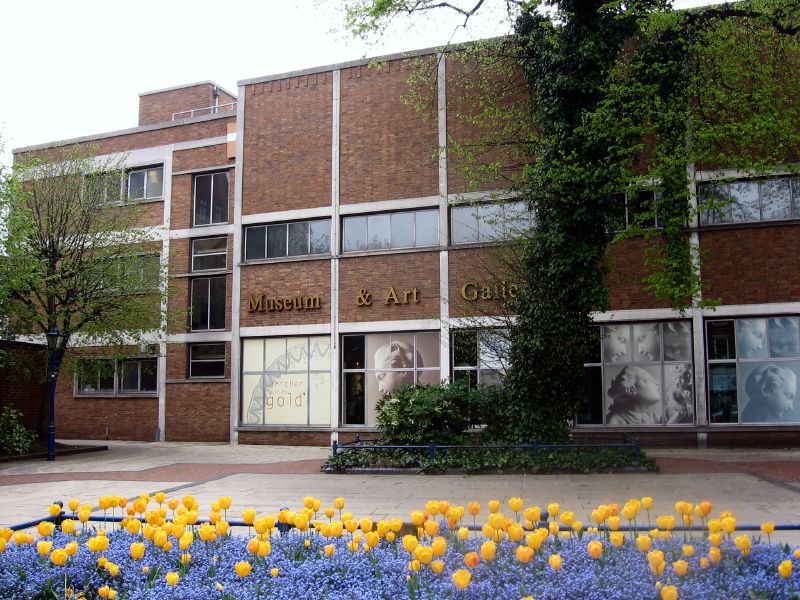
Derby Silk Mill is a museum in Derby, United Kingdom. Often described as one of the world's first factories. The free Lokali audio guide runs 7 minutes.
✓ Published October 2026 · how we write these guides
Visitor facts
| Lokali audio guide | 7 min · free |
|---|---|
| Type | Museum |
| Location | Derby, United Kingdom |
| Coordinates | 52.9258, -1.4758 |
| Official website | derbymuseums.org |
| Languages | 50+, in the Lokali app |
The story
Listen first. Behind you, the River Derwent runs dark and steady past the old mill wall. The water is never quite silent here. It slides over stone, it gathers in eddies, and on a quiet morning it is the loudest thing in this corner of Derby. Now look up at the brick. It is warm, reddish, a little uneven. This is the Derby Silk Mill, and the reason it stands exactly here is the same reason you can hear that river.
Water was power. In the early eighteenth century, long before steam engines spread across Britain, a fast river could turn a wheel. That wheel could turn shafts and gears. And those gears could drive machines that did the work of many hands. The Derwent offered that power right in the middle of a market town. Several ambitious men saw the opportunity. What they built on this narrow island of land changed how people would work for the next three centuries.
The product was silk. More precisely, it was silk throwing, which means twisting fine raw silk filaments into strong, usable thread. In those years, Italy, especially the region of Piedmont in the north, led Europe in this craft. Italian mills used clever water-powered machines, and the designs were guarded closely. English weavers had to import thread at high prices. So the question for any English entrepreneur was simple. How do you get your hands on that machinery?
An earlier attempt on this site, led by a man named Thomas Cotchett, did not succeed. Then the half-brothers John and Thomas Lombe arrived. John Lombe travelled to Italy and returned with detailed knowledge of the Italian machines. How he obtained it is part of the story's appeal. Many accounts describe it as industrial espionage, with drawings made in secret. Thomas Lombe secured a patent, and the new mill rose here in the early 1720s, powered by the river behind you.
And here is the darker tale. John Lombe died young, only a few years after the mill began work. Legend has it that he was poisoned by a woman sent from Italy to punish him for stealing the secrets. It is a gripping story, and Derby people have told it for a very long time. But it is folklore, not proven history. No one knows for certain how he died. Keep that in mind when you hear it retold with great confidence.
What historians do agree on is the scale of the idea. This was not a workshop with a few looms. It was a large building, several storeys high, where one power source drove many machines at once. Workers arrived at set times and tended machines that never tired. Many of those workers were children. For this reason, the Lombe mill is often described as one of the first true factories in the world. Pause on that for a moment — the modern factory, in one sense, starts here.
The idea travelled. In the decades that followed, other entrepreneurs built water-powered mills up the Derwent valley, most famously Richard Arkwright with his cotton mills at Cromford. Today, that whole stretch of river, from this spot northward, is protected as the Derwent Valley Mills World Heritage Site. This mill sits at the southern end of that chain. So when you stand here, you are standing at the first link of a long industrial story.
Now, a surprise for many visitors. The building in front of you is not the original mill as the Lombes knew it. In 1910, a serious fire swept through the old structure. Much of it was destroyed. The mill was rebuilt afterwards, but it was rebuilt lower, with fewer floors than before. So the shape you see is largely an early twentieth century building. It stands on the old footprint, and the river arches below it carry the memory of the original foundations.
Before you go inside, turn toward the entrance and find the ornate iron gates. They are wrought iron, full of scrolls, leaves and curling shapes. They are linked to Robert Bakewell, a skilled Derby ironsmith of the early eighteenth century. Notice how the iron seems light, almost like drawing in the air. Making that by hand, with heat and hammer, took enormous patience. These gates are a quiet reminder that Derby was a city of makers long before the machines arrived.
That word, makers, matters here. Today the building houses the Museum of Making, which opened in 2021. The museum does not only tell the story of silk. It looks at Derby's long tradition of building things, from fine crafts to engineering, railways and aircraft engines. Inside, you will find thousands of objects, many displayed together in large groupings. The effect is a little like walking through the storeroom of a whole city's imagination.
The museum also tries to be a working place, not just a display. There are spaces where people can learn to make things themselves, using tools and machines. In a way, that brings the building back to its first purpose. It was built for production, for hands and machines working side by side. Now it invites visitors to try that for themselves. If you have time, look at what is happening in the workshops today.
Step back outside and look around the green. The tower of Derby Cathedral rises just to the north, its stone pale against the brick of the mill. Nearby stands a statue of Charles Edward Stuart, known as Bonnie Prince Charlie, on horseback. In 1745, his Jacobite army, which fought to restore the Stuart family to the British throne, marched south as far as Derby before turning back. So within a few steps, you have faith, rebellion and industry, all in one small space.
Before you leave, walk to the riverside once more. Watch the Derwent move past the base of the mill. The water still runs where the wheel once turned, and the brick still carries the marks of fire, repair and change. Think of the children who climbed these stairs before dawn, and of the machines that hummed above the river. Then listen again. That same sound of water is the first thing they heard, too.
Key facts
What to look for
Practical tips
Common questions
Is there a free audio guide to Derby Silk Mill?
Yes — the Lokali app narrates Derby Silk Mill free of charge in 50+ languages. The guide runs about 7 minutes, covers the history, what to look for on site and practical tips, and works offline once downloaded.
Where is Derby Silk Mill?
Derby Silk Mill is in Derby, United Kingdom, at 52.9258, -1.4758. Tap the map link on this page for directions from where you are.
What is Derby Silk Mill known for?
Often described as one of the world's first factories. Built in the early 1720s for the Lombe brothers.
What should you look for at Derby Silk Mill?
Ornate wrought-iron gates linked to ironsmith Robert Bakewell. River arches under the mill above the flowing Derwent. Warm red brick of the rebuilt early twentieth century mill.
What should you know before visiting Derby Silk Mill?
Start at the riverside to hear the Derwent before entering. Allow extra time to explore the museum's workshop spaces.
On the map
Opens directions to Derby Silk Mill from your location.
More to see in Derby


Hear Derby Silk Mill in your language
The full story, narrated, in 50+ languages. Download it before you go and it plays offline, at your own pace, with no ticket and no tour group.