
Avebury
51.4286° N · 1.8542° W · Archaeological Site
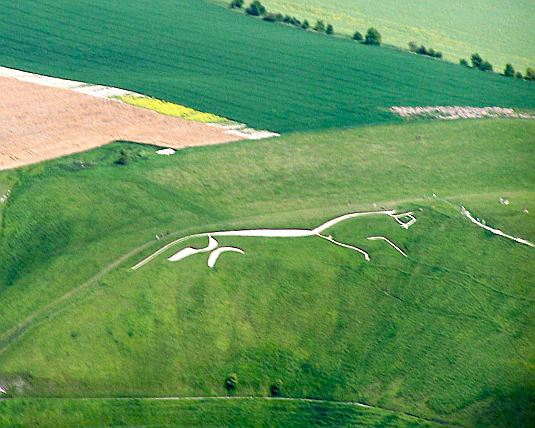
Photo: MikPeach · CC BY-SA 4.0 · Wikimedia Commons
Avebury is a neolithic henge monument in Wiltshire, England, UK. Avebury is the largest stone circle in Britain. The free Lokali audio guide runs 7 minutes.
✓ Published October 2026 · how we write these guides
Visitor facts
| Lokali audio guide | 7 min · free |
|---|---|
| Type | Archaeological Site |
| Location | Devizes, United Kingdom |
| Coordinates | 51.4286, -1.8542 |
| Official website | nationaltrust.org.uk |
| Languages | 50+, in the Lokali app |
The story
Listen first. Somewhere close by, a sheep tears at the grass. A car passes slowly on the village lane. Under your feet the turf is soft and springy, laid over chalk. Then you look up, and there they are: great grey stones, rough and lichen-spotted, standing in the field as if they had always been here. In a sense, they have. These stones have stood in this valley for more than four thousand years.
You are standing at Avebury, a short drive north-east of the market town of Devizes, in the county of Wiltshire. This is the largest stone circle in Britain. It is so large that a whole village sits partly inside it. There are cottages, a church nearby, a manor house, and a pub, all within or beside a prehistoric monument. Few places in the world let you walk this freely among the work of the Neolithic, the late Stone Age.
Let us start with the shape of the place. The stones are only one part of it. Look for the huge circular bank of earth, and the deep ditch inside it. Together, the bank and ditch form what archaeologists call a henge — a ring-shaped earthwork with the ditch on the inner side. That arrangement is a puzzle. A defensive wall puts the ditch outside, to keep enemies out. Here, the ditch is inside. Whatever this place was for, it was not a fort.
The ditch you see today is much shallower than it once was. Over the centuries, soil and rubble have slid back into it. Excavations showed that the original ditch was far deeper, cut straight down into the white chalk. The builders had no metal tools. They dug with picks made from red deer antlers, and they probably used shoulder blades of cattle as shovels. Picture the bank as it first looked — not green, but bright white chalk, visible from far across the downs.
Within the henge stood a great outer ring of stones. Inside that ring were two smaller circles, one to the north and one to the south. Archaeologists generally date the main building work to the middle of the third millennium before Christ, around the same broad period as the great sarsen circle at Stonehenge. The work almost certainly took many generations. People who started it did not live to see it finished.
The stones themselves are sarsen, a hard sandstone that lies scattered naturally across these chalk hills. Unlike some of the Stonehenge stones, they did not travel far. The builders seem to have chosen them for their shapes. Some are tall and narrow, others broad and squat, and some writers have suggested the builders deliberately paired these two forms. That idea is a theory, not a certainty. Notice, too, that the stones are not carved into neat blocks. They keep their natural, lumpy outlines.
Now for something many visitors miss. As you walk the circle, look for small concrete markers set in the grass. Some are short pillars, some are flat plinths. Each one shows where a stone once stood but no longer stands. There are many of them. Avebury today is a reconstruction of a monument that people damaged heavily over the centuries.
The damage came in waves. In the medieval period, villagers toppled some stones and buried them in pits. Historians are not fully sure why. Fear of pagan powers, the influence of the church, or simple farming needs are all possible reasons. Later, from around the seventeenth and eighteenth centuries, people broke stones up for building material. They heated a stone with fire, then threw cold water on it, and the stone cracked. Some of the older houses in this village may contain pieces of the circle in their walls.
Here is a story that grew from one of those buried stones. In 1938, excavators lifted a fallen stone and found a human skeleton beneath it. Near the bones lay a pair of iron scissors, a small metal probe, and some medieval coins. The man was quickly nicknamed the barber-surgeon. The theory was that he died when the stone fell on him as villagers buried it. More recent study has questioned parts of that tale, so treat the details with caution. The stone itself is still known as the Barber Stone.
The man who led that dig was Alexander Keiller, an archaeologist whose family fortune came from making marmalade in Dundee. In the 1930s he bought much of the land here. He excavated, found buried stones, and raised many of them back into position. He also placed the concrete markers you see. The small museum here carries his name. Without him, the circle you walk around today would look very different.
Avebury is not alone in this landscape. A long double line of stones, the West Kennet Avenue, runs from the southern side of the henge across the fields. Further away rises Silbury Hill, the largest prehistoric artificial mound in Europe. Nearby, too, is West Kennet Long Barrow, a chambered tomb older than the circle itself. Since 1986, Avebury and Stonehenge have shared a single listing as a World Heritage Site. The land and monument are cared for largely by the National Trust.
Why did people build all this? Honestly, nobody knows for sure. Gatherings, seasonal ceremonies, ancestors, the movement of the sun — all have been suggested. What is clear is the scale of shared effort. Thousands of working days went into the ditch alone. In the eighteenth century, the antiquarian William Stukeley drew careful plans of the stones before many of them were destroyed. His drawings are still one of the best records of what was here.
Before you leave, stay for a moment beside one of the stones. Put your hand flat against it, if you like. The surface is cool and rough, with patches of pale lichen and small hollows worn by rain. Many hands have touched this stone before yours. Some of them belonged to the people who stood it upright here.
As you walk back towards the village, look again at the bank on the skyline. Listen to the sheep, the wind in the grass, the low talk of other visitors. The monument is not behind glass. It is part of a working village and a living field. Take that feeling with you — of an ancient place that still carries ordinary, everyday life inside its ring.
Key facts
What to look for
Practical tips
Common questions
Is there a free audio guide to Avebury?
Yes — the Lokali app narrates Avebury free of charge in 50+ languages. The guide runs about 7 minutes, covers the history, what to look for on site and practical tips, and works offline once downloaded.
Where is Avebury?
Avebury is near Devizes, United Kingdom, at 51.4286, -1.8542. Tap the map link on this page for directions from where you are.
What is Avebury known for?
Avebury is the largest stone circle in Britain. Main construction dates to the third millennium before Christ.
What should you look for at Avebury?
Concrete markers in the grass showing where stones are missing. The ditch sitting inside the bank, not outside it. Pale lichen patches and rain-worn hollows on stone surfaces.
What should you know before visiting Avebury?
Walk the full bank top for the best overall view. Wear sturdy shoes; the grass gets muddy after rain.
When is the best time to visit Avebury?
Visit early morning to share the stones with fewer people.
On the map
Opens directions to Avebury from your location.
More to see near Avebury


Hear Avebury in your language
The full story, narrated, in 50+ languages. Download it before you go and it plays offline, at your own pace, with no ticket and no tour group.