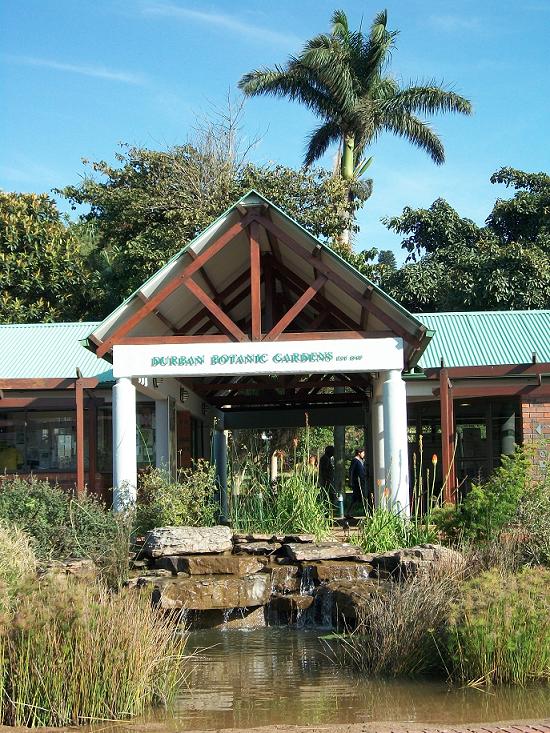
Durban Botanic Gardens is a garden in Durban, South Africa. Established in 1849, this 14-hectare garden showcases indigenous South African plants, cycads, palms, and orchids. Most visitors spend 1–2 hours here. The free Lokali audio guide runs 5 minutes.
✓ Verified August 2026 · how we write these guides
Visitor facts
| Time needed | 1–2 hours |
|---|---|
| Lokali audio guide | 5 min · free |
| Type | Garden |
| Best for | Local life |
| Location | Durban, South Africa |
| Coordinates | -29.8721, 31.0035 |
| Languages | 45, in the Lokali app |
The story
The air changes the moment you pass through the gate. It grows cool and green and still. The noise of the city fades behind you. You are in the Durban Botanic Gardens, the oldest public garden in the city. Tall trees close over the paths. Birds call from somewhere out of sight. Take a slow breath, and let your eyes adjust to the soft, filtered light.
The garden was founded in 1849. That makes it Durban's oldest surviving public institution. It began as a place to test which crops might grow in this warm and humid climate. Coffee, tea, and other plants were studied here in the early years. Over time the working garden became a place of beauty, kept for rest and learning rather than trade.
Follow the main path beneath the old trees. Many of them are very large, with wide trunks and high branches. Their roots spread across the ground in long, twisting ridges. The shade they cast is deep and welcome on a hot day. Some of these trees have stood here for well over a century, growing slowly, season after season.
The garden is known for its collection of cycads. These are ancient plants, older in their family line than most trees on Earth. They have thick, rough trunks and stiff, spreading leaves. Among them is a rare cycad called the Wood's cycad. The plant is now extinct in the wild, and every one that survives has been grown from a single original specimen.
Stand for a moment beside one of these cycads. Its shape has barely changed across millions of years. The leaves are hard and sharp to the touch. The trunk is rough like old bark and stone. To look at it is to look at a living thing from a far older world, one that has outlasted countless others around it.
Further along you will find the orchid house. Step inside, and the air turns warm and damp. Orchids hang and climb on every side, their flowers in many colours and shapes. Some are small and pale. Others are broad and bright. The room is quiet, and the only movement is the slow drip of water from the leaves above.
The garden also holds a wide lawn that slopes gently down toward a small lake. People sit here on the grass in the shade. Children run across the open space. The water is calm, and birds gather along its edge. On a warm afternoon, families spread blankets and stay for hours, in no hurry to leave.
Listen, and you will hear the birds. The garden is home to many kinds. Some call from the high branches. Others move quickly through the undergrowth. Weavers build their hanging nests near the water. The sound of them fills the air all day, rising and falling, a steady part of the life of the place.
There is a sunken garden as well, set below the level of the paths around it. Flowers grow in neat beds along its edges. A small stream runs through the lower ground. The air here feels even cooler and more sheltered. It is a good place to sit alone for a while and let your thoughts settle.
The Durban Botanic Gardens were built for everyone. There is no grand building at the centre, no single monument to walk toward. The plants themselves are the reason to come. They have been gathered, planted, and tended here for many generations, by gardeners whose names most visitors will never know.
That long care shows in every corner. The paths are clear. The lawns are trimmed. The rare plants are watched over and protected. A garden like this cannot be made quickly. It can only be grown, slowly and patiently, by people willing to plant trees whose full height they may never live to see.
Take your time as you walk. The garden gathers plants from many parts of the world, set side by side along the paths. Tall palms stand in long rows. Ferns crowd the shaded, damp corners. Flowering shrubs open in their own seasons, one after another through the year. Each turn in the path brings a new shape, a new colour, and a new smell. There is no single best route to follow. You can wander freely, take whichever way looks greenest, and let the garden lead you from one quiet corner to the next.
Before you leave, find a bench beneath one of the oldest trees and sit down. Look up through the leaves at the moving light. The garden has been here far longer than you, and it will remain long after. For this short while, it asks nothing of you but to be still and to notice it.
Key facts
What to look for
Practical tips
Common questions
How long do you need at Durban Botanic Gardens?
Plan 1–2 hours. That is the time most visitors spend at Durban Botanic Gardens. The free Lokali audio guide adds about 5 minutes of narration you can listen to as you walk, so it fits inside your visit rather than adding to it.
Is there a free audio guide to Durban Botanic Gardens?
Yes — the Lokali app narrates Durban Botanic Gardens free of charge in 50+ languages. It covers the history, what to look for on site and practical tips, and it works offline once downloaded.
Where is Durban Botanic Gardens?
Durban Botanic Gardens is in Durban, South Africa, at -29.8721, 31.0035. Tap the map link on this page for directions from where you are.
What should you know before visiting Durban Botanic Gardens?
Visit early morning for the coolest, quietest air.
What is Durban Botanic Gardens known for?
Durban Botanic Gardens was founded in 1849.
What is the best time to visit Durban Botanic Gardens?
Early morning brings bird activity and fewer visitors.
On the map
Opens directions to Durban Botanic Gardens from your location.
More to see in Durban



Hear Durban Botanic Gardens in your language
The full story, narrated, in 50+ languages. Download it before you go and it plays offline, at your own pace, with no ticket and no tour group.