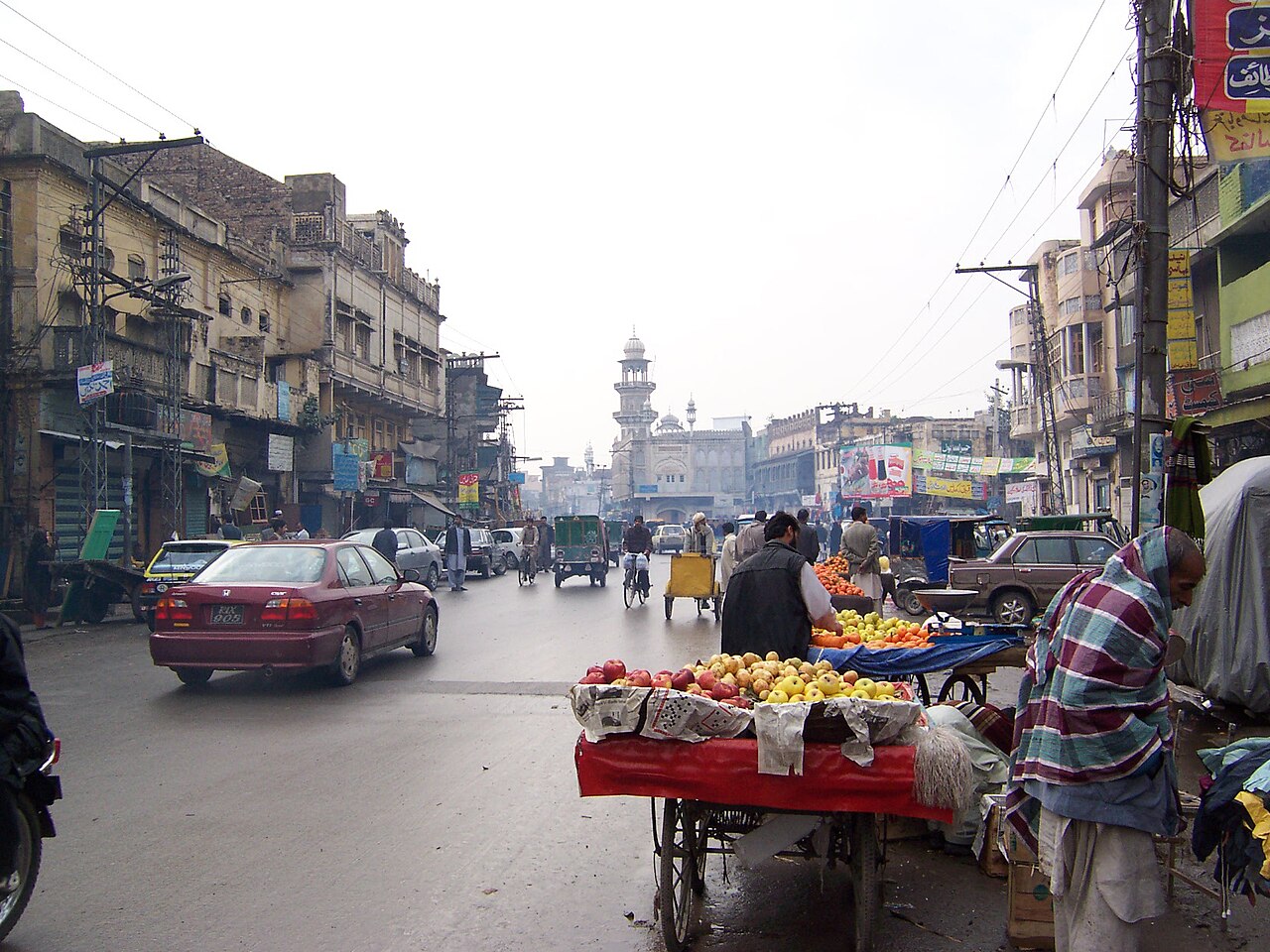
Gilgit Bazaar is the historic central market of Gilgit, selling traditional crafts, spices, dried fruits, and textiles. It is in Gilgit, Pakistan. Most visitors spend 1–2 hours here. The free Lokali audio guide runs 5 minutes.
✓ Verified August 2026 · how we write these guides
Visitor facts
| Time needed | 1–2 hours |
|---|---|
| Lokali audio guide | 5 min · free |
| Type | Market |
| Best for | Local life |
| Location | Gilgit, Pakistan |
| Coordinates | 35.9254, 74.3213 |
| Languages | 45, in the Lokali app |
The story
Sound reaches you first. Voices call out prices across the lane. Engines hum, and horns sound in the narrow streets. Somewhere a metal shutter rolls up with a clatter. You smell spices, fresh bread, ripe fruit, and dust warmed by the sun. People move past you on every side. You have arrived at the main bazaar of Gilgit, the heart of the town.
Gilgit is the largest town in this part of northern Pakistan. It sits in a broad valley where several mountain routes meet. For a very long time, it has served as a stop for travelers and traders moving between the high valleys. The bazaar grew out of this role. People still come here from the surrounding villages to buy, to sell, and to meet.
The market fills the center of the town. Shops line the main streets and the smaller lanes that branch off them. Some sell food. Others sell cloth, tools, shoes, or household goods. The shops are often small, and packed from floor to ceiling with their stock. Goods spill out onto tables and onto the edge of the street.
Food is everywhere in the bazaar. Sellers stack fruit in bright piles on their stalls. In season, you find apricots, apples, mulberries, and cherries grown in the local valleys. Dried fruit and nuts are sold loose, weighed out on simple scales. The region is known across the country for its apricots, which are dried in the sun and eaten all winter.
Bread is part of daily life here. Bakers work at round ovens set into the wall. They press the dough flat and bake it fast against the hot inner surface. The bread comes out warm, marked by the fire, and smells of smoke and flour. You can buy it fresh from the oven and eat it as you walk through the lanes.
The bazaar shows the mix of people who live across this region. Many communities meet here, each with its own language and its own dress. You may hear several languages spoken in a single lane. This mix comes from the valleys around Gilgit, which have long been home to different groups, each with its own customs and its own goods to trade.
Craft goods are sold here too. Look for woolen caps, warm shawls, and thick blankets made for the cold winters. Some shops sell gemstones from the surrounding mountains, which hold deposits of several kinds of stone. Others sell carpets, metal work, and copper pots. Prices are often open to friendly bargaining, so it is normal to talk before you buy.
The bazaar is busy throughout the day. Mornings are good for fresh food, when the sellers lay out what has arrived that day. The afternoon brings more people out into the streets. The pace is steady rather than rushed. Shopkeepers often pause to drink tea, to talk with neighbors, and to greet the customers they already know.
Moving through the market takes a little patience. The lanes are narrow, and there is a lot to take in. Cars, carts, porters, and people on foot all share the same space. Step to the side when a vehicle needs to pass. Take your time, look around as you go, and let the flow of the street carry you from one shop to the next.
This is a working market, not a place built for visitors. People come here for their daily needs, as they always have. That is part of its interest. You see ordinary life as it happens, hour by hour. When you buy something here, you take part in the same trade that has run in this valley for many years.
A few simple manners help a great deal. Ask before you take a photograph of a person, and accept a no with a smile. Greet shopkeepers before you ask about a price. A calm and friendly manner opens doors. Many sellers are glad to talk, to offer tea, and to tell you where their goods have come from.
Keep some small notes and coins ready, as not every shop can change a large note. Carry a bag for what you buy. The bazaar is a good place to gather food and warm clothing before a longer journey into the mountains, and many travelers stop here to do exactly that before heading on.
Find a quiet corner after a while, perhaps with a cup of sweet tea. Watch the market move around you. Goods change hands. Old friends meet and part. The same exchange has happened in this valley for a very long time, under these same mountains. In the bazaar, you do not only see Gilgit. You stand inside its daily life.
Key facts
What to look for
Practical tips
Common questions
How long do you need at Gilgit Bazaar?
Plan 1–2 hours. That is the time most visitors spend at Gilgit Bazaar. The free Lokali audio guide adds about 5 minutes of narration you can listen to as you walk, so it fits inside your visit rather than adding to it.
Is there a free audio guide to Gilgit Bazaar?
Yes — the Lokali app narrates Gilgit Bazaar free of charge in 50+ languages. It covers the history, what to look for on site and practical tips, and it works offline once downloaded.
Where is Gilgit Bazaar?
Gilgit Bazaar is in Gilgit, Pakistan, at 35.9254, 74.3213. Tap the map link on this page for directions from where you are.
What should you know before visiting Gilgit Bazaar?
Come in the morning for the freshest produce.
What is Gilgit Bazaar known for?
Located in the center of Gilgit town.
What is the best time to visit Gilgit Bazaar?
Go early morning before the heat peaks.
On the map
Opens directions to Gilgit Bazaar from your location.
More to see in Gilgit


Hear Gilgit Bazaar in your language
The full story, narrated, in 50+ languages. Download it before you go and it plays offline, at your own pace, with no ticket and no tour group.