
Photo: Bewahrerderwerte · CC BY-SA 4.0 · Wikimedia Commons
Glasgow Cathedral is a church in Glasgow, Scotland, UK. Saint Mungo, Glasgow's patron saint, lies buried in the lower church. The free Lokali audio guide runs 8 minutes.
✓ Published October 2026 · how we write these guides
Visitor facts
| Lokali audio guide | 8 min · free |
|---|---|
| Type | Cathedral |
| Location | Glasgow, United Kingdom |
| Coordinates | 55.8631, -4.2346 |
| Official website | glasgowcathedral.org.uk |
| Languages | 50+, in the Lokali app |
The story
Stand still for a moment and look at the stone. It is dark, almost charcoal in places, and rough under the fingertips. That darkness is not the colour the builders chose. The sandstone was once a warm, honey tone. Over generations, smoke from a great industrial city settled on these walls and stayed. What you are touching is medieval stone wearing a coat from the age of coal. Welcome to Glasgow Cathedral, the oldest building still in use at the heart of this city.
The story of this place begins long before the stone. It begins with a man. Saint Mungo, also known as Kentigern, is the patron saint of Glasgow. According to tradition, he came to this spot in the sixth century and built a small church beside a stream called the Molendinar Burn. Very little about his life can be confirmed by documents. Much of what we know comes from later writings, written centuries after his death, and they mix faith with legend.
Those legends are everywhere in Glasgow, once you know how to see them. Locals learn a little rhyme as children. Here is the bird that never flew, here is the tree that never grew, here is the bell that never rang, here is the fish that never swam. Each line points to a miracle told about Mungo. A robin he brought back to life. A frozen branch he set alight. A bell. And a fish that carried a lost ring. All four appear on the city's coat of arms.
The church you see today is not Mungo's. It is the work of later centuries. A cathedral was consecrated here in the twelfth century, and much of the present building rose through the thirteenth and fifteenth centuries. The style is Gothic. In simple terms, that means pointed arches, tall windows, and ribbed stone ceilings that carry weight down into columns. The aim was height and light. The aim was to make people look up. Walk inside, and you will feel that pull.
Here is the first surprise. Most of Scotland's great medieval cathedrals are ruins today. Saint Andrews, Elgin, Dunkeld — broken walls and open sky. In 1560, the Scottish Reformation swept away the old Catholic order, and many churches were stripped, abandoned, or left to fall. Glasgow's cathedral survived with its roof on. It is the most complete medieval cathedral on the Scottish mainland. Local tradition says the city's tradesmen gathered to defend it. Historians debate exactly what happened, but the building stands.
Once inside, look toward the far end of the nave. You will see a solid stone screen dividing the space. This is the pulpitum, a carved barrier that once separated the clergy from ordinary worshippers. Screens like this were common in medieval churches. Almost all of them were destroyed after the Reformation. This one remains — a rare survivor in Scotland. Notice the carved figures and the worn edges where centuries of hands and shoulders have brushed past. Then walk through it into the choir beyond.
The building has an unusual shape, and the reason is the ground beneath it. The cathedral sits on the slope of a hill, which falls steeply toward the old course of the Molendinar. The medieval builders did not flatten the land. Instead, they built down into it. At the eastern end, the floor of the upper church sits high above the hillside, and beneath it lies a second church. It is called the lower church, and it is the real heart of this place.
Go down the stairs. The air becomes cooler and the light grows soft. The lower church is a forest of thick columns and low vaults, the stone ribs crossing overhead like the branches of trees. In the middle lies the tomb of Saint Mungo. This was the goal of medieval pilgrims, who travelled long distances to pray here. Today it is usually quiet. Stand by the tomb for a minute, and listen. The sound of the city above simply disappears.
Here is a second surprise, this time from literature. In the novel Rob Roy, Sir Walter Scott set an important scene in this lower church. His hero hears a mysterious warning while sitting in a service among the pillars. Scott's novels were read across Europe in the nineteenth century, and they helped turn Scottish places into destinations. Some of the earliest literary tourists came here partly because of those pages. They wanted to stand in the same shadowy space they had imagined while reading.
Back upstairs, look for the Blacader Aisle. It sits below the south transept, the arm of the church that extends sideways. It is named after Robert Blacader, the first Archbishop of Glasgow, who built it around 1500. Look up at the ceiling. The stone ribs meet in carved bosses, small decorated knots of stone where the lines join. Some are flowers and leaves. Others are harder to read. Bring your eyes close to the details, and the ceiling becomes a gallery of small carvings.
Now turn your attention to the windows. Most of the stained glass is not medieval. The original glass was lost long ago. What you see today is largely the work of the twentieth century, especially from the decades after the Second World War. Artists filled these openings with deep blues, reds, and golds. On a bright afternoon, colour falls across the floor and moves slowly as the sun shifts. Compare different windows, and you will see changing styles and different ideas about faith and art.
The outside has changed too. Look at the west front, the end facing the square. It once had two towers. In the 1840s, they were taken down as part of a restoration that aimed to make the building look more uniform. Many people now see that decision as a loss. Today the central tower and spire rise alone above the roofline. Across the street stands Provand's Lordship, a stone house from the fifteenth century, often described as the oldest house in Glasgow.
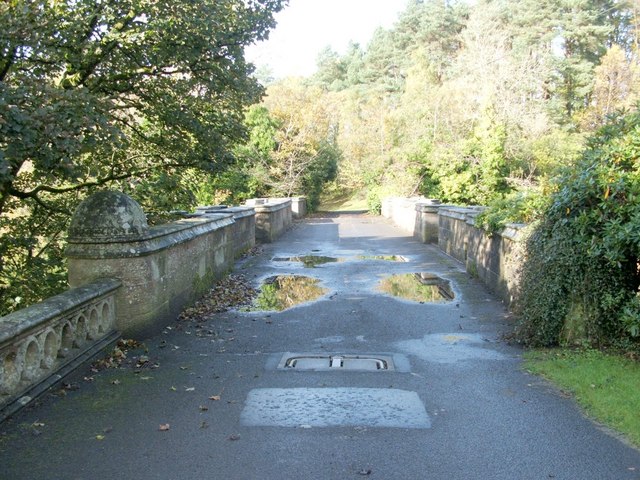
Behind the cathedral, a hill climbs toward the sky, covered with monuments. This is the Glasgow Necropolis, a Victorian garden cemetery for the city's merchants and industrialists. You reach it across a bridge that locals call the Bridge of Sighs. The Molendinar Burn once ran beneath it. Today the stream is hidden underground. At the summit stands a column with a statue of John Knox, the Protestant reformer. It is a strange sight, Knox looking down on the cathedral that survived his Reformation.
Before you leave, step back into the square and look again at those dark walls. Think of the layers here. A saint beside a stream. Pilgrims on their knees in the lower church. Reformers, novelists, merchants, and soot from a thousand chimneys. The building still holds services today, so this is not only a monument. It is a working church. As you walk away, listen for the bells or the organ, and notice how the old stone catches the last of the light.
Key facts
What to look for
Practical tips
Common questions
Is there a free audio guide to Glasgow Cathedral?
Yes — the Lokali app narrates Glasgow Cathedral free of charge in 50+ languages. The guide runs about 8 minutes, covers the history, what to look for on site and practical tips, and works offline once downloaded.
Where is Glasgow Cathedral?
Glasgow Cathedral is in Glasgow, United Kingdom, at 55.8631, -4.2346. Tap the map link on this page for directions from where you are.
What is Glasgow Cathedral known for?
Saint Mungo, Glasgow's patron saint, lies buried in the lower church. Most complete medieval cathedral on the Scottish mainland.
What should you look for at Glasgow Cathedral?
Soot-darkened sandstone on the exterior walls. The carved stone pulpitum screen at the end of the nave. Saint Mungo's tomb among the low columns of the lower church.
What should you know before visiting Glasgow Cathedral?
Head down to the lower church first, before tour groups arrive. Visit on a sunny afternoon to see colour from the windows.
On the map
Opens directions to Glasgow Cathedral from your location.
More to see in Glasgow


Hear Glasgow Cathedral in your language
The full story, narrated, in 50+ languages. Download it before you go and it plays offline, at your own pace, with no ticket and no tour group.