
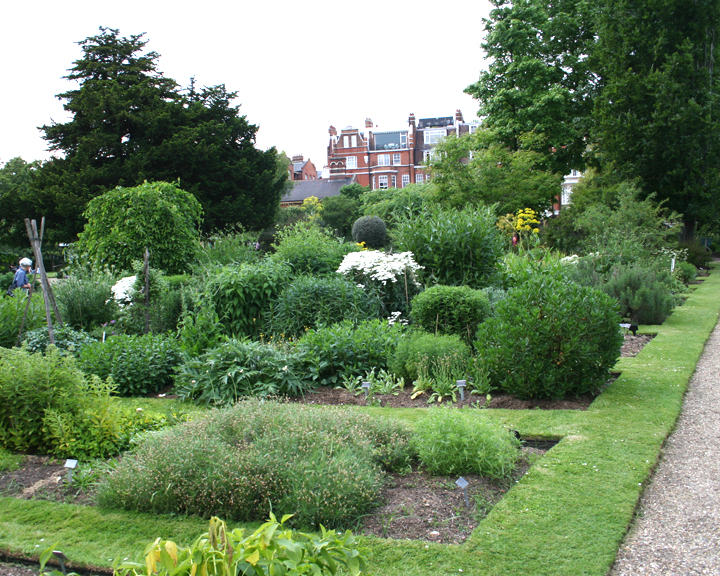
Photo: Gordon Joly · CC BY 2.5 · Wikimedia Commons
Battersea Park is a park in the Borough of Wandsworth, London, England, UK. Battersea Park opened to the public in 1858. The free Lokali audio guide runs 7 minutes.
✓ Published October 2026 · how we write these guides
Visitor facts
| Lokali audio guide | 7 min · free |
|---|---|
| Type | Park |
| Location | London, United Kingdom |
| Coordinates | 51.4793, -0.1573 |
| Official website | wandsworth.gov.uk |
| Languages | 50+, in the Lokali app |
The story
Listen first. Somewhere close by, a coot is scolding the water. A cyclist ticks past on the path. Beyond the trees, the Thames moves slow and brown. On a still morning you can smell cut grass, damp bark, and the faint river tang of mud at low tide. This is Battersea Park, on the south bank of the river, and almost everything you can see around you was made by people on purpose.
Before the park, this ground was Battersea Fields. It was low, marshy land, crossed by ditches and often wet underfoot. Market gardeners grew vegetables here for the city across the water. On Sundays the fields filled with crowds from London. They came to drink, to gamble, to watch pigeon shooting, and to enjoy a famously rough fair around a riverside tavern. To many respectable Victorians, it was a place of trouble.
The fields also hosted a moment of political theatre. In 1829, the Duke of Wellington, then Prime Minister, met the Earl of Winchilsea here for a duel. The quarrel was about Catholic emancipation, the move to give Catholics fuller civil rights. Wellington fired and missed, perhaps on purpose. Winchilsea fired into the air. Both men walked away unhurt. It is a strange thought — a sitting Prime Minister, pistol in hand, somewhere on this open ground.
By the middle of the nineteenth century, reformers wanted to tame the fields. They also wanted green space for a fast-growing, crowded city. Parliament backed the idea of a new royal park. The problem was the ground itself. It was too low and too wet. So the builders brought in enormous quantities of soil, including earth dug out during the excavation of London's docks. The land you are standing on was, quite literally, raised by hand and by cart.
The park opened to the public in 1858. Its designers gave it the shape you still feel today. There are long, curving carriage drives, a large ornamental lake, and planted islands. The Victorians liked a landscape that unfolds slowly. They wanted you to turn a corner and find a new view. As you walk, notice how the paths rarely run straight. That gentle bending was the whole idea.
One of the park's early showpieces was the Subtropical Garden. Victorian gardeners filled it with bold, exotic plants — palms, giant leaves, bright foliage — planted out each summer. At the time, this was a daring style. It caught the attention of gardeners across Britain. Today the garden still carries that spirit. In warm months, look for large-leaved plants that seem almost too dramatic for a London afternoon.
Now turn your attention towards the river. Here is the first surprise for many visitors. Rising above the trees by the water stands the Peace Pagoda. It was built in the 1980s by monks and nuns of a Japanese Buddhist order, Nipponzan Myohoji. The order builds peace pagodas around the world. Its gilded figures of the Buddha face outward, one on each side. A monk has long tended the site, and you may hear a drum or chanting on some mornings.
The riverside walk beside the pagoda is one of the quieter stretches of the Thames in central London. Across the water lies Chelsea, with its rows of handsome houses. Look along the river and you can see the Albert Bridge, with its delicate pastel ironwork, and Chelsea Bridge further downstream. At dusk, the Albert Bridge glows with hundreds of small lights. From this bank, the reflections stretch across the dark water.
A century after the park opened, it became a stage for national celebration. In 1951, Britain held the Festival of Britain, a showcase of recovery and optimism after the Second World War. The main exhibition stood on the South Bank. Battersea Park hosted the Festival Pleasure Gardens. There were fun-fair rides, music, fountains, and playful buildings. For many Londoners tired of rationing and bomb sites, it was colour and light after grey years.
Art lives quietly in these lawns, too. Look for Henry Moore's Three Standing Figures, a group of tall, stone women gazing outward together. Moore was one of the leading British sculptors of the twentieth century. Elsewhere, near the lake, stands Barbara Hepworth's Single Form, a smooth bronze shape with a hollow pierced through it. It honours Dag Hammarskjöld, a Secretary-General of the United Nations. Walk around both works. They change as the light moves.
Here is a second surprise. Somewhere in the park stands a small statue of a brown dog. It recalls a fierce Edwardian argument known as the Brown Dog affair. The original memorial protested against experiments on animals. It caused riots among medical students and was later removed. The dog you can find today is a replacement, set up much later. A small statue, but it carries a long and angry story.
The park is not only for quiet reflection. Families come for the children's zoo, the playgrounds, and the boating lake in summer. Runners loop the carriage drives in all weathers. Dog walkers gather in friendly clusters on the grass. Near the lake, the Pump House Gallery sits in an old Victorian building that once helped feed water to the lake and its cascades. Today it shows contemporary art.
Just east of the park, you may glimpse the chimneys of Battersea Power Station. For decades this brick giant stood empty. It has now been reborn with shops, homes, and offices. Its four white chimneys make a strong frame for photographs from the park's edge. Between the power station, the river, and the pagoda, this corner of London holds industry, faith, and leisure side by side.
Before you leave, pause where you are. Feel the ground under your feet — once a soggy marsh, raised by Victorian labour. Look at the trees, many of them planted generations ago. Listen again for the water birds, the distant traffic on the bridges, the voices drifting across the grass. As you walk out, notice how the city returns slowly, and how this green space keeps a little of its quiet with you.
Key facts
What to look for
Practical tips
Common questions
Is there a free audio guide to Battersea Park?
Yes — the Lokali app narrates Battersea Park free of charge in 50+ languages. The guide runs about 7 minutes, covers the history, what to look for on site and practical tips, and works offline once downloaded.
Where is Battersea Park?
Battersea Park is in London, United Kingdom, at 51.4793, -0.1573. Tap the map link on this page for directions from where you are.
What is Battersea Park known for?
Battersea Park opened to the public in 1858. Wellington fought a duel on Battersea Fields in 1829.
What should you look for at Battersea Park?
Four gilded Buddha figures facing outward on the pagoda. Henry Moore's three tall stone figures gazing together. The hollow pierced through Hepworth's bronze Single Form.
What should you know before visiting Battersea Park?
Visit early morning for calm water and birdsong. Walk the riverside path from pagoda towards Albert Bridge.
When is the best time to visit Battersea Park?
Stay for dusk to see Albert Bridge lights.
On the map
Opens directions to Battersea Park from your location.
More to see in London


Hear Battersea Park in your language
The full story, narrated, in 50+ languages. Download it before you go and it plays offline, at your own pace, with no ticket and no tour group.