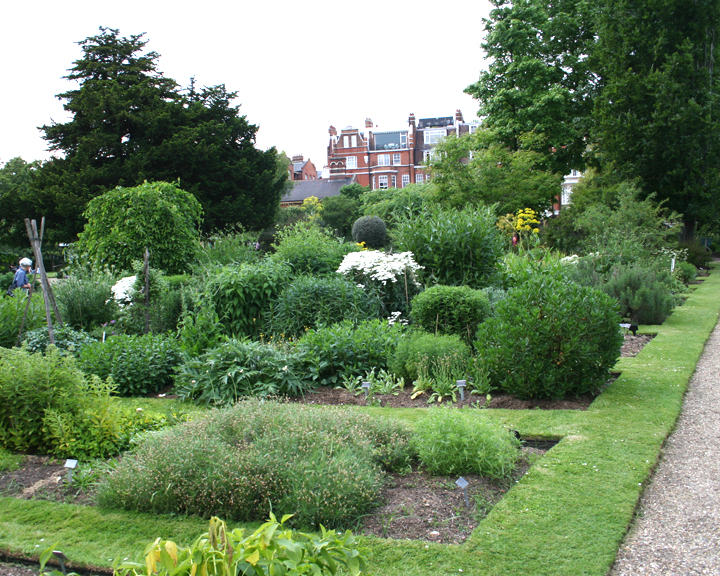
Chelsea Physic Garden
51.4850° N · 0.1628° W · Botanical Garden
Photo: flickr user flickr-rickr · CC BY-SA 2.0 · Wikimedia Commons
Chelsea Physic Garden is a botanical garden in London. Founded in 1673 by the Society of Apothecaries. The free Lokali audio guide runs 7 minutes.
✓ Published October 2026 · how we write these guides
Visitor facts
| Lokali audio guide | 7 min · free |
|---|---|
| Type | Botanical Garden |
| Location | London, United Kingdom |
| Coordinates | 51.4850, -0.1628 |
| Official website | chelseaphysicgarden.co.uk |
| Languages | 50+, in the Lokali app |
The story
Listen for a moment. Behind these old brick walls, the traffic of London fades into a soft hum. Gravel crunches underfoot. A bee works through a bed of herbs, and the air smells of crushed leaves... sage, mint, something sharper you cannot quite name. You are standing in one of the oldest botanic gardens in Britain, a walled square of green beside the River Thames.
This garden was never meant for pleasure. It was meant for medicine. In 1673, the Worshipful Society of Apothecaries founded it here in Chelsea. Apothecaries were the pharmacists of their day. They mixed remedies from roots, bark, seeds and flowers. Their apprentices needed to learn which plant could heal, and which plant could kill. So the Society built a living classroom, and the word physic, an old term for the science of healing, gave the garden its name.
Why Chelsea? In the seventeenth century, this was a riverside village well outside the crowded City of London. The Thames was the main road. The apothecaries could arrive by boat, and plants and goods could come in by water. The river also kept the soil mild and moist. Even today, you can feel that the air here is a little softer than in the streets outside.
In the early eighteenth century, the garden faced an uncertain future. Then a powerful neighbour stepped in. Sir Hans Sloane, a physician and collector, bought the manor of Chelsea in 1712. Ten years later, he leased the garden to the apothecaries for five pounds a year — and he set that rent forever. In return, the garden had to send dried plant specimens to the Royal Society every year, for decades. Look for his statue near the centre of the garden. Sloane stands in his robes, watching over the beds.
Here is a detail many visitors miss. Sloane's collections later helped to found the British Museum. So the man who secured this small garden also left a mark on one of the largest museums in the world. And the streets around you carry his name. Sloane Square and Hans Place are both close by.
Sloane also chose the right gardener. Philip Miller took charge here in 1722 and stayed for about fifty years. He wrote The Gardener's Dictionary, a huge guide that gardeners across Britain and beyond used for generations. Under Miller, the garden traded seeds and plants with gardens across Europe and the wider world. According to the garden's own history, cotton seed sent from here helped to start cotton growing in the American colony of Georgia. That is a long journey for a handful of seeds from a London garden.
Now turn your attention to the stones. Somewhere in this garden is a strange, dark rockery beside a pond. It dates from the 1770s, and it is often described as the oldest rock garden in Europe that the public can still visit. Part of it is made from black volcanic lava from Iceland. The explorer and botanist Joseph Banks brought that lava back from his travels. Other stones are said to come from old building work at the Tower of London.
The high walls do more than keep out the noise. Brick holds the warmth of the sun and releases it slowly at night. Together with the river and the heat of the city, this creates a sheltered microclimate. Plants that would struggle elsewhere in England can grow here. One surprise is the olive tree. It is often called the largest outdoor fruiting olive in Britain, and in good years it carries real olives.
Today the planting tells several stories at once. There are beds of medicinal plants arranged by the illnesses they have been used to treat. There are plants that gave us modern medicines, and plants used in traditional healing systems from many cultures. There are also poisonous plants, clearly labelled. A word of caution: please do not touch or taste anything. In this garden, the line between a remedy and a poison can be very thin.
As you walk, look at the small labels at the foot of the plants. Each one gives a scientific name, and many give the plant's family and origin. This system of two-part Latin names became the standard way to name living things in the eighteenth century. Miller was slow to accept it at first, but in later editions of his dictionary he used it. The labels you see today continue that habit of careful naming.
The garden has changed shape around the edges. In the nineteenth century, the Chelsea Embankment was built along the Thames. It pushed the riverbank back and put a busy road between the garden and the water. The old riverside entrance lost its purpose. So when you stand by the southern wall, remember that boats once came almost to this spot. The river is still there, just beyond the road, but the garden no longer touches it.
For most of its life, this was a private place for students and scientists. The apothecaries ran it for about two centuries, and later other bodies took over its care. In 1983, it became an independent charity, and it opened its gates to the general public. So, for most of its history, very few people could walk where you are walking now.
This remains a working garden. Gardeners still collect seeds, care for rare plants, and teach visitors about the uses of plants in food, medicine and daily life. The beds change with the seasons. Spring brings fresh green shoots, summer brings colour and scent, and autumn brings seed heads and fruit. Winter is quieter, but the bones of the garden — the paths, walls and old trees — are easier to see.
Before you leave, stand still once more. Listen for the gravel, the birds, the low sound of the road beyond the wall. Look at the plant closest to you and read its label. For more than three centuries, people have stood in this same square of ground and asked the same simple question: what can this plant do for us? As you step back into the streets of Chelsea, you carry that question with you.
Key facts
What to look for
Practical tips
Common questions
Is there a free audio guide to Chelsea Physic Garden?
Yes — the Lokali app narrates Chelsea Physic Garden free of charge in 50+ languages. The guide runs about 7 minutes, covers the history, what to look for on site and practical tips, and works offline once downloaded.
Where is Chelsea Physic Garden?
Chelsea Physic Garden is in London, United Kingdom, at 51.4850, -0.1628. Tap the map link on this page for directions from where you are.
What is Chelsea Physic Garden known for?
Founded in 1673 by the Society of Apothecaries. Sir Hans Sloane bought the manor of Chelsea in 1712.
What should you look for at Chelsea Physic Garden?
The statue of Sir Hans Sloane near the garden centre. Black Icelandic lava stones in the old pond rockery. The large olive tree growing outdoors in the walls' shelter.
What should you know before visiting Chelsea Physic Garden?
Visit in late spring or summer for the fullest planting. Bring a notebook to record plant names from the labels.
When is the best time to visit Chelsea Physic Garden?
Visit in late spring or summer for the fullest planting.
On the map
Opens directions to Chelsea Physic Garden from your location.
More to see in London


Hear Chelsea Physic Garden in your language
The full story, narrated, in 50+ languages. Download it before you go and it plays offline, at your own pace, with no ticket and no tour group.