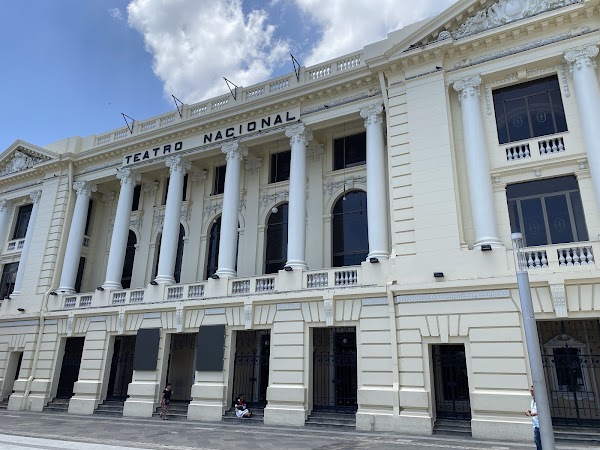
National Theatre of San Salvador
51.5055° N · 0.1167° W · Theatre
National Theatre of San Salvador is a theatre in London, United Kingdom. Brutalist landmark on the South Bank, opened in 1976. Most visitors spend 1–2 hours here. The free Lokali audio guide runs 6 minutes.
✓ Verified August 2026 · how we write these guides
Visitor facts
| Time needed | 1–2 hours |
|---|---|
| Lokali audio guide | 6 min · free |
| Type | Theatre |
| Best for | Local life |
| Location | London, United Kingdom |
| Coordinates | 51.5055, -0.1167 |
| Languages | 45, in the Lokali app |
The story
You step in from the noise of the street, and the air changes at once. The sounds of car horns and vendors fade behind you. Cool stone surrounds the entrance hall. Soft light falls from above. You are standing inside the National Theatre of San Salvador. It is one of the oldest theatres in all of Central America, and it has welcomed audiences for more than a hundred years.
The building opened its doors in 1917. At that time, the country wanted a stage that could match the grand theatres of Europe. A French architect named Daniel Beylard drew the plans. He worked in a French Renaissance style. That means smooth curves, tall columns, and careful balance on every side. The goal was simple. The theatre should feel important from the very first glance.
Stand for a moment in the square outside and study the front of the building. Columns rise toward the roof in an even row. Carved shapes and floral patterns decorate the pale surface. Large windows break up the wall. The design feels formal, yet it also invites you to come closer. Everything about the front tells you that something special waits inside these walls.
Now walk through the main entrance. The lobby opens around you in soft tones. Wide staircases climb toward the upper floors. The handrails are smooth from a century of hands. The materials are elegant but never heavy. Picture the crowds who once gathered here on opening nights. They arrived in their finest clothes, ready for an evening they would remember for years.
Then you reach the main hall, the true heart of the theatre. Rows of red seats curve outward in the shape of a horseshoe. Balconies rise in tiers above the floor. Each level is trimmed with warm, gold-colored detail. From almost every seat, the view of the stage is clear and direct. The room feels both large and close at the same time.
Lift your eyes toward the ceiling. A large painting spreads across the space above the audience. Soft figures and gentle color fill the surface. In daylight the painting is quiet and easy to miss. But when the house lights glow in the evening, it pulls the whole room upward. Your gaze travels from the stage, across the balconies, and up into that painted sky.
For more than a hundred years, this stage has carried every kind of performance. Plays and concerts. Ballet and opera. Local students and famous visiting companies have all stood under these lights. The theatre does not belong to one group alone. It belongs to the public. Generation after generation has come here to share the same room and the same stories.
The history of the building has not always been gentle. El Salvador lies in a region of frequent earthquakes. A powerful quake struck the city in 1986. The shaking left cracks across the walls and damaged the structure inside. For a while, no one was certain whether the theatre could survive. Its future hung in the balance, like a held breath.
The city chose to save it. Skilled workers repaired the halls, the seats, and the fine decorations one piece at a time. They wanted the next generation to inherit the very same space their grandparents had loved. That choice was an act of care. Today the building stands not only as a theatre, but also as proof of what a community decides to protect.
Take a moment to think of the people who have passed through these doors. Families dressed for a celebration. Young performers waiting in the wings before their first show. Musicians tuning quietly behind the heavy curtain. Ushers guiding guests to their seats in the dark. The walls have absorbed a full century of nervous hearts, deep breaths, and sudden waves of applause.
The theatre also sits in the old center of the city. Step outside again and you find open squares, historic churches, and long market streets close by. This corner has served as a stage for public life for generations. People meet here, and they celebrate here. The theatre is one strong anchor among many in this busy and meaningful part of San Salvador.
If a tour is open, follow it past the lobby and into the quieter rooms. Notice how the light moves through the windows. Listen to how your footsteps echo in the empty hall. A theatre at rest has its own kind of voice. It waits, patient and still, for the next audience to arrive and fill the silence with life.
Before you leave, pause once more in the main hall. Imagine the lights slowly going down. Imagine the first clear note rising in the dark. A theatre is far more than stone, paint, and red velvet. It is a promise. It says that people will gather here again, side by side, to watch a story unfold together.
Key facts
What to look for
Practical tips
Common questions
How long do you need at National Theatre of San Salvador?
Plan 1–2 hours. That is the time most visitors spend at National Theatre of San Salvador. The free Lokali audio guide adds about 6 minutes of narration you can listen to as you walk, so it fits inside your visit rather than adding to it.
Is there a free audio guide to National Theatre of San Salvador?
Yes — the Lokali app narrates National Theatre of San Salvador free of charge in 50+ languages. It covers the history, what to look for on site and practical tips, and it works offline once downloaded.
Where is National Theatre of San Salvador?
National Theatre of San Salvador is in London, United Kingdom, at 51.5055, -0.1167. Tap the map link on this page for directions from where you are.
What should you know before visiting National Theatre of San Salvador?
Check the theatre's schedule for evening plays and concerts.
What is National Theatre of San Salvador known for?
Inaugurated in 1917 in the historic center.
What is the best time to visit National Theatre of San Salvador?
Even without a ticket, explore the foyer and terraces — they are open to the public and offer river views.
On the map
Opens directions to National Theatre of San Salvador from your location.
More to see in London


Hear National Theatre of San Salvador in your language
The full story, narrated, in 50+ languages. Download it before you go and it plays offline, at your own pace, with no ticket and no tour group.