
Old Royal Naval College
51.4837° N · 0.0059° W · Archaeological Site
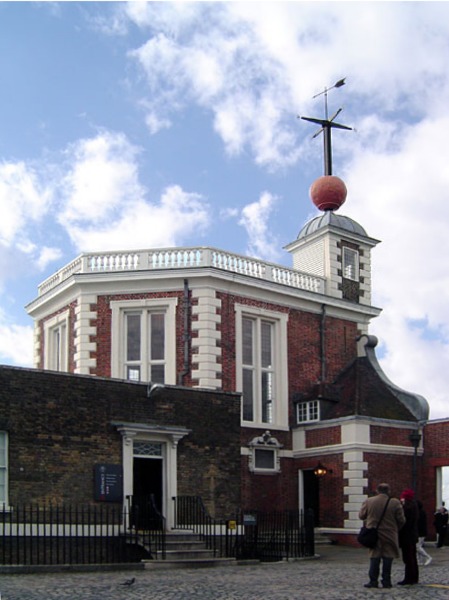
Photo: © Bill Bertram (Pixel8) 2007-08 · CC BY-SA 3.0 · Wikimedia Commons
Old Royal Naval College is an architectural landmark in Greenwich, London and UNESCO World Heritage Site. Designed by Sir Christopher Wren, who took no fee. The free Lokali audio guide runs 7 minutes.
✓ Published October 2026 · how we write these guides
Visitor facts
| Lokali audio guide | 7 min · free |
|---|---|
| Type | Archaeological Site |
| Location | London, United Kingdom |
| Coordinates | 51.4837, -0.0059 |
| Official website | ornc.org |
| Languages | 50+, in the Lokali app |
The story
Listen first. Gravel crunches underfoot, gulls call over the Thames, and somewhere behind you a boat engine idles at the pier. Ahead of you, two pale stone domes rise against the sky. They face each other across a wide lawn, like a pair of guards who never blink. Between them, the space stays open all the way down to the water. That empty gap is the most important thing here, and we will come back to it.
You are standing on ground that held royalty long before it held sailors. A Tudor palace once stood on this riverbank. It was called Greenwich Palace, or the Palace of Placentia. Henry the Eighth was born here, and so was his daughter, Elizabeth the First. Very little of that palace survives above ground today. But it explains why this stretch of the Thames mattered so much. Kings and queens arrived here by water, and the river was their front door.
The buildings in front of you came later. At the end of the seventeenth century, Queen Mary the Second wanted a home for injured and elderly seamen of the Royal Navy. The idea was a naval answer to the Royal Hospital at Chelsea, which cared for old soldiers. A royal charter in 1694 set the project in motion. So these grand courts were not built for princes. They were built for men who had lost limbs, eyesight, or health at sea.
The architect was Sir Christopher Wren, the man behind Saint Paul's Cathedral. He gave his services to the project without taking a fee. Other great names of English Baroque worked here too, including Nicholas Hawksmoor and Sir John Vanbrugh. Baroque, in simple terms, is a style of drama and grandeur — columns, domes, and long, ceremonial views. And that brings us back to the gap between the domes.
Here is the detail most visitors miss. Wren did not split the site in two only for beauty. Behind the college, up the slope, stands a small white building called the Queen's House, designed earlier by Inigo Jones. Queen Mary insisted that its view of the river must not be blocked. So Wren divided his hospital into separate halves and left a corridor of open air between them. Turn around now, and look up the lawn. That small white house is the reason this whole layout exists.
The site is arranged in four main blocks, known as courts. They carry royal names: King Charles Court, Queen Anne Court, King William Court, and Queen Mary Court. King Charles Court is the oldest part. It grew from a block started in the 1660s for a new palace that was never finished. Wren cleverly absorbed it into his own design. So when you look at the riverside fronts, you are looking at work from several decades, made to appear as one calm composition.
Under the dome on the King William side is the Painted Hall. It was meant as a grand dining room for the pensioners. In practice, it became far too splendid for everyday meals. The painter Sir James Thornhill spent around nineteen years covering its walls and ceiling. The result is one of the largest decorated interiors in Britain. People often call it Britain's Sistine Chapel, after the famous painted chapel in Rome.
The ceiling celebrates William and Mary, Protestant monarchy, and British power at sea. Figures of virtues, gods, and sea creatures crowd around the royal couple. At the far end, in the Upper Hall, look carefully. Thornhill painted himself into the scene, gesturing out towards the viewer. It is a quiet signature from a man who was proud of his long labour. A small surprise, hidden among kings and allegories.
The Painted Hall also holds a solemn memory. After Admiral Lord Nelson died at the Battle of Trafalgar in 1805, his body was brought back to England. In January 1806, he lay in state in this hall. Thousands of people came to file past his coffin before his funeral at Saint Paul's. For a few days, this room became the centre of a grieving nation. Many visitors walk through without knowing it.
Across the lawn, under the matching dome, is the Chapel of Saint Peter and Saint Paul. A fire in 1779 badly damaged the original interior. It was rebuilt in a lighter, more delicate style, led by James Stuart, a designer nicknamed "Athenian" Stuart for his love of ancient Greek design. Inside, you will find soft pastel colours and fine plasterwork. Compared with the Painted Hall, it feels calm and cool. The two domes look like twins outside, but inside they hold very different moods.
The pensioners left in the nineteenth century, and in 1873 the buildings became the Royal Naval College. For well over a century, naval officers trained here in science, engineering, and strategy. The Navy finally departed in 1998. Today, the University of Greenwich and Trinity Laban, a conservatoire of music and dance, use many of the buildings. So you may hear a violin practising through an open window, or see students crossing the courts with laptops.
This site is also part of Maritime Greenwich, a UNESCO World Heritage Site. That protected area includes the Queen's House, the Royal Observatory on the hill, and the park around them. The college has also become a popular film location. Its long colonnades, which are rows of columns, and its riverside fronts have appeared in many historical dramas. Directors like it because it can look like London, Paris, or Rome with very little disguise.
Before you leave, walk down to the river terrace. From here, you see the college as visitors arriving by boat were meant to see it. The two domes frame the view, the Queen's House sits between them, and the green slope of Greenwich Park climbs behind. Across the water, the towers of Canary Wharf rise in glass and steel. Old and new London face each other across the same tide.
Take a moment here. Notice the colour of the stone as the light changes on it. Listen for the boats, the gulls, and perhaps a few notes of music from the courts. This place began as a gift to worn-out sailors, and it still feels generous — open lawns, open views, open doors. As you walk away, glance back once at that gap between the domes. It was left empty on purpose, and it is still doing its job.
Key facts
What to look for
Practical tips
Common questions
Is there a free audio guide to Old Royal Naval College?
Yes — the Lokali app narrates Old Royal Naval College free of charge in 50+ languages. The guide runs about 7 minutes, covers the history, what to look for on site and practical tips, and works offline once downloaded.
Where is Old Royal Naval College?
Old Royal Naval College is in London, United Kingdom, at 51.4837, -0.0059. Tap the map link on this page for directions from where you are.
What is Old Royal Naval College known for?
Designed by Sir Christopher Wren, who took no fee. Founded as a hospital for retired Royal Navy seamen.
What should you look for at Old Royal Naval College?
Twin domes framing the white Queen's House behind. Thornhill's self-portrait in the Upper Hall ceiling. Pale pastel plasterwork inside the Chapel.
What should you know before visiting Old Royal Naval College?
Walk to the river terrace for the classic framed view. Visit the Painted Hall and Chapel to compare moods.
On the map
Opens directions to Old Royal Naval College from your location.
More to see in London



Hear Old Royal Naval College in your language
The full story, narrated, in 50+ languages. Download it before you go and it plays offline, at your own pace, with no ticket and no tour group.