Museo de las Momias
21.0147° N · 101.2583° W · Museum
Museo de las Momias is a macabre museum housing naturally mummified remains exhumed from the local cemetery between 1865 and 1958. It is in Guanajuato City, Mexico. Most visitors spend 30–45 min here. The free Lokali audio guide runs 5 minutes.
✓ Verified August 2026 · how we write these guides
Visitor facts
| Time needed | 30–45 min |
|---|---|
| Lokali audio guide | 5 min · free |
| Type | Museum |
| Best for | History |
| Location | Guanajuato City, Mexico |
| Coordinates | 21.0147, -101.2583 |
| Languages | 45, in the Lokali app |
The story
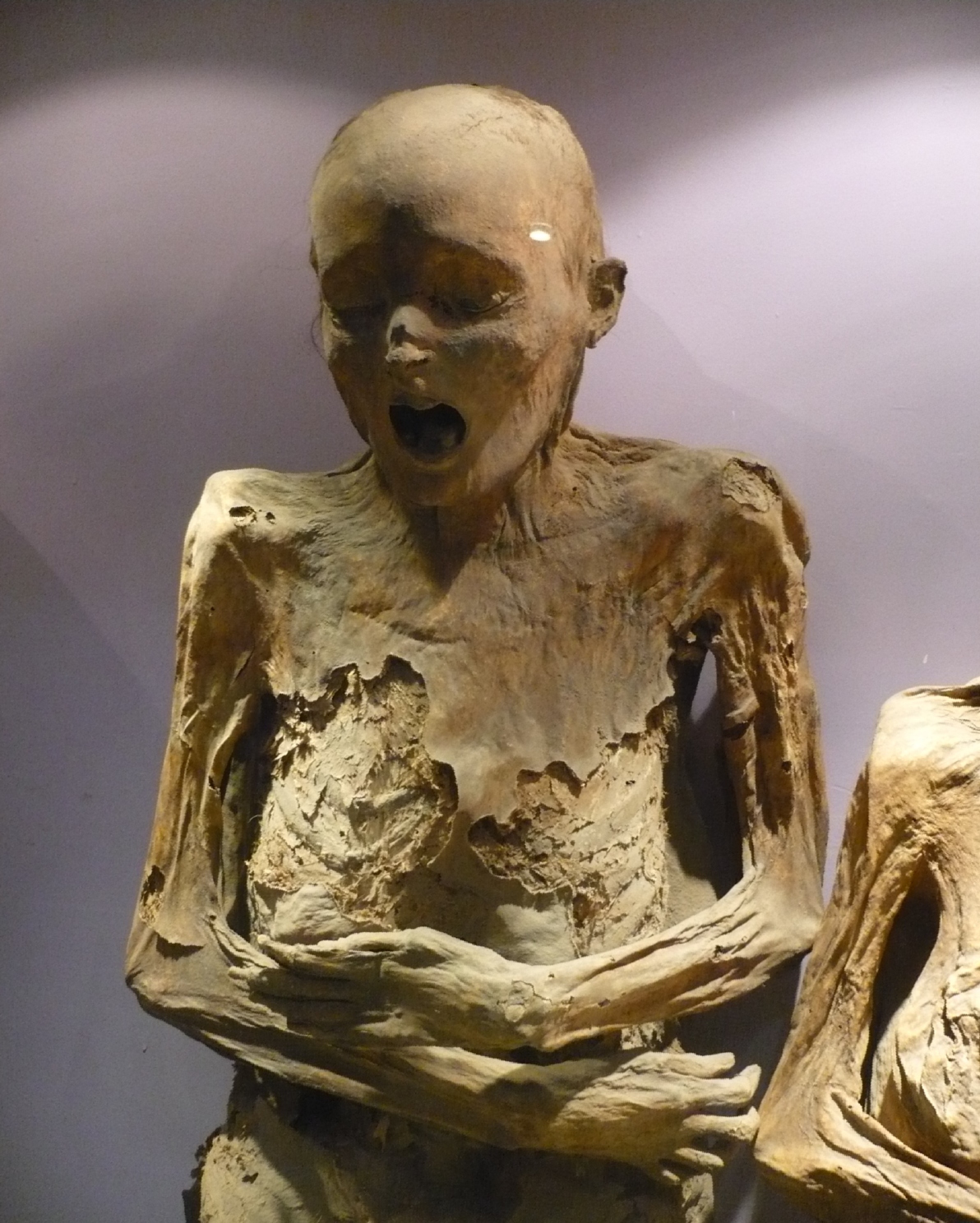
The room is cool and a little dim. Glass cases line the walls. Inside them stand and lie human figures, dried and darkened by time. Their faces are still here, mouths open, skin pulled tight over bone. This is the Museo de las Momias, the Mummy Museum of Guanajuato.
These are not ancient mummies wrapped in cloth. They are ordinary people from this city, buried in the local cemetery in the past two centuries. Something in the ground and the air here dried their bodies instead of letting them decay. The result is what you see in these cases. It still surprises the people who study it, and nothing about it was ever planned.
The story begins with a tax. In the middle of the nineteenth century, the city charged families a fee to keep a body buried in the cemetery. Those who could not, or did not, pay had their relatives removed from the ground to make room for others. It was a hard rule in a poor time, and many families could not meet it.
When workers dug up these graves, they found something they did not expect. Many of the bodies had not rotted away. Instead they had dried out and hardened. The dry climate, the minerals in the soil, and the sealed crypts had preserved them in a natural way. Each one was different from the next, and some kept their features in fine detail.
The first body was removed in 1865. Over the following years, more and more were taken from the ground. The dried bodies were kept rather than destroyed. People began to ask to see them. Word of the dried bodies spread quickly through the town. Cemetery workers started showing them to curious visitors, sometimes for a small coin.
In time this grew into a museum. The bodies were arranged in cases and rooms. The grave tax that started it all was finally ended in 1958. By then the collection had become well known, and people traveled from far away to walk among these silent figures. Few towns anywhere have a place quite like it.
Walk slowly past the cases. Each figure was once a living person with a name and a family. Some signs tell what is known of them, though for many the details are lost. You can see traces of their clothing, their hair, the lines of their faces. Take your time, for there is a lot to take in. Time has kept more than you might expect.
One of the smallest figures here is said to be among the smallest mummies in the world. It is the body of a very young child. Cases like this one are hard to look at. They remind us that the people here were not a strange other kind. They were people like us, with families who grieved them. Their grief was once as real as our own.
The natural process that made these mummies is real and well studied. No special chemicals were used. No one set out to preserve these bodies. Scientists have examined them to learn how the drying happened. The dry valley air and the mineral soil did the work on their own, quietly, over months and years underground.
Many visitors find the museum strange or unsettling. Others find it moving. In Mexico, death is not always hidden away. It is spoken of, painted, and remembered in festivals each year. This place fits into that older, calmer view of death as a part of life. Here the dead are remembered, not erased.
The museum has shaped how the wider world pictures Guanajuato. Writers, photographers, and filmmakers have all come here over the years. Their work carried these faces far beyond the city, in books and in film. For many people abroad, this quiet room is the first thing they learn about the town.
Be respectful as you walk through. The rules about photography change from time to time, so check the signs at the entrance. Move quietly, and give other visitors room. Whatever you feel here, remember that these were real people from this very city, laid to rest by families who loved them.
When you step back out into the daylight, the sun feels brighter than before. The noise of the street returns. You carry with you the quiet of that cool room. The people in those cases have no more words to give. But they ask, simply by being there, that we do not forget them, or the lives they once led.
Key facts
What to look for
Practical tips
Common questions
How long do you need at Museo de las Momias?
Plan 30–45 min. That is the time most visitors spend at Museo de las Momias. The free Lokali audio guide adds about 5 minutes of narration you can listen to as you walk, so it fits inside your visit rather than adding to it.
Is there a free audio guide to Museo de las Momias?
Yes — the Lokali app narrates Museo de las Momias free of charge in 50+ languages. It covers the history, what to look for on site and practical tips, and it works offline once downloaded.
Where is Museo de las Momias?
Museo de las Momias is in Guanajuato City, Mexico, at 21.0147, -101.2583. Tap the map link on this page for directions from where you are.
What should you know before visiting Museo de las Momias?
Check the entrance signs for current photography rules.
What is Museo de las Momias known for?
The first body was disinterred in 1865.
What is the best time to visit Museo de las Momias?
The museum is small and intense—most visitors spend 20-30 minutes.
On the map
Opens directions to Museo de las Momias from your location.
More to see in Guanajuato City


Hear Museo de las Momias in your language
The full story, narrated, in 50+ languages. Download it before you go and it plays offline, at your own pace, with no ticket and no tour group.