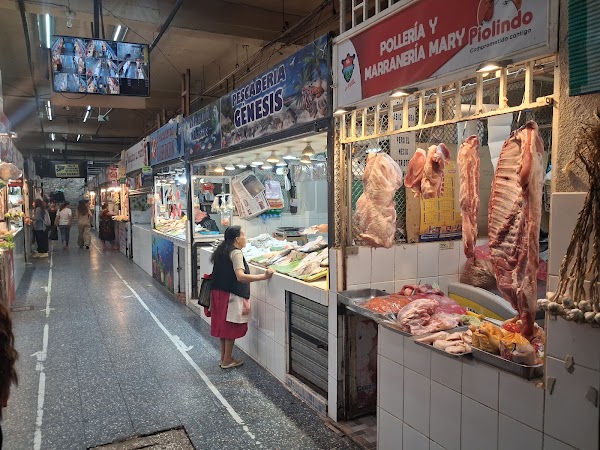
Central Market (Mercado Central)
14.6330° N · 90.5045° W · Market
Central Market (Mercado Central) is a sprawling underground market in the city centre, packed with vendors selling textiles, crafts, produce, and traditional Guatemalan goods. It is in Guatemala City, Guatemala. Most visitors spend 1–2 hours here. The free Lokali audio guide runs 5 minutes.
✓ Verified August 2026 · how we write these guides
Visitor facts
| Time needed | 1–2 hours |
|---|---|
| Lokali audio guide | 5 min · free |
| Type | Market |
| Best for | Local life |
| Location | Guatemala City, Guatemala |
| Coordinates | 14.6330, -90.5045 |
| Languages | 45, in the Lokali app |
The story
The smell reaches you first. Grilled meat, fresh herbs, and sweet ripe fruit mix in the warm air. Voices call out prices on every side. Color spills from each crowded stall. You have arrived at the Central Market. It hides behind the great cathedral, down in the heart of the old city. From the street, you might walk right past it.
The market is easy to miss at first. It does not rise up into the air. Instead, much of it sits below the level of the street. Above it lies an open plaza of plain concrete. You walk down into the market, rather than up a set of stairs. This unusual shape comes straight from the way the building was made. You drop below the noise of the traffic.
The market you see today is not the first one here. An earlier market stood on this spot for many years. Then, in 1976, a powerful earthquake struck Guatemala City. The old building was lost, along with much of the center around it. What you walk through now was built to replace it. Its low, strong shape was meant to stand against future quakes.
Go down the stairs into the market. The light changes as you descend. Above you, narrow gaps let in thin beams of sun. Below, the air is cooler and full of sound. Stalls press close on both sides of you. The paths between them are narrow. People move past with heavy bags and boxes. Let go, and give yourself to the flow. Keep one hand on your bag.
The upper levels sell crafts. Here you find the work of artisans from across the whole country. There are woven textiles in deep, strong colors. There are leather bags and belts, stiff and new. There are carved wood, painted ceramics, and worked silver. Many of these pieces come from distant towns and villages, gathered together here in one place.
Look closely at the textiles. Each region weaves its own patterns and colors. The shapes and shades can tell you where a cloth was first made. Run a piece of the fabric through your fingers. Much of it was woven by hand, on a simple wooden loom. The work behind a single finished piece can take many long days.
Move deeper, and the goods change around you. Beads and jewelry catch the thin light. Masks and small carvings line the walls. Bright blankets hang down from above your head. It becomes a wall of color on every side. Take your time as you go. The more closely you look, the more small, careful details you will find. Colors crowd in from every angle.
Now follow your nose downward again. The lowest level holds the food. Small kitchens cook simple meals all through the day. Pots steam over open flames. Tortillas warm on flat hot iron. Families sit elbow to elbow at shared wooden counters. This is where local people come to eat, not only visitors. The food is plain, fresh, and cheap.
Try to sit and eat something here yourself. Just point at whatever looks good to you. A bowl of soup, a plate of rice and meat, a cool sweet drink. The cooks are quick and kind with strangers. Eating down here is the best way to feel the real life of the market. For a while, you become part of its day. The warmth of the food revives you.
All around you, trade goes on as it has for generations. Buyers test the prices with care. Sellers wrap up goods in rough paper. Money passes from hand to hand. This is not a show built for visitors to watch. It is a working market that feeds and clothes the whole city. You are a guest inside its daily rhythm.
Remember to bargain, but do it gently. In the craft stalls, the first price is only a starting point. A calm, friendly back and forth is expected here. Smile as you talk. Offer a little less than they ask. Then meet somewhere in the middle. Both sides should leave the stall content. This small exchange is part of the visit. A fair price pleases both of you.
When you climb back up to the plaza, the daylight feels sudden and very bright. Behind and below you, the market keeps humming underground. It was rebuilt once from ruin, and it never stopped working since. In its narrow paths, the everyday life of the city carries on. One sale, and one shared meal, at a time.
Key facts
What to look for
Practical tips
Common questions
How long do you need at Central Market (Mercado Central)?
Plan 1–2 hours. That is the time most visitors spend at Central Market (Mercado Central). The free Lokali audio guide adds about 5 minutes of narration you can listen to as you walk, so it fits inside your visit rather than adding to it.
Is there a free audio guide to Central Market (Mercado Central)?
Yes — the Lokali app narrates Central Market (Mercado Central) free of charge in 50+ languages. It covers the history, what to look for on site and practical tips, and it works offline once downloaded.
Where is Central Market (Mercado Central)?
Central Market (Mercado Central) is in Guatemala City, Guatemala, at 14.6330, -90.5045. Tap the map link on this page for directions from where you are.
What should you know before visiting Central Market (Mercado Central)?
Go down to the lowest level for cheap meals.
What is Central Market (Mercado Central) known for?
Located behind the Metropolitan Cathedral in Zona 1.
What is the best time to visit Central Market (Mercado Central)?
Go in the morning when vendors are restocking and the energy peaks.
On the map
Opens directions to Central Market (Mercado Central) from your location.
More to see in Guatemala City


Hear Central Market (Mercado Central) in your language
The full story, narrated, in 50+ languages. Download it before you go and it plays offline, at your own pace, with no ticket and no tour group.