Monastery of Stoudios
40.9961° N · 28.9286° E · Archaeological Site
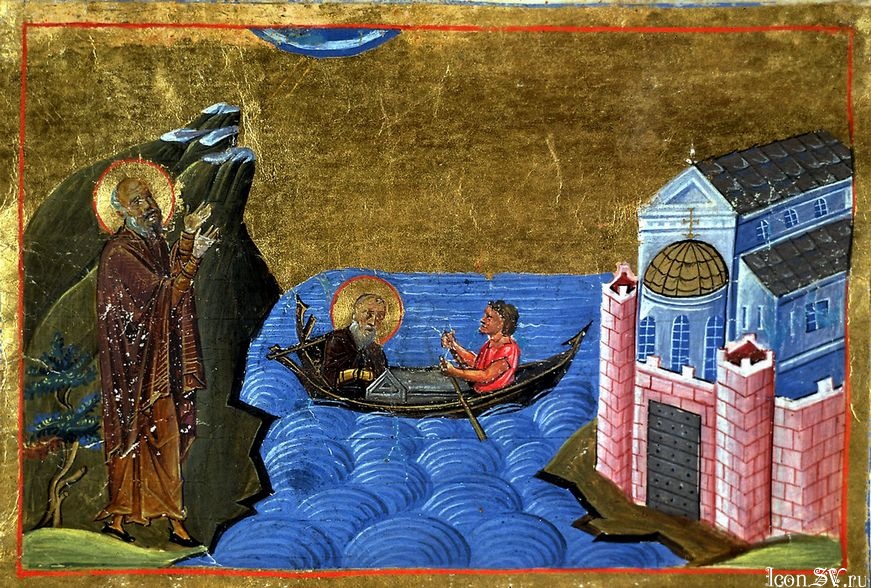
Photo: Authors of Menologion of Basil II (circa 985 AC, Constantinople), Byzantine manuscript ill · Public domain · Wikimedia Commons
Monastery of Stoudios is a Greek Orthodox monastery in Constantinople. It is in Istanbul, Türkiye. Founded in the mid-fifth century by the official Studius. The free Lokali audio guide runs 7 minutes.
✓ Published October 2026 · how we write these guides
Visitor facts
| Lokali audio guide | 7 min · free |
|---|---|
| Type | Archaeological Site |
| Location | Istanbul, Türkiye |
| Coordinates | 40.9961, 28.9286 |
| Languages | 50+, in the Lokali app |
The story
Stand still for a moment and listen. The traffic of the coastal road hums somewhere behind you, gulls call from the direction of the Sea of Marmara, and close by, the brick walls hold a different kind of quiet. Look at the masonry. Bands of thin red brick alternate with pale stone, the mortar thick between them. This is a Byzantine way of building, and these walls are among the oldest church fabric still standing anywhere in Istanbul.
You are in the south-western corner of the old city, not far from the great land walls that once guarded Constantinople. Today this quarter is a working neighbourhood of apartment blocks, corner shops, and tea gardens. Few tour buses stop here. That is part of the appeal. The monastery of Stoudios sits among ordinary streets, and you reach it the way locals reach their mosque, simply by walking down the road.
The story begins in the mid-fifth century. A wealthy Roman official named Studius, a man of high rank in the imperial court, paid for a church dedicated to Saint John the Baptist. A monastery grew around it. Over the centuries it took the name of its founder, and the Stoudios monastery became one of the most important religious houses in the whole Byzantine world. The Byzantines, remember, were the Greek-speaking continuation of the Roman Empire in the east.
The church followed the shape of a basilica. That means a long rectangular hall, divided into a central nave and two side aisles by rows of columns, with a rounded apse at the eastern end. It is the same basic plan that early Christians borrowed from Roman public buildings. Here, the columns were cut from fine marble, and some of them were a deep, mottled green. Stone like this was valued highly and travelled long distances to reach the capital.
The early monks here were connected to a community known as the sleepless ones. According to tradition, they organised themselves in shifts so that prayer and chanting in the church never stopped, day or night. Imagine it... a continuous thread of voices moving through these walls, hour after hour, year after year. Whether the practice lasted unbroken for long is hard to say, but the ideal shaped the reputation of the house.
The monastery's most famous figure arrived around the end of the eighth century. His name was Theodore, and history remembers him as Theodore the Studite. He became abbot and reorganised the community with a detailed rule. That rule covered work, prayer, meals, silence, and the copying of books. It was strict, practical, and carefully written down, and it made Stoudios a centre of learning as well as worship.
Here is something many visitors miss. Theodore's rule did not stay inside these walls. It spread to other monasteries, including communities on Mount Athos in Greece, and later it reached the lands of Kievan Rus, the early medieval state that grew into Ukraine and Russia. So the daily rhythm of countless Orthodox monks, far to the north and west, carried something that started right here, in this quiet corner of the city.
Theodore lived through a bitter conflict called Iconoclasm. In this period, some emperors ordered the removal or destruction of religious images, believing that their veneration was wrong. Theodore defended the icons fiercely. For this he was exiled more than once. The Stoudios monks became known as a stubborn and outspoken voice, sometimes in open tension with emperors and patriarchs. This was not a sleepy retreat. It was a place that argued with power.
The monastery also had a scriptorium, a workshop where monks copied manuscripts by hand. Studite scribes are linked to the spread of a smaller, faster style of Greek handwriting, which allowed books to be produced more efficiently. Hymns were written here too. Through these quiet desks and pens, the community helped carry Greek texts forward through the medieval centuries. Many of the books we still read from that world passed through hands like theirs.
Fortunes changed. When crusaders seized Constantinople in 1204, the city suffered heavily, and the monastery was damaged. It was later restored, but the empire itself was shrinking. After the Ottoman conquest in 1453, the church was converted into a mosque near the end of the fifteenth century. It took the name of an Ottoman official who held the post of master of the horse. Locals still call it the Imrahor Mosque, after that title.
Then came the earthquake of 1894. It struck Istanbul hard, and the old roof of the building collapsed. For more than a century afterwards, the interior stood open to the sky. Weeds grew between the marble. Rain fell where monks had once chanted. Generations of neighbours knew it only as a roofless ruin behind a wall. In recent years, after long restoration work, the building has been returned to use as a mosque.
As you look around, pay attention to the entrance porch at the western end. Its columns and the carved band of stone resting on top of them are among the finest surviving pieces of the original fifth-century work. The capitals are decorated with deeply cut acanthus leaves, a spiky plant motif inherited from classical Greece and Rome. Inside, parts of the old floor showed patterns of cut and fitted coloured marble. Look for the warm tones of brick against white stone.
If you visit while the building is open for worship, dress modestly, remove your shoes, and step quietly around those who are praying. Avoid prayer times if you wish to look around in peace. Remember that this is a living place of faith again, not a museum. That continuity is remarkable in itself. Prayers in Greek once filled this space. Now prayers in Arabic do, more than fifteen centuries after the first stones were laid.
Before you leave, stand outside and look once more at the walls. Brick, stone, brick, stone... layer upon layer, laid by hands that knew the Roman world. Around you, the neighbourhood carries on. A shop shutter rolls up, a child runs past, a kettle starts somewhere. As you walk back toward the sea, notice how easily this old building sits among new ones, keeping its long memory quietly, without asking anyone to look.
Key facts
What to look for
Practical tips
Common questions
Is there a free audio guide to Monastery of Stoudios?
Yes — the Lokali app narrates Monastery of Stoudios free of charge in 50+ languages. The guide runs about 7 minutes, covers the history, what to look for on site and practical tips, and works offline once downloaded.
Where is Monastery of Stoudios?
Monastery of Stoudios is in Istanbul, Türkiye, at 40.9961, 28.9286. Tap the map link on this page for directions from where you are.
What is Monastery of Stoudios known for?
Founded in the mid-fifth century by the official Studius. Oldest surviving church structure in Istanbul.
What should you look for at Monastery of Stoudios?
Alternating bands of red brick and pale stone. Carved acanthus leaf capitals on the entrance porch columns. Green mottled marble columns from the original basilica.
What should you know before visiting Monastery of Stoudios?
Dress modestly and remove shoes before entering the prayer hall. Visit outside prayer times for a quieter look inside.
On the map
Opens directions to Monastery of Stoudios from your location.
More to see in Istanbul


Hear Monastery of Stoudios in your language
The full story, narrated, in 50+ languages. Download it before you go and it plays offline, at your own pace, with no ticket and no tour group.