
Perperikon
41.7147° N · 25.4653° E · Archaeological Site
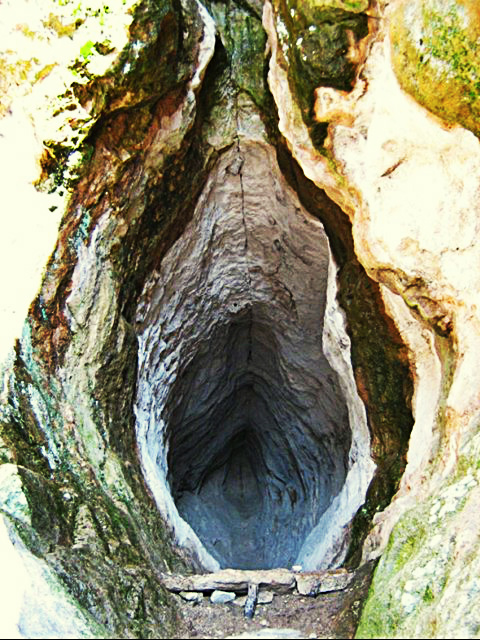
Photo: Nenko Lazarov · CC BY 2.5 · Wikimedia Commons
Perperikon is an archaeological site in Bulgaria. Human activity on the hill reaches back to prehistoric times. The free Lokali audio guide runs 8 minutes.
✓ Published October 2026 · how we write these guides
Visitor facts
| Lokali audio guide | 8 min · free |
|---|---|
| Type | Archaeological Site |
| Location | Kardzhali, Bulgaria |
| Coordinates | 41.7147, 25.4653 |
| Official website | perperikon.rim-kardzhali.bg |
| Languages | 50+, in the Lokali app |
The story
Listen to the ground under your shoes. It is not soil or paving here. It is living rock, pale and rough, worn smooth in places by thousands of years of feet. The wind moves over the ridge and carries the dry smell of oak scrub and warm stone. Around you, the low, rounded hills of the Eastern Rhodopes fold away in every direction. Welcome to Perperikon, a city cut directly into a mountain.
Perperikon sits on a rocky hill a short drive northeast of Kardzhali, in southern Bulgaria, close to the village of Gorna Krepost. Below the hill runs the small Perpereshka river. Take a moment to look at what surrounds you. Steps, walls, doorways, channels and basins are not built on top of the rock. Most of them are carved out of it. People did not bring stone here. They removed it, chisel stroke by chisel stroke, and left the spaces behind.
The story of this hill is very long. Archaeologists have found traces of human activity here from the late Stone Age, many thousands of years ago. Early communities seem to have treated the summit as a sacred place. Fragments of pottery, simple figures and traces of fire suggest ritual use long before any city stood here. The hill rises clearly above the valley, and you can understand why people felt drawn to it. From the top, the sky feels close and wide.
The people most closely linked to Perperikon are the Thracians. They were a group of ancient tribes who lived across much of the Balkans, and the Greeks wrote about them as fierce warriors, skilled horsemen and devoted worshippers. The Thracians did not leave many written texts of their own. Much of what we know comes from their tombs, their gold work, and sacred rock sites like this one. The Rhodope Mountains hold many such sites, but few are as large as this.
Here is the first surprise. Ancient writers mention a famous oracle of the god Dionysus somewhere in Thracian lands. Dionysus was the Greek god of wine, ecstasy and rebirth, and the Thracians honoured him with fire and wine poured on stone. The Roman writer Suetonius tells a story that the father of the emperor Augustus visited such an oracle. When wine was poured on the altar, the flames reportedly rose so high that the priests saw it as a sign of greatness for his son.
Nobody knows for certain where that oracle stood. Some archaeologists, including those who led modern excavations here, have argued that Perperikon is a strong candidate. Others believe the oracle may have been elsewhere in the Rhodopes. So treat this as an open question, not a settled fact. Still, as you walk past the carved basins and the round altar near the summit, it is easy to imagine wine running across the stone and smoke rising into the evening air.
Look closely at the rock under your feet as you climb. You will see narrow grooves running across the surface. Many of them likely carried rainwater, wine or other liquids during rituals, or simply drained water away from buildings. You will also see square sockets cut into vertical faces. These once held wooden beams for floors and roofs. The stone kept the outline of rooms long after the timber rotted away. In a sense, you are reading the floor plan of vanished houses.
Over the centuries, the sanctuary grew into a fortified settlement. In the Roman period, Perperikon became a town with streets, houses and strong defensive walls. The region was valuable. The rivers here carried gold, and gold mining in the surrounding valleys is part of the area's long history. Wealth attracted power, and power needed protection. That is why the walls you see along the slopes are thick and placed with care. They follow the natural line of the cliffs.
Near the summit stands the largest building complex, often described as a palace or sanctuary. Its rooms are cut deep into the hill, with walls of bare rock rising around you. Take a moment inside one of these spaces. Notice how the temperature drops slightly in the shade. Notice how sound changes when you speak. Your voice hits stone on several sides and comes back softened. This is how the rooms sounded to the people who used them.
Here is the second surprise. Perperikon did not end with the pagan world. In the early Christian era, a church was built here, and the town later became an important religious centre. In the Middle Ages, control of the fortress passed between the Byzantine Empire and the medieval Bulgarian state several times. Through all these changes, people kept living on this same hill. They simply reshaped the old rock for new beliefs and new rulers.
The long life of the city came to an end in the late medieval period, after the Ottoman conquest of the region in the fourteenth century. The fortress lost its importance, and the town was slowly abandoned. Earth and vegetation covered much of it. For a long time, the site was known mostly to locals and a few scholars. Large-scale excavations only began around the start of the twenty-first century, and work continues. Some parts of the hill may still hide undiscovered rooms.
As you move around the site, pay attention to the paths. The rock can be uneven and polished smooth, so it becomes slippery after rain. Good shoes make a real difference here. There is little shade near the summit, and on a clear summer day the stone holds the heat. Take your time on the steps. Pausing often is not only safer. It also gives you new views across the valley and back up toward the summit.
From the top, look out over the landscape. You can see forested ridges, open slopes, and the shape of the river valley below. This view helps explain the site. Whoever held this hill could watch the routes, the fields and the rivers for a long distance. The Thracian priest, the Roman soldier and the medieval bishop all stood roughly where you stand now. They looked at the same horizon, even if the forests and villages have changed.
Before you walk down, stop for a moment and place your hand on the rock. Feel how warm or cool it is. Run your fingers along one of the cut edges. Somebody shaped that edge with simple tools, thousands of years ago or perhaps a few hundred. As you descend, listen again to the wind across the ridge, and notice the grooves, sockets and steps you passed on the way up. They will look different now that you know what they once held.
Key facts
What to look for
Practical tips
Common questions
Is there a free audio guide to Perperikon?
Yes — the Lokali app narrates Perperikon free of charge in 50+ languages. The guide runs about 8 minutes, covers the history, what to look for on site and practical tips, and works offline once downloaded.
Where is Perperikon?
Perperikon is near Kardzhali, Bulgaria, at 41.7147, 25.4653. Tap the map link on this page for directions from where you are.
What is Perperikon known for?
Human activity on the hill reaches back to prehistoric times. Thracians used the summit as a rock-cut sacred site.
What should you look for at Perperikon?
Narrow grooves cut across the rock for channelling liquids. Square beam sockets carved into vertical rock faces. The round carved altar near the summit.
What should you know before visiting Perperikon?
Wear shoes with good grip for the polished rock. Bring water and sun protection for the exposed summit.
When is the best time to visit Perperikon?
Visit early or late in the day for softer light.
On the map
Opens directions to Perperikon from your location.
More to see near Perperikon
Hear Perperikon in your language
The full story, narrated, in 50+ languages. Download it before you go and it plays offline, at your own pace, with no ticket and no tour group.