
Nereid Monument
36.3547° N · 29.3202° E · Monument
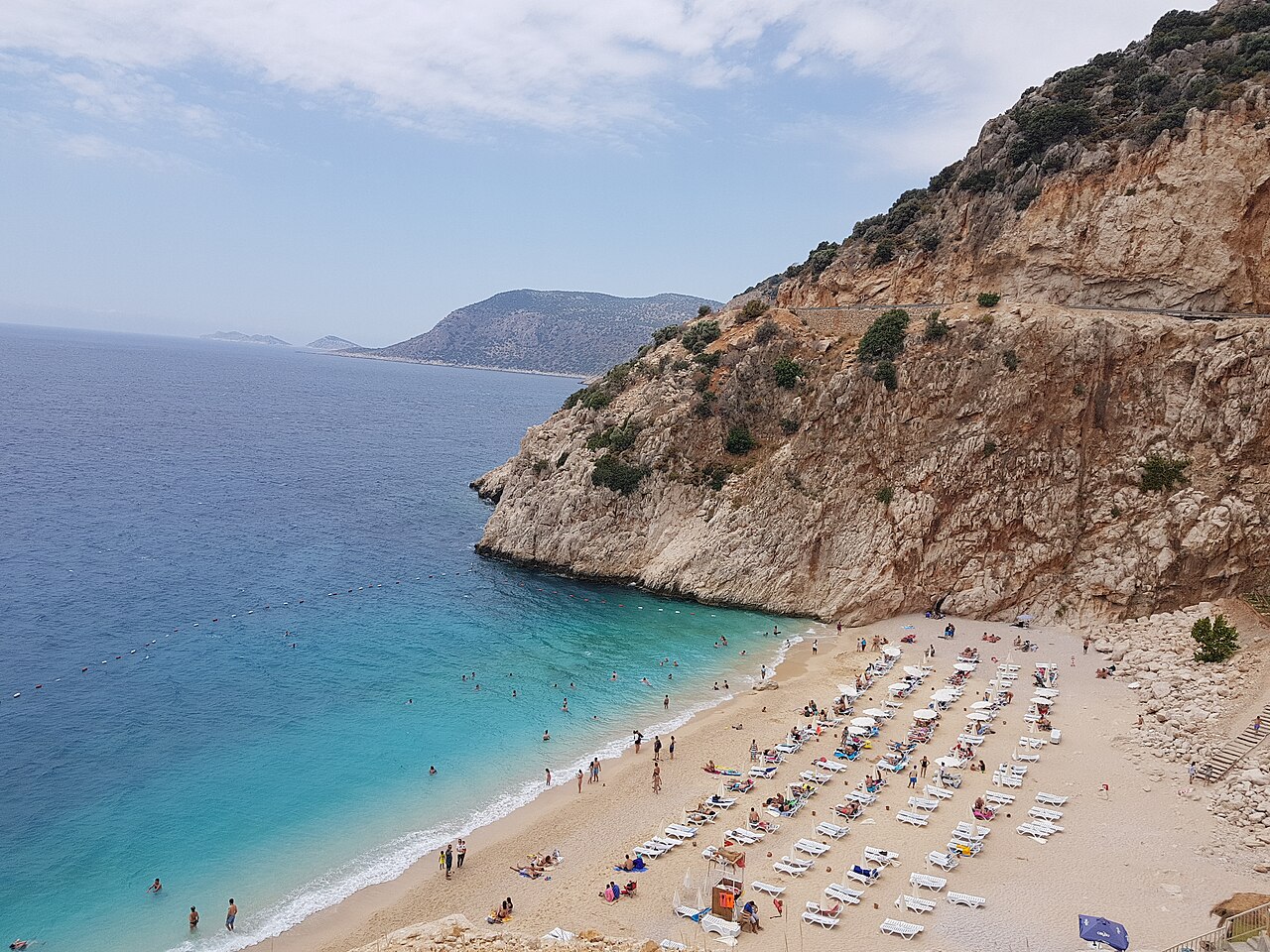
Photo: geni · CC BY-SA 4.0 · Wikimedia Commons
Nereid Monument is an antique sculptured tomb monument in Lycia (Turkey). Nereids were sea nymphs, daughters of the sea god Nereus. The free Lokali audio guide runs 7 minutes.
✓ Published October 2026 · how we write these guides
Visitor facts
| Lokali audio guide | 7 min · free |
|---|---|
| Type | Monument |
| Location | Kastellorizo, United Kingdom |
| Coordinates | 36.3547, 29.3202 |
| Languages | 50+, in the Lokali app |
The story
Listen first to the water. In the harbour of Kastellorizo it slaps softly against stone, against hulls, against the steps of the quay. The air smells of salt, diesel, and coffee from the tavernas along the waterfront. Somewhere a rope creaks as a fishing boat shifts on its mooring. Before we talk about names or dates, let that sound settle. Everything on this small island has always faced the sea, and so does the story we are about to follow.
A quick, honest note before we begin. The name Nereid Monument belongs to one of the most celebrated tombs of the ancient Mediterranean. That tomb was built far from here, in the Lycian city of Xanthos, on the Turkish mainland. I do not have verified records about the specific marker or memorial carrying this name in Kastellorizo. So I will not invent its builder or its date. Instead, let me show you why the name fits this island so well, and what you can see around you.
Start with the word itself. In Greek myth, the Nereids were sea nymphs, the daughters of the old sea god Nereus. Ancient poets said there were fifty of them. They rode on dolphins and sea creatures, calmed storms, and helped sailors find their way home. For an island that has lived by the sea for thousands of years, it is hard to think of more fitting guardians. Fishermen, sponge divers, and merchant captains all sailed out from this harbour, and many hoped for exactly that kind of protection.
Now look east, across the narrow strait. Those hills belong to Turkey. The town of Kaş sits only a few kilometres away, close enough that its lights show clearly at night. In ancient times, that whole coast was Lycia — a region of independent cities with their own language, their own gods, and a striking way of honouring their dead. Kastellorizo was part of that coastal world. Its people traded, married, and sailed back and forth across this water.
The original Nereid Monument rose in Xanthos, one of the leading Lycian cities, in the early fourth century before Christ. It looked like a small Greek temple raised on a tall stone base. Between its columns stood statues of women in wind-blown robes, as if they had just stepped out of the waves. Scholars usually identify them as Nereids. The building was a tomb for a local ruler, and its carved friezes showed battles, hunts, and banquets in his honour.
Here is the first surprise for many visitors. You cannot see that monument in Lycia today. In the nineteenth century, the British explorer Charles Fellows studied the ruins of Xanthos. Its sculptures were shipped to London, and the reconstructed front of the tomb now stands inside the British Museum. So one of the finest monuments of this coastline lives in a gallery more than two thousand kilometres away. A memorial in Kastellorizo with the same name carries an echo of that loss, and of a shared Lycian past.
The second surprise is closer to hand. Kastellorizo holds the only Lycian rock-cut tomb in Greece. It lies on the slope at the eastern edge of the harbour, near the old castle. Its front is carved straight into the cliff, shaped to look like a temple, with columns and a pediment cut from living rock. If you want to understand the world that produced the Nereid Monument, walk there. You will be standing in front of genuine Lycian work, on Greek soil.
Now come back to the present and look at the stone around you. Notice the colour of the local limestone — pale grey and honey, softened by salt and sun. Run your eyes over any carved surface and see how the wind has rounded its edges. Sea air is hard on stone. Over the years it eats fine detail and leaves smooth, almost polished curves. On a monument named for sea nymphs, that slow work of the sea feels oddly appropriate.
Turn toward the waterfront houses. Their facades are painted in strong, clear colours — ochre, deep red, blue, and white — with wooden balconies and shutters. Many were built when the island was a busy trading port with a much larger population than today. Through the twentieth century, war, changing borders, and emigration emptied much of the town. Large numbers of islanders settled in Australia, and many of their families still return in summer. You may hear an Australian accent at the next café table.
That emptiness and return give the harbour its particular mood. Some houses are restored and bright. Others stand roofless, with fig trees growing through old rooms. A memorial in this setting is not only about ancient myth. It also stands among the traces of people who left and the descendants who come back. When you look at the monument, look also at the windows behind it. Some are lit, some are dark.
The light here changes the whole scene. In the early morning, the water lies flat and the colours of the houses double in reflection. By midday, the sun is hard and white, and the stone looks bleached. Late in the afternoon, the light turns gold and slides low across the harbour. That is when carved surfaces show the most depth, because shadows fill every groove. If you can, return at that hour and see how different the same stone looks.
Small details reward patience. Watch the boats that come and go — the ferry from Rhodes, the water taxis to the sea caves, the small fishing craft painted in island colours. Notice the cats sleeping in shaded doorways, and the old men playing cards outside the cafés. Listen for the bells of the church on the hill. None of this is staged for visitors. It is simply the daily rhythm of the place, and the monument stands quietly inside it.
Before you move on, take one more look east toward the Lycian coast. Somewhere over there, among the ruins of Xanthos, an empty base marks the place where the original tomb once stood. Here, on this side of the strait, the name lives on beside the water the Nereids were said to guard. Myth, history, departure, and return all sit within a single view. Take a breath of that salt air, listen once more to the water against the quay, and let the harbour lead you onward.
Key facts
What to look for
Practical tips
Common questions
Is there a free audio guide to Nereid Monument?
Yes — the Lokali app narrates Nereid Monument free of charge in 50+ languages. The guide runs about 7 minutes, covers the history, what to look for on site and practical tips, and works offline once downloaded.
Where is Nereid Monument?
Nereid Monument is near Kastellorizo, United Kingdom, at 36.3547, 29.3202. Tap the map link on this page for directions from where you are.
What is Nereid Monument known for?
Nereids were sea nymphs, daughters of the sea god Nereus. Original Nereid Monument was a tomb in Lycian Xanthos.
What should you look for at Nereid Monument?
Sea-rounded edges where salt air has softened carved stone. Turkish coastline of ancient Lycia across the narrow strait. Temple-shaped facade of the rock tomb cut into cliff.
What should you know before visiting Nereid Monument?
Return in late afternoon when low light deepens carved surfaces. Walk east along the harbour to see the Lycian rock tomb.
When is the best time to visit Nereid Monument?
Look across the strait at dusk to see Kaş lights.
On the map
Opens directions to Nereid Monument from your location.
More to see near Nereid Monument


Hear Nereid Monument in your language
The full story, narrated, in 50+ languages. Download it before you go and it plays offline, at your own pace, with no ticket and no tour group.