
Ojców National Park
50.2067° N · 19.8292° E · National Park
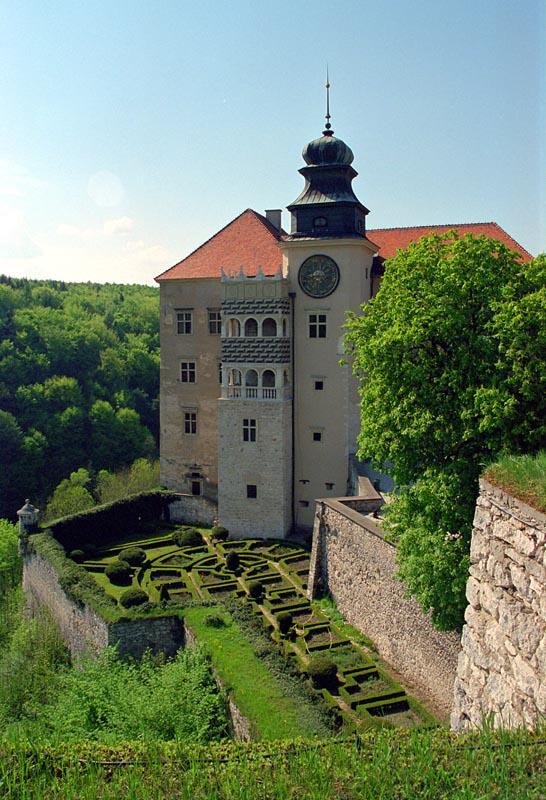
Photo: Aneta Pawska · CC BY-SA 3.0 pl · Wikimedia Commons
Ojców National Park is a national park of Poland. Smallest of Poland's twenty-plus national parks. The free Lokali audio guide runs 7 minutes.
✓ Published October 2026 · how we write these guides
Visitor facts
| Lokali audio guide | 7 min · free |
|---|---|
| Type | National Park |
| Location | Kraków, Poland |
| Coordinates | 50.2067, 19.8292 |
| Official website | opn.gov.pl |
| Languages | 50+, in the Lokali app |
The story
Listen first. Under the beech trees, the Prądnik stream runs fast and shallow over pale stones. The air is cool and smells of wet leaves and moss. Above you, white limestone cliffs rise out of the forest. They are grey in shadow and almost bright in the sun. Welcome to Ojców National Park, a narrow green valley only a short drive north of Kraków.
This is the smallest of Poland's national parks. It covers a strip of land so modest that you can walk across much of it in a single day. But size is not the point here. Ojców holds an unusual amount inside a small space. There are caves, castles, rock towers, wooden villas, rare plants and many species of bats. The valley feels much larger than the map suggests.
The park was founded in 1956 to protect this landscape. It sits at the southern end of a long limestone plateau. Poles call that plateau the Kraków-Częstochowa Upland, or simply the Polish Jura. The name points to the Jurassic period. In that age, around one hundred and fifty million years ago, a warm shallow sea covered this region. Sponges and other sea creatures lived and died there. Their remains slowly hardened into the limestone you see on every side.
Over a very long time, water did the rest. Rain and streams dissolved the soft rock and carved the valley deeper. They left behind the harder pieces as free-standing towers and cliffs. Look at the rocks closely. Many have rough, holed surfaces, like a sponge or old bread. Some cliffs are almost vertical. Others lean over the path. Each rock here has a local name, and many come with a story.
The most famous rock stands near the northern end of the valley. It is called Hercules' Club. It is a tall limestone pillar, narrow at the base and wider at the top, like a giant's weapon pushed into the ground. It looks like it should fall. It does not. Legend has it that the devil himself carried it here. Geologists give a simpler answer: the softer rock around it washed away, and the harder core remained.
Just behind Hercules' Club stands Pieskowa Skała Castle. It rises on a rocky ridge above the valley. The castle began as a medieval fortress and was later rebuilt in the Renaissance style. Its inner courtyard has elegant arcades on several levels. Today the castle is a museum connected to the royal collections of Wawel in Kraków. The pillar and the castle together make one of the most photographed views in southern Poland.
Pieskowa Skała is part of a longer chain. Across the Polish Jura, a line of medieval castles once guarded the western border of the kingdom. Many were built on rock outcrops, high and hard to reach. People call this route the Trail of the Eagles' Nests, because the castles sit on cliffs like birds' nests. In Ojców village itself, you can climb to the ruins of another of these castles. King Casimir the Great built it in the fourteenth century. Today a gate tower and fragments of wall remain above the valley.
Now to the caves. The limestone here is full of them — hundreds, in fact, though most are small. The best known is Łokietek's Cave. It is named after Władysław the Elbow-high, a short but determined king of medieval Poland. According to a popular tale, he hid in this cave from enemy soldiers. A spider spun a web across the entrance. The soldiers saw the unbroken web, decided no one was inside, and moved on. Historians cannot confirm the story. Locals tell it anyway, and children love it.
Other caves carry something more solid. Archaeologists have found traces of very early people in the caves of the valley, including Ciemna Cave, whose name means "dark cave". Stone tools and animal bones show that people used these shelters tens of thousands of years ago. So when you stand at a cave mouth here, you are standing where hunters once sheltered from the cold of the Ice Age. That is a surprise for most visitors, who come for the castles.
The caves also matter for another reason. They are home to bats. Ojców is one of the most important bat sites in Poland, with many different species. They hibernate in the cool, steady air of the caves through the winter. For this reason, some caves close to visitors in the cold months. If you see a sign or a closed gate, it is there to protect the sleeping animals.
Walk down to the valley floor near Ojców village and look for a small wooden chapel. It stands directly over the stream, on supports above the water. This is the Chapel on the Water. The story behind it is well known. In the late nineteenth century, this region was under Russian rule. A tsarist order banned building religious structures on Ojców land. The local people found a clever answer. If they could not build on the land, they would build over the water. The chapel was completed in the early twentieth century.
The village has another layer of history. In the nineteenth century, Ojców became a fashionable resort. Visitors came from Kraków and Warsaw for the clean air, the walks and the views. Wooden villas appeared along the valley, many with carved balconies and decorated gables in a Swiss style. Several still stand. Walk slowly past them. The dark timber, the painted trim and the steep roofs belong to an age when city people first discovered the pleasure of a weekend in nature.
The plant life deserves attention too. Because the valley has sunny cliff tops and shaded, damp floors, very different plants grow close together. On the warm rocks, you may find dry grasses and small hardy flowers. In the cool beech woods below, ferns and mosses cover the ground. The Ojców birch is a rare tree linked to this area. In autumn, the whole valley turns gold, copper and red against the white stone.
Before you leave, stop for a moment. Look up at the nearest cliff. Notice the black lines of water stains running down the pale rock. Listen to the stream, still working on the valley, very slowly, as it has for millions of years. When you walk back toward the road, watch for the small gaps and dark openings in the rock. Each one is a cave, a shelter, or simply a place where the water has passed.
Key facts
What to look for
Practical tips
Common questions
Is there a free audio guide to Ojców National Park?
Yes — the Lokali app narrates Ojców National Park free of charge in 50+ languages. The guide runs about 7 minutes, covers the history, what to look for on site and practical tips, and works offline once downloaded.
Where is Ojców National Park?
Ojców National Park is near Kraków, Poland, at 50.2067, 19.8292. Tap the map link on this page for directions from where you are.
What is Ojców National Park known for?
Smallest of Poland's twenty-plus national parks. Established as a national park in 1956.
What should you look for at Ojców National Park?
Hercules' Club pillar, wider at top than base. Wooden Chapel on the Water standing over stream. Sponge-like holes pitted across the limestone cliffs.
What should you know before visiting Ojców National Park?
Wear sturdy shoes for rocky, uneven valley trails. Bring a light jacket for cool cave interiors.
When is the best time to visit Ojców National Park?
Arrive early on weekends to avoid crowded paths.
On the map
Opens directions to Ojców National Park from your location.
More to see in Kraków


Hear Ojców National Park in your language
The full story, narrated, in 50+ languages. Download it before you go and it plays offline, at your own pace, with no ticket and no tour group.