
Photo: Stanlekub · Public domain · Wikimedia Commons
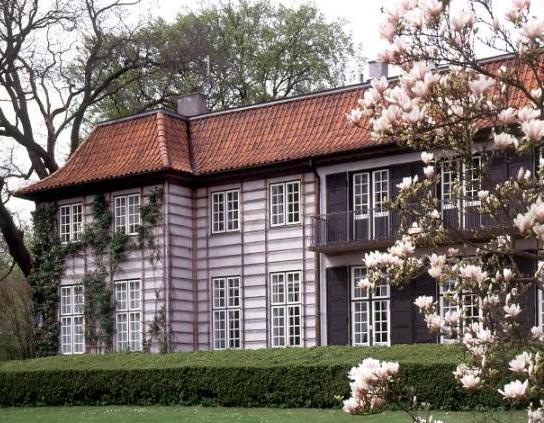
Uraniborg is an observatory constructed by Tycho Brahe. It is near Landskrona, Sweden. Tycho Brahe built Uraniborg on Ven in the 1570s. The free Lokali audio guide runs 7 minutes.
✓ Published October 2026 · how we write these guides
Visitor facts
| Lokali audio guide | 7 min · free |
|---|---|
| Type | Archaeological Site |
| Location | Landskrona, Sweden |
| Coordinates | 55.9079, 12.6966 |
| Languages | 50+, in the Lokali app |
The story
Listen first. Wind moves across open fields, and somewhere beyond them the sea breaks against a low coast. Underfoot there is grass and gravel, and in front of you a geometry of hedges, paths and planted squares. It looks like a quiet garden. But this patch of ground on the island of Ven once held one of the most important scientific buildings in Europe. Its name was Uraniborg, the castle of Urania, the Greek muse of astronomy.
You are standing in the middle of the Öresund, the narrow strait between Sweden and Denmark. Today Ven belongs to Landskrona Municipality in Sweden. When this place was built, however, the island was Danish. The Danish king Frederick the Second granted it to a young nobleman named Tycho Brahe in the 1570s. The king wanted to keep a brilliant mind at home. Tycho wanted a place where he could watch the sky without interruption. The island gave both of them what they wanted.
Tycho was already famous before he arrived. In 1572 he observed a new star blazing in the constellation Cassiopeia. Most scholars of his day believed the heavens beyond the Moon were perfect and unchanging. Tycho measured the new star carefully and showed that it did not move against the background stars. That meant it was far beyond the Moon. The heavens could change after all. It was a quiet but serious crack in an idea that had stood for many centuries.
So what did he build here? Uraniborg was a Renaissance manor house and observatory in one. It had living quarters, a library, a chemistry laboratory in the basement, and rooms on the upper floors for observing instruments. It stood at the centre of a square walled garden, laid out with careful symmetry. The whole design followed ideas of harmony and proportion that Renaissance thinkers loved. The building and the garden were meant to be read together, as one plan.
Here is the first thing many visitors miss. Tycho made his great discoveries without a telescope. The telescope had not yet been invented for astronomy. Everything here was done with the naked eye, using large measuring instruments of brass and wood. There were quadrants, sextants and armillary spheres. These are frames of rings and arcs used to measure the angles between stars. Tycho made them bigger and steadier than anyone before him, and he checked his results again and again.
The instruments at Uraniborg had a problem. Wind shook them, and the upper floors were not stable enough for the precision Tycho demanded. His answer was clever. A short walk from here, he built a second observatory called Stjerneborg, the castle of stars. Its instruments sat in chambers dug partly into the ground, shielded from the wind. You can visit the reconstructed site today. Standing there, you can picture assistants crouched beside cold brass rings on a clear winter night.
Tycho did not work alone. Ven became a small research community, with students and assistants who recorded observations night after night over many years. The island also had a printing press, so Tycho could publish his own work. He even arranged a paper mill to supply it. In a way, Ven was an early research institute. It had people, tools, a library, and a way to share results. That combination feels very modern when you stand in this quiet field.
Tycho himself was a vivid character. As a student he lost part of his nose in a duel with another nobleman. For the rest of his life he wore a replacement made of metal. Stories about his household also survive. One well-known tale says he kept a tame elk that drank too much beer at a dinner, fell down a staircase and died. It is a story repeated for centuries, so treat it as colourful lore rather than firm history.
The golden years did not last. After King Frederick died, Tycho lost royal favour. He quarrelled with the new court and with the people of Ven, who resented his demands. In 1597 he left the island for good. He eventually settled in Prague, where he died in 1601. Before his death he worked with a young assistant named Johannes Kepler. Kepler later used Tycho's precise observations of Mars to show that planets move in ellipses, not perfect circles.
That is the second surprise of this place. The data gathered on this small island helped build modern astronomy. Tycho himself never accepted that the Earth moves around the Sun. He proposed his own model instead. Yet his measurements were so accurate that they gave Kepler the evidence he needed. In a sense, the ideas Tycho resisted were proven with his own numbers. The quiet ground around you carried the raw material for a revolution.
And what happened to the castle? After Tycho left, Uraniborg fell into ruin. Its stone and brick were taken away and reused, and within a few generations little stood above ground. In 1658 Ven passed from Denmark to Sweden along with the rest of the region. Today you see the outline of the foundations and the reconstructed Renaissance garden. The garden follows the old symmetrical plan, with beds of herbs, fruit trees and clipped hedges.
Take a moment to walk the garden paths. Notice how they cross at the centre, where the house once stood. Look at the low walls and the way the space opens towards the sky on every side. Nearby, the Tycho Brahe Museum tells the story in more detail, with models of the house and its instruments. The island around you is mostly farmland, and many visitors explore it by bicycle, past fields, small villages and steep cliffs above the water.
Before you go, look up. The same sky that Tycho measured is above you now. On a clear night over Ven, with little light from towns, the stars would look much as they did to him. Listen again to the wind and the sea. Then walk slowly back along the path, and imagine the brass instruments, the patient assistants, and the long nights of counting. Every careful measurement began right here, on this quiet ground.
Key facts
What to look for
Practical tips
Common questions
Is there a free audio guide to Uraniborg?
Yes — the Lokali app narrates Uraniborg free of charge in 50+ languages. The guide runs about 7 minutes, covers the history, what to look for on site and practical tips, and works offline once downloaded.
Where is Uraniborg?
Uraniborg is near Landskrona, Sweden, at 55.9079, 12.6966. Tap the map link on this page for directions from where you are.
What is Uraniborg known for?
Tycho Brahe built Uraniborg on Ven in the 1570s. Ven was Danish until it passed to Sweden in 1658.
What should you look for at Uraniborg?
Foundation outline marking where the castle once stood. Symmetrical garden paths crossing at the central point. Herb beds and fruit trees in the reconstructed garden.
What should you know before visiting Uraniborg?
Rent a bicycle near the harbour to explore the island. Visit the Tycho Brahe Museum for models of the castle.
On the map
Opens directions to Uraniborg from your location.
More to see near Uraniborg


Hear Uraniborg in your language
The full story, narrated, in 50+ languages. Download it before you go and it plays offline, at your own pace, with no ticket and no tour group.