
Academy Museum of Motion Pictures
34.0633° N · 118.3608° W · Museum
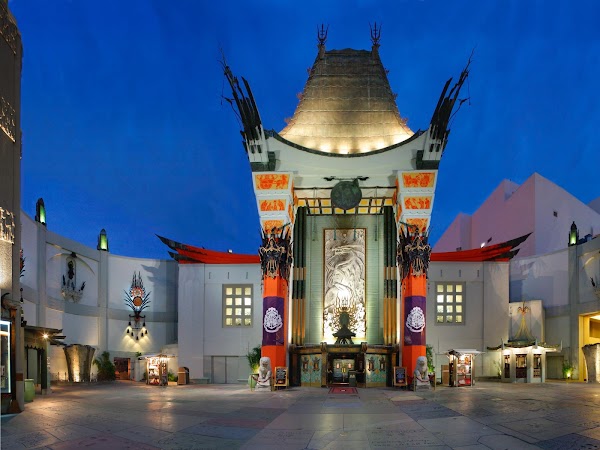
Photo: Carol M. Highsmith · Public domain · Wikimedia Commons
Academy Museum of Motion Pictures is a Los Angeles museum dedicated to films and filmmaking. The Academy behind the Oscars was founded in 1927. The free Lokali audio guide runs 7 minutes.
✓ Published October 2026 · how we write these guides
Visitor facts
| Lokali audio guide | 7 min · free |
|---|---|
| Type | Museum |
| Location | Los Angeles, United States |
| Coordinates | 34.0633, -118.3608 |
| Official website | oscars.org |
| Languages | 50+, in the Lokali app |
The story
Stand at the corner of Wilshire Boulevard and Fairfax Avenue and look up. A tall cylinder of small gold tiles catches the afternoon sun and throws it back at the traffic. The light is warm, almost syrupy, the colour of an old film premiere. Behind you, buses hiss at the kerb and people cross towards the lawns of Museum Row. This corner has been a landmark for a long time. What you are looking at now is a building that changed its whole purpose, without losing its face.
This is the Academy Museum of Motion Pictures. It belongs to the Academy of Motion Picture Arts and Sciences — the same organisation that hands out the Oscars every year. The Academy was founded in 1927, in the early days of Hollywood. For most of the century that followed, it had no large public museum of its own. That changed in the autumn of 2021, when these doors finally opened. For an institution so closely tied to film, the wait was surprisingly long.
Here is the first thing many visitors miss. The golden cylinder was not built for movies at all. It was the corner of a department store. The May Company opened its store here in 1939, in a style called Streamline Moderne. That is a late version of Art Deco, with smooth curves and long horizontal lines, inspired by the shape of trains and ocean liners. The gold tower was a kind of advertisement. It signalled glamour and shopping to people driving past.
Today that old store is called the Saban Building. Its curved corner and gold tiles were carefully restored. Inside, the floors that once sold coats and kitchenware now hold galleries, a shop, and a café. Walk through the ground floor and notice the scale. The ceilings and wide open spaces still feel like a place built for crowds. The building kept its shape. It only changed its story.
Now look past the old store, towards the back of the site. There you will see something completely different — a huge sphere of glass and concrete, lifted off the ground on supports. The Italian architect Renzo Piano designed this new structure. He is known for buildings that feel light and full of air. Here, the sphere seems to float above the plaza. Locals have given it playful nicknames, and some compare it to a giant soap bubble.
Inside the sphere is the David Geffen Theater, a large cinema built for proper screenings. On top, under a curved glass dome, sits an open terrace. From up there, on a clear day, you can see the Hollywood Hills and, if the air is kind, the Hollywood Sign. Glass bridges connect the sphere to the old store. Crossing one, you walk from 1939 into the twenty-first century in only a few steps.
That contrast is the heart of the place. One building comes from the golden age of the department store. The other looks almost like science fiction. Together they say something about cinema itself. Film is an old art, more than a century old now, but it keeps reinventing its tools. Here, the architecture does the same thing. The past is kept, and the future is added on top.
Now step into the galleries. The museum is not only a hall of famous objects. It tries to show how films are actually made. You will find rooms about screenwriting, costume, makeup, sound, and visual effects. Some displays explain the craft of people whose names you rarely see in big letters. Editors, set designers, and composers get real attention here. For many visitors, this is the second surprise — the museum celebrates the whole crew, not only the stars.
Of course, there are famous objects too. One of the best known is a pair of ruby slippers from The Wizard of Oz. Several pairs were made for that film, and only a few survive. Look closely if you can. The sequins are small, and the red is deeper than most people expect. Standing in front of them, people often go quiet. It is a little like meeting a childhood memory in person.
Another crowd favourite hangs from above. It is a full-size shark associated with Jaws, the 1975 thriller that changed summer movies forever. The crew nicknamed their mechanical sharks Bruce. Often the machines broke down during filming in the ocean. Because of that, the director showed the shark far less than planned. Many critics say that this made the film more frightening. Sometimes, a problem on set becomes the film's greatest strength.
The museum also looks honestly at the history of the industry. Some exhibitions discuss who was left out of Hollywood's story — and who was shown unfairly on screen. These rooms ask questions, not only answer them. Exhibitions change over time, so what you see today may differ from what a friend saw last year. That is part of the design. The collection is large, and the museum rotates it to tell new stories.
If you like a bit of theatre yourself, look for the Oscars experience. It lets visitors walk onto a recreated stage and hold a real statuette, while the sound of applause fills the room. It is a little silly, and a little moving. You can also find displays of Oscar statuettes themselves, in their famous gold figure. After seeing the gold tower outside, you may notice how much gold runs through this place.
Before you leave, step outside into the open space between the buildings. Next door is the Los Angeles County Museum of Art, and a short walk away are the La Brea Tar Pits, where scientists still study Ice Age fossils. This stretch of Wilshire Boulevard holds art, deep time, and cinema side by side. It is an unusual neighbourhood for a museum about dreams made of light.
So take one last look up. The gold cylinder still catches the light, as it did for shoppers in the 1930s. The glass sphere still floats behind it. Cars move along Wilshire, and somewhere in the city, someone is probably filming right now. As you walk away, listen to the street for a moment. In Los Angeles, every corner can look like a scene. This one simply knows it.
Key facts
What to look for
Practical tips
Common questions
Is there a free audio guide to Academy Museum of Motion Pictures?
Yes — the Lokali app narrates Academy Museum of Motion Pictures free of charge in 50+ languages. The guide runs about 7 minutes, covers the history, what to look for on site and practical tips, and works offline once downloaded.
Where is Academy Museum of Motion Pictures?
Academy Museum of Motion Pictures is in Los Angeles, United States, at 34.0633, -118.3608. Tap the map link on this page for directions from where you are.
What is Academy Museum of Motion Pictures known for?
The Academy behind the Oscars was founded in 1927. The museum opened to the public in autumn 2021.
What should you look for at Academy Museum of Motion Pictures?
Thousands of small gold tiles covering the corner cylinder. Smooth Streamline Moderne curves on the old store facade. Glass bridges linking the sphere to the old building.
What should you know before visiting Academy Museum of Motion Pictures?
Visit the rooftop terrace on a clear day for hill views. Check the screening schedule before visiting the Geffen Theater.
On the map
Opens directions to Academy Museum of Motion Pictures from your location.
More to see in Los Angeles


Hear Academy Museum of Motion Pictures in your language
The full story, narrated, in 50+ languages. Download it before you go and it plays offline, at your own pace, with no ticket and no tour group.