
Hollywood Walk of Fame
34.1018° N · 118.3273° W · Street
Hollywood Walk of Fame is a street in Los Angeles, United States. Sidewalk embedded with over 2,700 brass stars honouring entertainment figures, stretching along Hollywood Boulevard and Vine Street since 1960. Most visitors spend 30–60 min here. The free Lokali audio guide runs 5 minutes.
✓ Verified August 2026 · how we write these guides
Visitor facts
| Time needed | 30–60 min |
|---|---|
| Lokali audio guide | 5 min · free |
| Type | Street |
| Best for | Photography |
| Location | Los Angeles, United States |
| Coordinates | 34.1018, -118.3273 |
| Languages | 45, in the Lokali app |
The story
Under your feet, the sidewalk glitters. Set into dark charcoal terrazzo, pink stars with brass letters stretch away in both directions, block after block. More than two thousand seven hundred names lie along this pavement. Some you know instantly. Some nobody remembers. That mix is the whole story of Hollywood.
The Walk of Fame runs along Hollywood Boulevard for about fifteen blocks, then turns down Vine Street for three more. The Hollywood Chamber of Commerce dreamed it up in the 1950s as a way to polish the district's image and honor the entertainment industry at the same time. At the time, the boulevard needed the help. The great movie palaces were aging, and the studios had scattered.
Construction began in 1960, and the first stars were set that spring. The actress Joanne Woodward is often named as the first honoree, one of a small opening group. The idea caught on quickly. New names arrived year after year, and the sidewalk became a growing public monument. A plaque in a lobby could have done the job. A ribbon of stars along the pavement did it better.
Look closely at any star and you will see a small brass emblem under the name. There are five kinds. A film camera marks motion pictures. A television set marks broadcast TV. A phonograph record marks music. A microphone marks radio. Twin theater masks mark live performance. The emblem tells you why the person is here.
Each star is made fresh for its honoree. Workers cast the pink terrazzo, set the brass letters, and polish the surface smooth. Damaged stars are repaired or replaced, because the sidewalk takes a beating. Millions of shoes, skateboard wheels, and stroller tires cross these names every year.
A few names appear more than once. The singing cowboy Gene Autry earned a star in all five categories, the only person to do it. Others hold four or three. Walt Disney holds two, one for his films and one for television. For most honorees, one star is the prize of a lifetime.
Not every honoree is human. Mickey Mouse received a star in 1978, the first cartoon character to get one. Godzilla has a star. So do Lassie the dog and Kermit the Frog. Even the Munchkins of The Wizard of Oz share a group star. The Walk takes fame as it finds it, whether the famous one has paws, scales, or felt.
One star refuses to be walked on. The boxer Muhammad Ali asked that his name never lie under people's feet. He said he did not want the name of Muhammad trampled. His star hangs on a wall at the Dolby Theatre entrance, the only one mounted vertically. The request was granted in 2002, and the wall star remains unique.
New stars still arrive, roughly two dozen or more each year. A committee reviews hundreds of nominations every June. Selection is not free, either. The honoree's sponsors pay a large fee that funds the ceremony and upkeep. In recent years that fee has run to tens of thousands of dollars. Fame, here, comes with an invoice.
Unveiling ceremonies are free public events. The honoree appears, gives a speech, kneels beside the covered star, and pulls away the cloth for the cameras. Check the Walk of Fame website before your visit. If a ceremony falls on your dates, you can stand a few feet from a star being born. Recent ceremonies draw crowds with phones held high, and traffic slows around them.
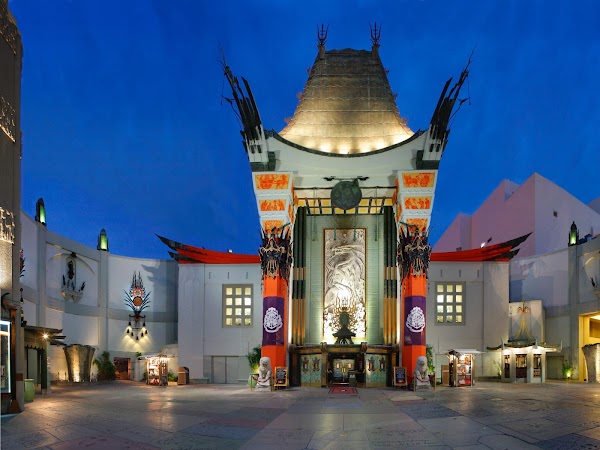
The Walk rewards wandering. Near the TCL Chinese Theatre the crowds are thick, and costumed superheroes pose for tips. Walk a few blocks east or down Vine Street and it grows quiet. There, the stars of forgotten radio hosts and silent film players wait for someone to say their names again. Bring a bottle of water and comfortable shoes; the full route is a long, sun-exposed walk.
Along the way, landmarks rise on both sides. The Dolby Theatre hosts the Academy Awards. The El Capitan Theatre glows with a restored 1920s facade. The Capitol Records tower, shaped like a stack of records, stands near the Vine Street stars. The sidewalk connects a century of entertainment in a single walk.
Fame is usually distant. It lives on screens and stages, above eye level. Here it lies underfoot, at the level of chewing gum and lost receipts, where anyone can crouch beside it. Find a name that mattered to you. Say it once. On this sidewalk, remembering someone is the entire point.
Key facts
What to look for
Practical tips
Common questions
How long do you need at Hollywood Walk of Fame?
Plan 30–60 min. That is the time most visitors spend at Hollywood Walk of Fame. The free Lokali audio guide adds about 5 minutes of narration you can listen to as you walk, so it fits inside your visit rather than adding to it.
Is there a free audio guide to Hollywood Walk of Fame?
Yes — the Lokali app narrates Hollywood Walk of Fame free of charge in 50+ languages. It covers the history, what to look for on site and practical tips, and it works offline once downloaded.
Where is Hollywood Walk of Fame?
Hollywood Walk of Fame is in Los Angeles, United States, at 34.1018, -118.3273. Tap the map link on this page for directions from where you are.
What should you know before visiting Hollywood Walk of Fame?
Check the Walk of Fame website for ceremony dates.
What is Hollywood Walk of Fame known for?
Dedicated in 1960 along Hollywood Boulevard and Vine Street.
What is the best time to visit Hollywood Walk of Fame?
The crowds peak mid-afternoon.
On the map
Opens directions to Hollywood Walk of Fame from your location.
More to see in Los Angeles




Hear Hollywood Walk of Fame in your language
The full story, narrated, in 50+ languages. Download it before you go and it plays offline, at your own pace, with no ticket and no tour group.