
Convent of Las Descalzas Reales
40.4183° N · 3.7062° W · Museum
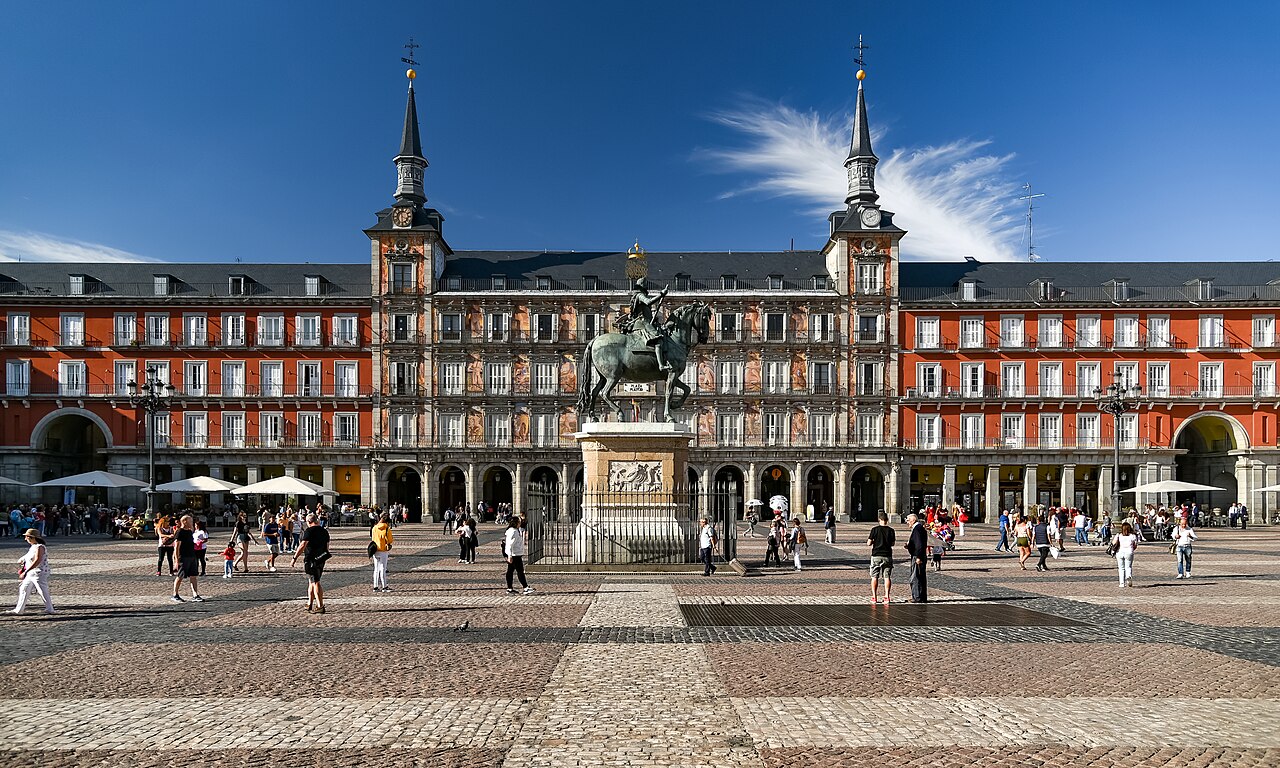
Photo: Luis García (Zaqarbal) · CC BY-SA 3.0 · Wikimedia Commons
Convent of Las Descalzas Reales is a monastery in Madrid, Spain. Founded by Joanna of Austria, sister of Philip the Second. The free Lokali audio guide runs 6 minutes.
✓ Published October 2026 · how we write these guides
Visitor facts
| Lokali audio guide | 6 min · free |
|---|---|
| Type | Museum |
| Location | Madrid, Spain |
| Coordinates | 40.4183, -3.7062 |
| Official website | patrimonionacional.es |
| Languages | 50+, in the Lokali app |
The story
Stand still for a moment in the small square outside. Behind you, the shopping streets near Puerta del Sol are loud with buses, buskers and the roll of suitcase wheels. In front of you there is a plain wall of brick and pale granite, with very few windows. It looks almost shut. That calm, closed face is the first lesson of this place. Behind those walls is a working convent, and also one of the richest small art collections in Madrid.
The name tells part of the story. Descalzas means barefoot, or discalced. It refers to nuns of the Poor Clares, a Franciscan order of women known for simple living and strict enclosure. Reales means royal. So this is the Convent of the Royal Barefoot Nuns. The two words sit together a little strangely, and that tension between poverty and royalty runs through everything you will see inside.
The founder was a remarkable woman, Joanna of Austria. She was a daughter of the Emperor Charles the Fifth and a sister of King Philip the Second. She was born in a palace on this very spot. She was married young to the heir of Portugal, and she was widowed while still a teenager. Her son later became King Sebastian of Portugal. Joanna returned to Spain, and for several years she governed the country as regent while her brother was abroad.
In the 1550s, Joanna decided to turn her birthplace into a convent. The old palace was adapted for a community of Poor Clare nuns, and the work continued over the following years. Here is the first surprise for many visitors. This was not a remote retreat in the hills. It was a royal house of prayer in the middle of the capital, a few steps from the court. For generations it gave powerful women a respectable, protected place to live.
And those women brought things with them. Daughters and widows of noble families often entered with a dowry. That dowry could include paintings, sculptures, reliquaries and fine textiles. Over the centuries, gift was added to gift. The nuns lived simply in their cells, but the shared spaces of the convent filled with treasures. Today the building is cared for by Patrimonio Nacional, the body that looks after Spain's royal heritage.
Visits are by guided tour only, in small groups. You will move through the rooms at the guide's pace, and photography inside is not allowed. This is not a rule for show. Nuns of the order still live here today, in the enclosed part of the building you will never see. As you walk the corridors, remember that a quiet community is going about its day just beyond the doors.
The tour usually begins with the grand staircase, and it is worth slowing down here. The walls and ceiling are covered with painted architecture — false columns, balconies and openings that trick the eye. Look up toward one painted balcony. There, members of the family of King Philip the Fourth appear to lean out and look down at you. It is a royal welcome, painted in the seventeenth century, and it still works.
Another striking room holds a set of large tapestries designed by the Flemish painter Peter Paul Rubens. They show the Triumph of the Eucharist, a celebration of the Catholic belief about the bread of the Mass. They were commissioned by the Infanta Isabel Clara Eugenia, a daughter of Philip the Second who governed the Spanish Netherlands. She had spent time in this convent as a girl. The tapestries were a gift with deep personal meaning.
Notice how the tapestries are designed. Rubens painted woven frames, curtains and even cherubs holding the scenes, so each tapestry looks like a picture hanging inside another picture. The colours are rich reds, golds and deep blues. Up close you can follow the individual threads. From a few steps back, the figures seem to move. Spend a minute at each distance, and you will see two different works.
The convent also has a musical story that surprises many people. Late in the sixteenth century, the Empress Maria, another sister of Philip the Second, came here after the death of her husband, the Holy Roman Emperor. She lived beside the community for years. The composer Tomás Luis de Victoria, one of the great voices of Renaissance church music, served in her household. His music was heard in these spaces.
As you pass through the side chapels, look at the details rather than only the big names. There are small altars, painted saints, carved wooden figures and devotional objects of every size. Some chapels feel almost like private rooms, each one shaped by a particular gift or family. Together they show how faith, wealth and memory were layered here over hundreds of years, one generous donor at a time.
The founder herself never left. Joanna of Austria is buried here, in the convent church. Her tomb includes a kneeling statue of her at prayer, attributed to the sculptor Pompeo Leoni, who worked for the Spanish court. She faces the altar with her hands joined. It is a calm, private image of a woman who once ruled a vast kingdom, and chose to rest among the nuns she brought here.
When the tour ends and you step back into the square, the noise of the city returns quickly. Turn around once more and look at that plain brick and granite front. Now you know what it holds — the painted balcony, the woven Rubens scenes, the kneeling founder, and a community still living quietly inside. As you walk back toward the crowds of Sol, listen for the convent bell. It is the same quiet rhythm this square has heard for more than four centuries.
Key facts
What to look for
Practical tips
Common questions
Is there a free audio guide to Convent of Las Descalzas Reales?
Yes — the Lokali app narrates Convent of Las Descalzas Reales free of charge in 50+ languages. The guide runs about 6 minutes, covers the history, what to look for on site and practical tips, and works offline once downloaded.
Where is Convent of Las Descalzas Reales?
Convent of Las Descalzas Reales is in Madrid, Spain, at 40.4183, -3.7062. Tap the map link on this page for directions from where you are.
What is Convent of Las Descalzas Reales known for?
Founded by Joanna of Austria, sister of Philip the Second. Built on the site of Joanna's own birthplace palace.
What should you look for at Convent of Las Descalzas Reales?
Painted royal family leaning from the staircase balcony. Woven false frames around each Rubens tapestry scene. Kneeling praying statue on Joanna of Austria's tomb.
What should you know before visiting Convent of Las Descalzas Reales?
Book a guided tour ahead; entry is by tour only. Keep your phone away; photography inside is not allowed.
When is the best time to visit Convent of Las Descalzas Reales?
Arrive early to find your tour group's meeting point.
On the map
Opens directions to Convent of Las Descalzas Reales from your location.
More to see in Madrid


Hear Convent of Las Descalzas Reales in your language
The full story, narrated, in 50+ languages. Download it before you go and it plays offline, at your own pace, with no ticket and no tour group.