
Automotive Hall of Fame
42.3025° N · 83.2377° W · Museum
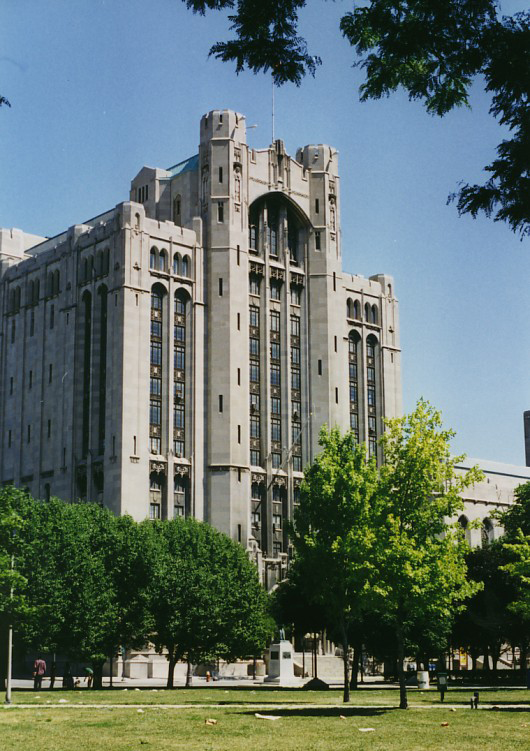
Photo: Dwight Burdette · CC BY 3.0 · Wikimedia Commons
Automotive Hall of Fame is an award. It is near Michigan, United States. The organisation traces its roots back to 1939. The free Lokali audio guide runs 6 minutes.
✓ Published October 2026 · how we write these guides
Visitor facts
| Lokali audio guide | 6 min · free |
|---|---|
| Type | Museum |
| Location | Michigan, United States |
| Coordinates | 42.3025, -83.2377 |
| Official website | automotivehalloffame.org |
| Languages | 50+, in the Lokali app |
The story
Listen for a moment. Out on the road, tyres hiss over the asphalt and an engine changes gear somewhere in the distance. Here in Dearborn, Michigan, that sound has a different weight. This is a town where the car shaped the streets, the jobs, and the lives of families for generations. And the building in front of you, the Automotive Hall of Fame, exists to remember the people behind that sound.
Most museums about cars are really about machines. They show chrome, curves, and polished engines under bright lights. This place takes a different angle. Its focus is people. The inventors, engineers, designers, racers, executives, and business builders who turned a noisy curiosity into something almost every family on earth now depends on. The cars are here to tell their stories, not the other way around.
The institution is older than this building. Its roots go back to 1939, when a group of people from the early motor industry formed an organisation to preserve the memory of the pioneers. Many of those pioneers were still alive then. They had seen the very first horseless carriages rattle down dirt roads. Over the following decades the organisation grew, changed its name, and moved more than once before it settled here in Dearborn in the late 1990s.
Why Dearborn? Look around and the answer becomes clear. Henry Ford was born on a farm in this area in 1863. The Ford Motor Company still has its world headquarters here. The vast Rouge industrial complex, once one of the largest factories on the planet, sits only a short drive away. And right next door is The Henry Ford, a large museum complex with its own collection of vehicles and American history. The Hall of Fame sits in good company.
Here is the first thing many visitors do not expect. This is not only an American story. The inductees come from many countries. You will find Henry Ford, of course, but also Soichiro Honda, the Japanese engineer who began with motorised bicycles. You will find Ferdinand Porsche from Central Europe and Enzo Ferrari from Italy. The hall treats the automobile as a global achievement, built by people who often competed fiercely with each other.
As you move through the exhibits, notice how the displays are organised around faces and names. Portraits and short biographies line the walls. Each one is a small doorway into a life. Some inductees are famous founders whose names are still written on cars today. Others worked quietly inside companies, solving problems that most drivers never think about. Safety systems, assembly methods, fuel delivery, steering. Someone had to invent every piece.
That is the second surprise worth holding onto. Many of the people honoured here never had a car named after them. They were engineers at drawing boards, managers on factory floors, or designers sketching the line of a fender. The hall argues that the automobile is a team achievement. A great car needs a great idea, but it also needs thousands of smaller ideas that make it safe, affordable, and reliable enough for ordinary people.
Induction is the heart of this institution. Each year, a new group of people is formally added to the hall. The ceremony usually draws figures from across the industry, and it is one of the moments when the car world pauses to look back at itself. Alongside the main induction, the organisation also gives other awards, including recognition for distinguished service and for younger leaders still shaping the industry today.
Take a moment to think about the scale of what these people changed. Before the automobile, most people lived their whole lives within a short distance of where they were born. A horse could carry you only so far in a day. The car changed where people lived, how cities grew, where they shopped, and how they met. Suburbs, highways, drive-in restaurants, road trips. All of these grew from the work celebrated in this building.
The story is not always simple, and a thoughtful visit makes room for that. The same industry that brought freedom of movement also brought traffic, pollution, and hard labour in tough factory conditions. Today, the industry is changing again, with electric motors, new batteries, and software playing a growing role. Some of the newer honours reflect this shift. The hall is not only about the past. It is also a record of an industry still reinventing itself.
If you are travelling with someone who loves cars, this is a good place to slow down and talk. Ask each other which name surprised you most. Which invention would you miss first if it disappeared tomorrow? Questions like these turn a walk past portraits into a real conversation. And if you plan to visit The Henry Ford next door as well, give yourself time. The two together make for a full day.
Before you leave, step back outside and look at the street. Watch the cars go by. Every one of them carries the work of people you have just met inside. The windscreen, the seat belt, the ignition, the paint, the factory line that put it all together. None of it appeared by accident. Each detail began as a problem that someone, somewhere, decided to solve.
So as you walk away, listen once more to the traffic. The hiss of tyres, the hum of engines, perhaps the quiet whir of an electric car. It is an ordinary sound, the kind most of us stop hearing. But here in Dearborn, standing beside this hall, you might hear it a little differently. Not just as noise, but as the sound of many lives, many ideas, and more than a century of human effort, still rolling forward.
Key facts
What to look for
Practical tips
Common questions
Is there a free audio guide to Automotive Hall of Fame?
Yes — the Lokali app narrates Automotive Hall of Fame free of charge in 50+ languages. The guide runs about 6 minutes, covers the history, what to look for on site and practical tips, and works offline once downloaded.
Where is Automotive Hall of Fame?
Automotive Hall of Fame is near Michigan, United States, at 42.3025, -83.2377. Tap the map link on this page for directions from where you are.
What is Automotive Hall of Fame known for?
The organisation traces its roots back to 1939. The hall settled in Dearborn in the late 1990s.
What should you look for at Automotive Hall of Fame?
Portraits of inductees lining the exhibit walls. Inductees from Japan, Germany, and Italy among Americans. Engineers honoured whose names never appeared on a car.
What should you know before visiting Automotive Hall of Fame?
Pair your visit with The Henry Ford museum next door. Plan a full day if visiting both neighbouring museums.
On the map
Opens directions to Automotive Hall of Fame from your location.
More to see near Automotive Hall of Fame



Hear Automotive Hall of Fame in your language
The full story, narrated, in 50+ languages. Download it before you go and it plays offline, at your own pace, with no ticket and no tour group.