
Danilov Monastery
55.7108° N · 37.6306° E · Tourist Attraction
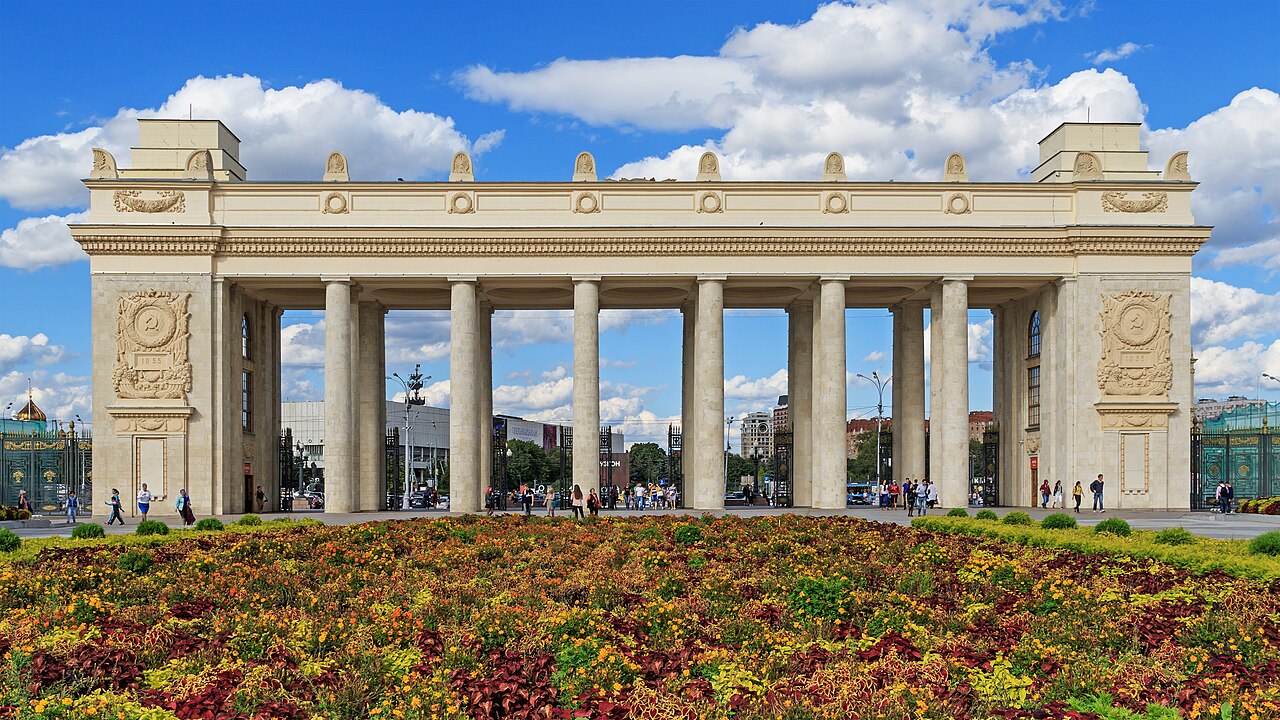
Photo: A.Savin · FAL · Wikimedia Commons
Danilov Monastery is a monastery. It is in Moscow, Russia. Traditionally considered the oldest monastery in Moscow. The free Lokali audio guide runs 6 minutes.
✓ Published October 2026 · how we write these guides
Visitor facts
| Lokali audio guide | 6 min · free |
|---|---|
| Type | Tourist Attraction |
| Location | Moscow, Russia |
| Coordinates | 55.7108, 37.6306 |
| Official website | msdm.ru |
| Languages | 50+, in the Lokali app |
The story
Start at the gate. Listen for a moment. The traffic of southern Moscow is still there, a low hum behind you. But past the white walls, the sound changes. You hear footsteps on paving stones, a door closing somewhere, and perhaps the slow call of a bell. The air often carries the smell of beeswax candles drifting out of an open church door. This is the Danilov Monastery, and it is a working religious community, not a museum.
The monastery takes its name from Prince Daniel of Moscow. He was the youngest son of Alexander Nevsky, the medieval prince who is a national hero in Russia. Daniel ruled Moscow in the late thirteenth century, when it was still a small town and not yet a great capital. Tradition holds that he founded this monastery, and it is usually called the oldest monastery in Moscow. Daniel died in 1303. He was later recognised as a saint, and his memory still shapes this place.
The story after Daniel is uneven. The early community did not stay strong here. For a long period the site declined, and its role passed elsewhere. In the sixteenth century, under Ivan the Fourth, often called Ivan the Terrible, the monastery was revived on this ground. From that point it grew again. Over the following centuries it gained walls, towers, churches and a cemetery. Most of what you see today comes from these later periods of building and rebuilding.
Look up at the gateway as you pass through. Above the main gate stands a small church, raised over the entrance itself. This was a common pattern in Russian monasteries. Visitors passed under a place of prayer before they reached the inner courtyard. Notice the bell tower above the gate too. It is one of the first things you see from the street, and it marks the entrance like a lantern marks a doorway.
Inside, the courtyard opens up. Paths run between lawns, flower beds and buildings painted in white and soft colours. Several churches stand close together. One of the oldest is the Church of the Holy Fathers of the Seven Ecumenical Councils. The name refers to the great meetings of early Christian bishops that defined Orthodox belief. Its walls are older and heavier than the elegant cathedral nearby, and the difference is easy to see.
That larger building is the Trinity Cathedral, from the early nineteenth century. It is usually credited to Osip Bove, an architect who did much to rebuild Moscow after the great fire of 1812. The style is neoclassical, which means it borrows calm columns and clean shapes from ancient Greece and Rome. Compare it with the older churches around it. You can read several centuries of taste in one short walk across this courtyard.
Now for one of the stranger chapters. After the revolution, the Soviet state closed most monasteries. Danilov was closed around 1930. The buildings did not stand empty. For decades they housed an institution for children, including many children whose parents had been arrested or had disappeared during the years of repression. Later the site was used for other purposes, including a factory. It is a heavy memory, and it sits quietly behind the fresh paint you see today.
Here is a detail many visitors never hear. When the monastery closed, its bells were sold abroad. An American businessman named Charles Crane bought them. He gave them to Harvard University, near Boston, in the United States. For decades these Moscow bells rang over a student residence there. Harvard students even formed a group to learn to ring them. In 2008, after long negotiations, the original bells came home to Danilov, and Harvard received new copies in their place.
So the bells you may hear today have crossed the Atlantic twice. They spent most of the twentieth century in a foreign country, ringing for people who did not speak their language. Now they ring again above the place they were made to serve. If a bell sounds while you are standing in the courtyard, it is worth pausing for that journey alone.
Another surprise. In 1983, Danilov became the first monastery in Moscow to be returned to the Orthodox Church during the Soviet period. That was before the great political changes of the late 1980s. The return was linked to an important anniversary. In 1988, the Church marked one thousand years since the baptism of the early Russian state. Workers restored the monastery quickly for that celebration, and it became a symbol of religious revival.
Today the monastery has a role far beyond its size. It serves as the official residence of the Patriarch of Moscow, the head of the Russian Orthodox Church. Church governing bodies also meet here. You may notice official cars, guards, or groups of clergy in black robes moving between buildings. This mix of quiet monastery life and church administration gives the place a particular feeling. It is both a home for monks and an office for a large institution.
The monastery once had a cemetery with famous writers. The most famous was Nikolai Gogol, the author of Dead Souls. In 1931, his remains were moved to the Novodevichy Cemetery across the city. Many stories grew around that reburial. Legend has it that witnesses saw strange things when the grave was opened. These tales are folklore, not documented fact. But they show how strongly Moscow remembers its writers, and how this ground once held them.
Before you leave, stand still for a minute in the courtyard. Look at the gold of the domes against the sky, and the white walls that close you in from the street. Notice the candle smoke near the church doors, and the people who come here to pray, not to sightsee. When you walk back out through the gate, the city noise will return at once. Carry this small pocket of quiet with you for a few more steps.
Key facts
What to look for
Practical tips
Common questions
Is there a free audio guide to Danilov Monastery?
Yes — the Lokali app narrates Danilov Monastery free of charge in 50+ languages. The guide runs about 6 minutes, covers the history, what to look for on site and practical tips, and works offline once downloaded.
Where is Danilov Monastery?
Danilov Monastery is in Moscow, Russia, at 55.7108, 37.6306. Tap the map link on this page for directions from where you are.
What is Danilov Monastery known for?
Traditionally considered the oldest monastery in Moscow. Named after Prince Daniel, son of Alexander Nevsky.
What should you look for at Danilov Monastery?
The small church built directly above the main gate. Neoclassical columns on the nineteenth-century Trinity Cathedral. Thick, older walls of the Seven Ecumenical Councils church.
What should you know before visiting Danilov Monastery?
Women should bring a headscarf and wear a skirt. Men should remove hats before entering the churches.
On the map
Opens directions to Danilov Monastery from your location.
More to see in Moscow



Hear Danilov Monastery in your language
The full story, narrated, in 50+ languages. Download it before you go and it plays offline, at your own pace, with no ticket and no tour group.