
Kremlin Wall Necropolis
55.7538° N · 37.6193° E · Historic Site
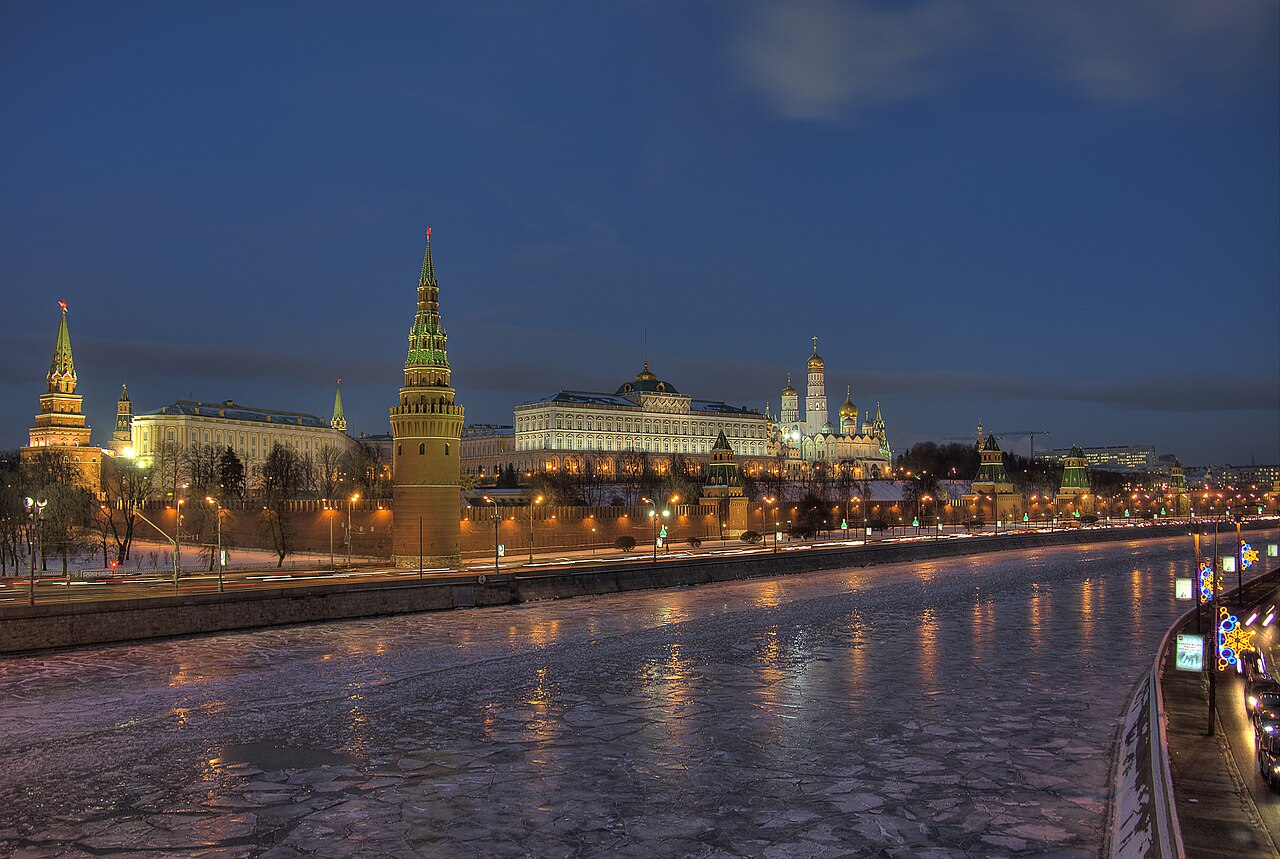
Photo: Tothkaroj · CC BY-SA 4.0 · Wikimedia Commons
Kremlin Wall Necropolis is a cemetery. It is in Moscow, Russia. First burials were mass graves of revolutionaries in 1917. The free Lokali audio guide runs 6 minutes.
✓ Published October 2026 · how we write these guides
Visitor facts
| Lokali audio guide | 6 min · free |
|---|---|
| Type | Historic Site |
| Location | Moscow, Russia |
| Coordinates | 55.7538, 37.6193 |
| Languages | 50+, in the Lokali app |
The story
Listen for a moment. The cobblestones of Red Square click under thousands of shoes, but here, close to the Kremlin wall, the sound softens. The red brick rises above you, warm in colour, with tall notched battlements cut like swallowtails along the top. At its foot runs a narrow strip of lawn, small evergreen trees, and a quiet row of stone busts. This is the Kremlin Wall Necropolis, one of the strangest cemeteries in the world.
It is strange because of where it sits. Most cities keep their dead on the edges, behind gates and old trees. Moscow placed some of its most powerful people at the very centre, a few steps from the main square of the country. Parades marched past these graves. Tanks and missiles rolled by them on holidays. For much of the twentieth century, this strip of ground sat right at the centre of Soviet ceremony.
First, the wall itself. It is much older than the graves. Italian builders raised these brick walls and towers in the late fifteenth century, under the Grand Prince Ivan the Third. Those swallowtail battlements are an Italian style, the same shape you can see on castles in northern Italy. So the backdrop for this Soviet cemetery is, in fact, a Renaissance fortress. Few visitors notice that detail as they walk past.
The cemetery began in a moment of violence. In November 1917, after the Bolsheviks seized power, fighting broke out in Moscow. Hundreds of revolutionaries died in the streets. The new government buried them together in mass graves here, beside the wall, in a large public funeral. There were no churches, no priests, no crosses. It was a deliberate break with the Orthodox past — a new kind of sacred ground for a new state.
After those first mass graves, the custom grew. Through the 1920s and beyond, the Soviet state honoured its leading figures with burial at this wall. Some were revolutionaries. Some were military commanders. Some were scientists, writers, and pilots. Being buried here was the highest honour the country could give. It carried a clear message. This person belonged to the story of the state itself.
There are two kinds of burial here, and it helps to know the difference. A small number of leaders lie in individual graves on the lawn behind the Mausoleum. Each grave carries a stone bust on a granite base. Many more people were cremated. Their ashes rest in urns sealed inside the wall, behind dark stone plaques with names and dates. Look up at the brick and you will see these plaques set into it, row after row.
The Mausoleum stands in front of all this — the dark red and black stone tomb of Vladimir Lenin, leader of the revolution. His embalmed body still lies inside. The necropolis is usually visited as part of the same route. Visitors pass through the Mausoleum, then walk out along the line of graves behind it. The two places form one memorial landscape, and the wall is their shared backdrop.
Now the first surprise. One of the busts on this lawn belongs to Joseph Stalin. After his death in 1953, his embalmed body lay inside the Mausoleum, next to Lenin. But in 1961, during the period when the Soviet leadership condemned his rule, his body was removed. It was buried here instead, in a plain grave beside the wall. Today people still leave flowers at his bust. That small gesture shows how divided memory of him remains.
Other names on the lawn tell the story of Soviet power. Here lie Felix Dzerzhinsky, the founder of the Soviet secret police, and Mikhail Kalinin, a long-serving head of state. Later leaders are here too — Leonid Brezhnev, Yuri Andropov, and Konstantin Chernenko. Chernenko died in 1985. His burial, in the middle of that decade, was among the last at the wall. Soon after, the Soviet era itself came to an end.
The wall urns hold some of the most loved names in Soviet history. Yuri Gagarin, the first human in space, rests here. So does Sergei Korolev, the chief designer behind the early Soviet space programme. His name was kept secret for most of his life. The writer Maxim Gorky is here too. So is Marshal Georgy Zhukov, the commander most closely linked with victory in the Second World War.
Here is the second surprise. Not everyone at this wall was Russian. The American journalist John Reed is buried here. He witnessed the revolution and wrote about it in a famous book, Ten Days That Shook the World. He died in Moscow in 1920 and received this honour. Several foreign communists from other countries also rest along the wall. For a time, this ground told an international story of revolution.
Today the mood here is calm and formal. Guards watch the route. People walk slowly and speak quietly. Some stop at a familiar name. Others simply look up at the brick and the plaques. You may see older visitors pause, or leave a single red carnation. You may see younger visitors read the names with curiosity, as history rather than memory. Both reactions are part of this place now.
Before you leave, stand still for a moment. Look at the line where the green lawn meets the old red brick. Five centuries of Moscow meet here — Italian masons, Russian princes, revolutionaries, cosmonauts, and generals. As you walk back out onto the cobbles, listen again. The noise of the square slowly returns. Behind you, the busts face the square, as they have for decades.
Key facts
What to look for
Practical tips
Common questions
Is there a free audio guide to Kremlin Wall Necropolis?
Yes — the Lokali app narrates Kremlin Wall Necropolis free of charge in 50+ languages. The guide runs about 6 minutes, covers the history, what to look for on site and practical tips, and works offline once downloaded.
Where is Kremlin Wall Necropolis?
Kremlin Wall Necropolis is in Moscow, Russia, at 55.7538, 37.6193. Tap the map link on this page for directions from where you are.
What is Kremlin Wall Necropolis known for?
First burials were mass graves of revolutionaries in 1917. Stalin's body moved here from the Mausoleum in 1961.
What should you look for at Kremlin Wall Necropolis?
Swallowtail battlements running along the top of the wall. Dark stone plaques marking urns set into the brick. Stone busts on granite bases behind the Mausoleum.
What should you know before visiting Kremlin Wall Necropolis?
Visit through the Mausoleum route to walk past the graves. Expect security checks and limited bags before entering.
On the map
Opens directions to Kremlin Wall Necropolis from your location.
More to see in Moscow



Hear Kremlin Wall Necropolis in your language
The full story, narrated, in 50+ languages. Download it before you go and it plays offline, at your own pace, with no ticket and no tour group.