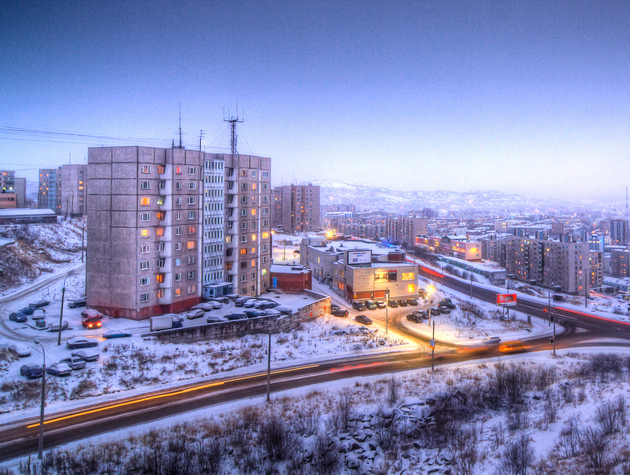
Murmansk Regional Museum
68.9602° N · 33.0820° E · Museum
Murmansk Regional Museum is a museum in Murmansk, Russia. Comprehensive museum documenting the city's Arctic history, Soviet naval heritage, and indigenous Sámi culture. Most visitors spend 1–2 hours here. The free Lokali audio guide runs 5 minutes.
✓ Verified August 2026 · how we write these guides
Visitor facts
| Time needed | 1–2 hours |
|---|---|
| Lokali audio guide | 5 min · free |
| Type | Museum |
| Best for | History |
| Location | Murmansk, Russia |
| Coordinates | 68.9602, 33.0820 |
| Languages | 45, in the Lokali app |
The story
Step in out of the Arctic wind and into a quiet set of warm halls. The cold of Murmansk stays outside the doors. In here, the whole story of this far northern land is gathered under one roof, from the rocks underground to the people who live above them. This is the oldest museum on the Kola Peninsula.
The museum opened in 1926. Murmansk itself was a very young city then, founded only about a decade earlier at the edge of the empire. The people who started the museum wanted to collect and keep the story of their new region before it could be lost. Almost a century later, that early collection has grown very large indeed.
Today the museum holds more than 170,000 items. There are documents and old books. There are posters, maps, and faded photographs. There are coins, weapons, and small objects dug carefully from the ground. Each single piece is one small part of a much larger story about how people have lived in this cold and distant land.
Begin with nature. The Kola Peninsula is a land of bare rock, dark water, and very long winters. The displays show the animals that live here and the minerals found beneath the surface. The region holds large deposits of ore, and mining shaped many of its towns. It helps to learn what the land is made of before you learn about the people who settled on it.
Then comes the human story, which reaches far back in time. People have lived on this land for thousands of years, long before any city stood on the bay. The exhibits follow that long line forward, step by step, from the earliest settlers all the way to the modern streets you can see through the windows.
Pay special attention to the Sami. The Sami are the indigenous people of this region, and of the lands across the borders to the west. They herded reindeer and moved with the seasons across the open ground. The museum keeps their tools, their clothing, and the small objects of their daily life. These displays help you understand a way of living that is shaped entirely by snow, herds, and open land.
Fishing and the sea also fill these rooms. The Pomors were Russian settlers who built their lives along the northern coast. They built strong boats and lived from the water, trading salt and fish along the shore. Their story sits here beside the story of the Sami, two different peoples sharing the same hard and beautiful place.
One part of the museum is heavy with memory. During the Second World War, from 1941 to 1945, Murmansk stood very close to the front line. The city was bombed many times, and large parts of it burned. Photographs, letters, and worn objects from those years show what the people of the city lived through. It is a quiet and serious part of the visit, and worth slowing down for.
The museum is more than this one building. It also has smaller branches outside the city. One sits in the village of Lovozero and tells the story of the Kola Sami in their own home region. Another sits in the village of Umba and tells the story of the Pomors of the coast. Each branch keeps a local story alive in the very place where it happened.
There is one practical thing to know before you come. The well-known main building on Lenin Avenue, the one with a large anchor standing outside it, has been under reconstruction. During that work the collection was moved to another address in the city. It is wise to check where the museum is currently open before you set out to find it.
This is a good place to bring a family. Since 2016 the museum has run regular programs for children. Staff help young visitors learn about the nature and the past of the region through games, stories, and things they can touch with their own hands. Children who walk in expecting to be bored often walk out asking questions.
Move through the halls slowly if you can. The objects here are not loud or flashy. Their power is quiet. A reindeer-skin coat, a sailor's compass, a child's wartime drawing, each one was held and used by a real person in this northern place. Together they build a picture that no single object could give on its own.
When you step back outside, the wind will meet you again at the door. But you will see Murmansk a little differently now. The city is young, the land beneath it is very old, and the people here have held on through deep cold and through war. The museum keeps all of that safe, one careful object at a time.
Key facts
What to look for
Practical tips
Common questions
How long do you need at Murmansk Regional Museum?
Plan 1–2 hours. That is the time most visitors spend at Murmansk Regional Museum. The free Lokali audio guide adds about 5 minutes of narration you can listen to as you walk, so it fits inside your visit rather than adding to it.
Is there a free audio guide to Murmansk Regional Museum?
Yes — the Lokali app narrates Murmansk Regional Museum free of charge in 50+ languages. It covers the history, what to look for on site and practical tips, and it works offline once downloaded.
Where is Murmansk Regional Museum?
Murmansk Regional Museum is in Murmansk, Russia, at 68.9602, 33.0820. Tap the map link on this page for directions from where you are.
What should you know before visiting Murmansk Regional Museum?
Check the current address, as the museum relocated.
What is Murmansk Regional Museum known for?
Founded in 1926 on the Kola Peninsula.
What is the best time to visit Murmansk Regional Museum?
The Sámi section offers authentic traditional clothing and tools rarely seen elsewhere.
On the map
Opens directions to Murmansk Regional Museum from your location.
Reference
More to see in Murmansk


Hear Murmansk Regional Museum in your language
The full story, narrated, in 50+ languages. Download it before you go and it plays offline, at your own pace, with no ticket and no tour group.