
Photo: TonioMora · CC BY-SA 4.0 · Wikimedia Commons
Melilla la Vieja is a citadel in the Spanish city of Melilla. Castilian forces took the site in 1497. The free Lokali audio guide runs 6 minutes.
✓ Published October 2026 · how we write these guides
Visitor facts
| Lokali audio guide | 6 min · free |
|---|---|
| Type | Fortification |
| Location | Nador, Spain |
| Coordinates | 35.2940, -2.9340 |
| Languages | 50+, in the Lokali app |
The story
Start with the stone under your feet. It is uneven, worn smooth in places, and warm when the sun has been on it. Above you, thick walls the colour of sand and honey rise straight out of the rock. Somewhere below, the Mediterranean pushes against the cliffs with a slow, heavy sound. Gulls call overhead. This is Melilla la Vieja, the old fortified town of Melilla, a short drive from the centre of Nador.
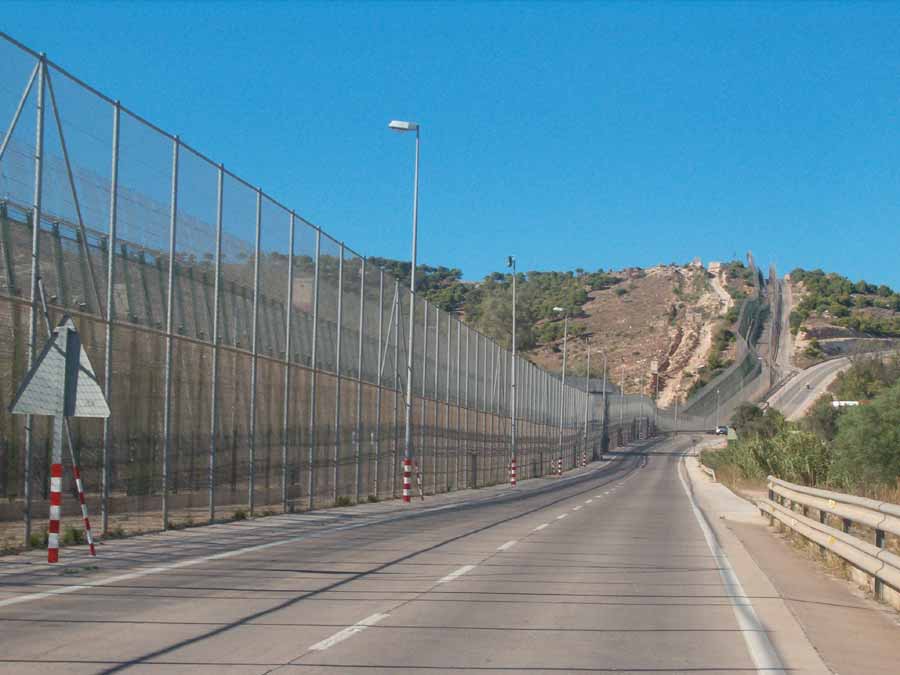
First, a word on where you are standing. Melilla is a Spanish city on the north coast of Africa, and it borders the Moroccan province of Nador. Morocco also claims the city, so its status is a sensitive subject on both sides of the border. Many people cross between Nador and Melilla every day, for work, for family, and for trade. The two places have shared this headland and this coast for centuries.
Long before these walls, this rocky point was a harbour. Phoenician and Carthaginian traders used the sheltered bay, and the settlement was later known to the Romans as Rusaddir. Very little of that ancient town is visible today. Yet the reason people came here has not changed. The headland gives protection from the open sea, and the high ground gives a clear view of anyone approaching by water or by land.
The story of the walls you see begins at the very end of the fifteenth century. In 1497, an expedition led by Pedro de Estopiñán took the site for Castile, acting on behalf of the Duke of Medina Sidonia. This was only a few years after the fall of Granada, the last Muslim kingdom in Spain. For the Spanish crown, a fortress on this coast was a forward post, a watchtower facing the North African shore.
What followed was centuries of building, rebuilding, and defending. The old town is often described as the first of several walled enclosures. Later enclosures grew outward as the garrison needed more space. Here, in the oldest one, the town is compact and tight. Streets are narrow and steep. Houses stand shoulder to shoulder inside the walls, because every metre of protected ground had value.
As you walk, look at the gates. Some of them carry carved coats of arms above the arch. One of the best known is the Gate of Santiago, which shows the arms of the Emperor Charles the Fifth. In the sixteenth century, he ruled Spain and a large part of Europe. A small chapel sits near this gate. The entrance passages are often angled or narrow, a design that made it harder for attackers to rush through.
Now here is something many visitors miss. Below the town, the rock is full of caves and tunnels. The best known are the Caves of the Conventico. During sieges, people sheltered in these passages, and some tunnels lead down towards the sea. It is a strange feeling to stand in the sunny streets above and know that a second, darker town lies under your feet, cut into the stone by human hands.
The fortress faced several sieges over the centuries. The most famous came in the 1770s, when the forces of the Moroccan sultan Mohammed ben Abdallah surrounded the town for months. The defenders held out. Cannons, earthworks, and mines were all part of that long struggle. When you see the deep moats and the heavy, sloped walls, remember that they were built for exactly this kind of long and patient warfare.
Water was always a problem on this dry rock. That is why the old town has large underground cisterns, built to store rainwater for the garrison and the people inside the walls. In a siege, a full cistern could mean the difference between holding out and surrender. If you have the chance to step inside one, notice how the air changes. It becomes cool and still, and sounds echo off the curved stone ceilings.
At the heart of the old town stands the Church of the Immaculate Conception. Inside, the people of Melilla honour the Virgin of Victory, the patron of the city. Local devotion to her is strong, and her image is carried in processions on special days. Even if you are not religious, the church is worth a quiet look. It is a place where the military history of the fortress meets the everyday faith of the families who lived here.
Here is a second surprise. Melilla is known not only for this fortress but also for its early twentieth century buildings in the newer town, many in the Modernist style, a decorative style of curved lines and floral details. From the walls of the old town, you can look across to that later city. In a single view, you see two very different centuries: the hard defensive stone here, and the ornamented facades over there.
Take time on the ramparts. Find a spot where you can see both the harbour and the open sea. On a clear day, the light on the water is sharp and bright, and the coastline stretches away towards the Moroccan side. Small museums inside the walls tell more of the local story, from ancient trade to military life. A slow walk, with pauses, works far better here than a fast tour.
Before you leave, stop for a moment by the wall and simply listen. The sea is still moving against the rocks below. The stone is still warm under your hand. Soldiers, traders, families, and travellers have all stood on this same high ground and looked out at the same water. As you walk back down the steep lanes towards the gates, notice the worn steps, and how many feet it took to make them that smooth.
Key facts
What to look for
Practical tips
Common questions
Is there a free audio guide to Melilla la Vieja?
Yes — the Lokali app narrates Melilla la Vieja free of charge in 50+ languages. The guide runs about 6 minutes, covers the history, what to look for on site and practical tips, and works offline once downloaded.
Where is Melilla la Vieja?
Melilla la Vieja is near Nador, Spain, at 35.2940, -2.9340. Tap the map link on this page for directions from where you are.
What is Melilla la Vieja known for?
Castilian forces took the site in 1497. Expedition was led by Pedro de Estopiñán.
What should you look for at Melilla la Vieja?
Charles the Fifth coat of arms over Santiago Gate. Angled entrance passages built to slow attackers. Deep moats cut between the fortified enclosures.
What should you know before visiting Melilla la Vieja?
Wear shoes with good grip for steep, worn stones. Walk the ramparts slowly and pause at viewpoints.
On the map
Opens directions to Melilla la Vieja from your location.
More to see near Melilla la Vieja
Hear Melilla la Vieja in your language
The full story, narrated, in 50+ languages. Download it before you go and it plays offline, at your own pace, with no ticket and no tour group.