
Country Music Hall of Fame and Museum
36.1583° N · 86.7761° W · Museum
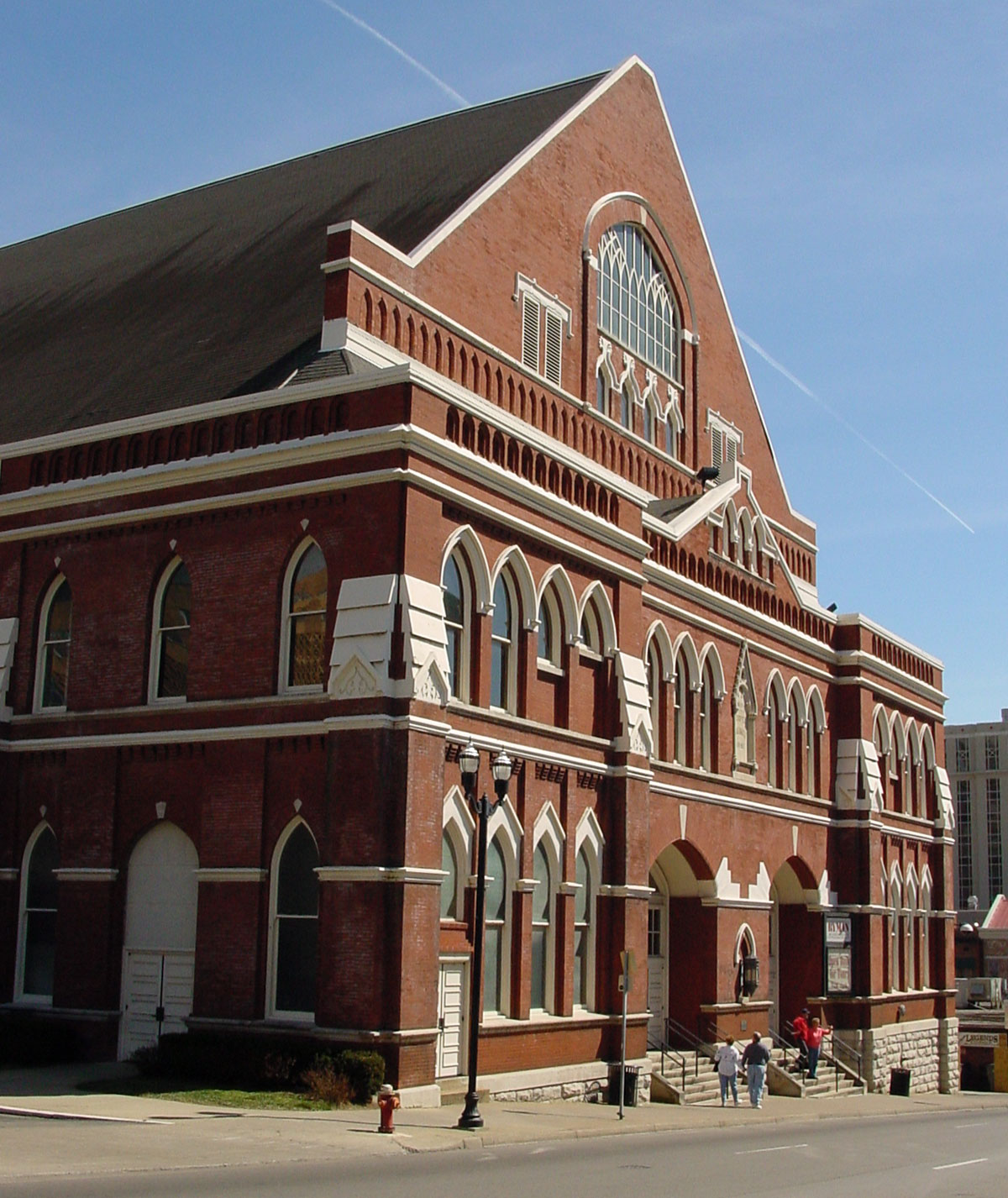
Photo: Sean Russell from Knoxville, TN, USA · CC BY-SA 2.0 · Wikimedia Commons
Country Music Hall of Fame and Museum is a hall of fame. It is near Nashville, United States. The Hall of Fame was created in 1961. The free Lokali audio guide runs 7 minutes.
✓ Published October 2026 · how we write these guides
Visitor facts
| Lokali audio guide | 7 min · free |
|---|---|
| Type | Museum |
| Location | Nashville, United States |
| Coordinates | 36.1583, -86.7761 |
| Official website | countrymusichalloffame.org |
| Languages | 50+, in the Lokali app |
The story
Stand on the plaza for a moment and listen. Behind you, the steady noise of downtown Nashville drifts up from Broadway: car horns, a bass line leaking out of a bar, someone tuning a guitar on a street corner. In front of you is a long building of pale stone and dark glass. It looks calm. But the longer you look, the more you notice that almost every line in this building is about music.
Start with the tall windows across the front. They are narrow, upright and set in a steady row, light and dark, light and dark. Many visitors walk past without seeing it, but the pattern is meant to suggest the keys of a piano. Now look up at the slim spire that rises from one end of the roof. It echoes the shape of the old radio tower of WSM, the Nashville station that carried the Grand Ole Opry across the country from the 1920s onward.
Here is a detail you cannot see from the ground. Seen from above, the whole building curves into the shape of a bass clef — the musical symbol that tells a player to read the lower notes. The architects built the idea of a song into the floor plan itself. It is a quiet joke, made in stone, for anyone flying over the city.
This building opened in 2001, but the institution is older. The Country Music Hall of Fame was created in 1961 by the Country Music Association, an industry group based in Nashville. The first members were Jimmie Rodgers, Hank Williams and Fred Rose. Rodgers was an early recording star often called the father of country music. Williams was the restless songwriter of the late 1940s and early 1950s. Rose was a songwriter and publisher who helped build Nashville's music business.
For its first decades, the museum lived on Music Row, the district of studios and record labels a short drive south of here. It opened there in 1967. By the end of the century, the collection had outgrown that home, and the museum moved downtown, close to the honky-tonks and the old Ryman Auditorium. Today it is run by a nonprofit foundation. That means its work goes far beyond display cases: it also keeps archives, recordings, photographs and oral histories.
Inside, the main exhibition follows the music from its roots to the present day. You begin with fiddles and banjos and the songs that came across the ocean with settlers from the British Isles and elsewhere. You move through gospel, blues, cowboy songs and the early radio barn dances. Then come the stars of honky-tonk, the polished Nashville Sound, the rough-edged outlaws of the 1970s, and the arena acts of recent decades. The thread through all of it is simple: ordinary people singing about work, love, faith and loss.
The objects are what stay with people. Handwritten lyrics on hotel notepaper. Stage costumes heavy with rhinestones and embroidery. Guitars worn pale where a right hand struck the strings for years. Look closely at the fretboards. The small dents and smooth patches show exactly where a musician's fingers spent their working life.
Some objects are bold. The museum has displayed a gold-finished Cadillac that belonged to Elvis Presley, with gleaming paint and a lavish interior. It has also shown the Pontiac of the singer Webb Pierce, a car covered in silver dollars, with pistols and steer horns as decoration. These cars can look silly at first. But they say something real about country music's pride in showing off success, after so many of its stars grew up with very little.
The heart of the building is the Hall of Fame Rotunda. It is a tall, round room, quieter than anywhere else in the museum. Bronze plaques line the walls, one for each member, each with a face in relief and a short summary of a life. People often lower their voices here without being asked. Look up near the top of the walls, and you will see words from the old hymn "Will the Circle Be Unbroken" running around the room. The song is about family, death and reunion, and it has been sung by generations of country performers.
Take your time with the plaques. You will find famous names, of course. But you will also find session musicians, songwriters, producers and radio people — the ones who never stood in the spotlight, yet shaped the sound you hear on Broadway tonight. That may be the biggest surprise for first-time visitors. This hall honours the whole working machine of the music, not only its singers.
The building holds two more treasures that many people miss. The first is Hatch Show Print, a letterpress print shop that has made posters in Nashville since the late nineteenth century. Its bold wooden type and bright inks once advertised circuses, boxing matches and Opry stars. The shop still works today, and you can watch the presses through the windows. The second is the starting point for tours of Historic RCA Studio B on Music Row, where many famous records were made. Those tours usually need a separate booking.
In 2014 the museum grew again, with a large expansion that added a theatre, event spaces and an education centre for children and families. Workshops there teach songwriting and music to young people. It fits the spirit of the place. Country music has always passed from person to person, from a parent on a porch to a child with a borrowed guitar.
When you step back outside, look again at the piano-key windows and the spire against the sky. Listen to the music coming up from the street, a few blocks away. Somewhere on Broadway, a young singer is playing for tips, hoping to be heard. Every bronze face in that rotunda started in a room like that. Take that thought with you as you walk on, and listen a little more closely to the next song you hear.
Key facts
What to look for
Practical tips
Common questions
Is there a free audio guide to Country Music Hall of Fame and Museum?
Yes — the Lokali app narrates Country Music Hall of Fame and Museum free of charge in 50+ languages. The guide runs about 7 minutes, covers the history, what to look for on site and practical tips, and works offline once downloaded.
Where is Country Music Hall of Fame and Museum?
Country Music Hall of Fame and Museum is near Nashville, United States, at 36.1583, -86.7761. Tap the map link on this page for directions from where you are.
What is Country Music Hall of Fame and Museum known for?
The Hall of Fame was created in 1961. First inductees included Hank Williams and Jimmie Rodgers.
What should you look for at Country Music Hall of Fame and Museum?
Front windows shaped like a row of piano keys. Roof spire echoing the old WSM radio tower. Hymn lyrics circling high on the Rotunda walls.
What should you know before visiting Country Music Hall of Fame and Museum?
Book the Historic RCA Studio B tour separately in advance. Save quiet time for the Rotunda near the end.
When is the best time to visit Country Music Hall of Fame and Museum?
Arrive early on weekends to avoid the largest crowds.
On the map
Opens directions to Country Music Hall of Fame and Museum from your location.
More to see in Nashville

Hear Country Music Hall of Fame and Museum in your language
The full story, narrated, in 50+ languages. Download it before you go and it plays offline, at your own pace, with no ticket and no tour group.