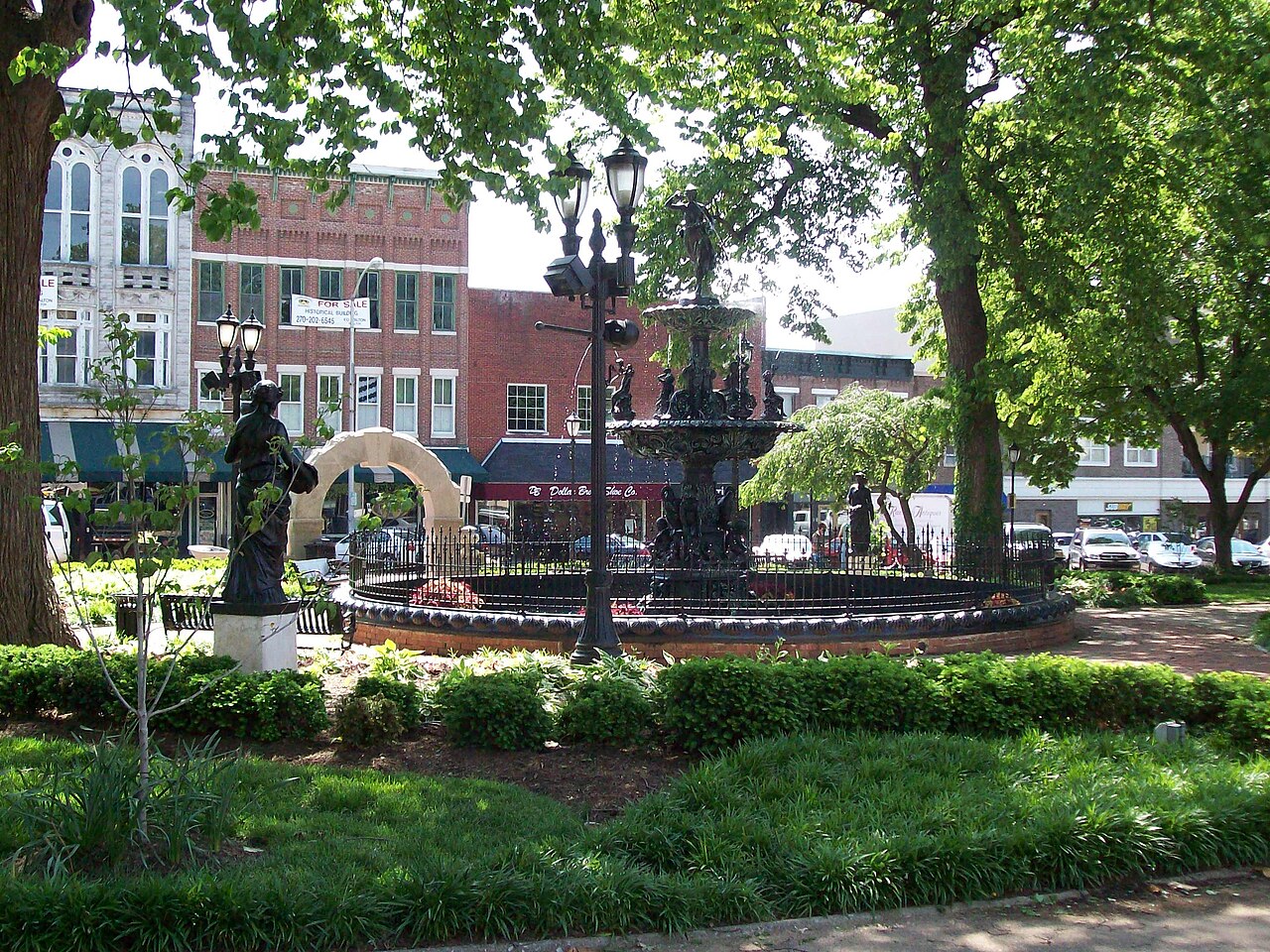
Bowling Green is a square in New York, United States. Manhattan's oldest public park, established in 1733 and named for its original use as a bowling lawn. Most visitors spend 15–30 min here. The free Lokali audio guide runs 5 minutes.
✓ Verified August 2026 · how we write these guides
Visitor facts
| Time needed | 15–30 min |
|---|---|
| Lokali audio guide | 5 min · free |
| Type | Square |
| Best for | History |
| Location | New York, United States |
| Coordinates | 40.7033, -74.0115 |
| Languages | 45, in the Lokali app |
The story
A small green oval sits in the middle of the rushing street. Office workers cross it with coffee in hand. Pigeons gather near the fountain, and an old iron fence rings the grass. You are standing in Bowling Green, the oldest public park in New York City.
People have gathered on this ground for a very long time. Long before the park, this open space at the foot of Broadway served as a market and a parade ground. In 1733, the city leased the plot to a few local men, who promised to make it a place of beauty for the city. The rent they paid was almost nothing, a single peppercorn each year. They laid out a green for the game of lawn bowling, and the name has stayed ever since.
Look closely at the fence around the grass. It was put up in the early 1770s, which makes it the oldest fence in the city. The iron was shaped by hand and set on a low stone base. For more than two centuries it has marked this same circle of ground, while everything around it was torn down and built again and again.
The fence once had a different job. In 1770, a large statue of King George the Third of Britain was raised in the center of the park. He sat on horseback, covered in gold-colored lead, a symbol of royal power over the colony. The new fence was built in part to protect him from the crowds.
It did not protect him for long. On the ninth of July, 1776, news of the Declaration of Independence reached the city. That evening, a crowd marched down Broadway to this park. They pulled the king from his horse and broke the statue apart. Much of its lead was carried away and melted into musket balls for the war.
Look at the top of the fence posts as you walk around. Long ago, small crowns made of iron sat on top of them, fitting for a park that honored a king. In the heat of that summer, those crowns were cut away. Run your eye along the posts and you can still see the rough marks where they were removed.
For the rest of its long life, Bowling Green has been a place to pause. Through the centuries, as the city around it became the center of American finance, the little park kept its shape. Bankers and clerks and travelers have crossed it, sat in it, and rested in it, season after season. Few other things in this changing city have stayed in one place so long.
At the northern end of the park, a crowd usually gathers around a large bronze animal. This is the Charging Bull. The sculptor Arturo Di Modica made it and placed it nearby in 1989, without asking permission first. The city moved it to this spot, and it has stayed. The bull weighs more than seven thousand pounds. It stands about eleven feet tall and runs some sixteen feet from nose to tail.
It stands with its head low and its body tensed, as if about to rush forward. The artist meant it as a sign of strength and hope after a hard time for the markets. Visitors line up each day to stand beside it and touch its polished sides, which shine where thousands of hands have worn the metal bright.
From the green, look around at the buildings that frame it. Grand old facades of stone rise on every side, from the days when this was the heart of the shipping and banking trade. Just to the south stands a large building that once collected the taxes on goods entering the busy port. Today that grand hall holds a museum of Native American life and art, free for anyone to enter. The wealth of a young nation moved through these few blocks.
Find a bench inside the iron rail and sit for a while. Water moves in the fountain. Leaves stir overhead. The traffic circles the green on both sides, but within the fence the pace is slower. Few of the people hurrying past know they are crossing the oldest park in the city.
Bowling Green is small, and easy to miss. Yet a king once stood here in gold, and a crowd once tore him down, and the same fence has watched all of it. Rest a moment on this old ground, between the worn iron posts and the charging bull, where the story of the city first turned toward independence.
Key facts
What to look for
Practical tips
Common questions
How long do you need at Bowling Green?
Plan 15–30 min. That is the time most visitors spend at Bowling Green. The free Lokali audio guide adds about 5 minutes of narration you can listen to as you walk, so it fits inside your visit rather than adding to it.
Is there a free audio guide to Bowling Green?
Yes — the Lokali app narrates Bowling Green free of charge in 50+ languages. It covers the history, what to look for on site and practical tips, and it works offline once downloaded.
Where is Bowling Green?
Bowling Green is in New York, United States, at 40.7033, -74.0115. Tap the map link on this page for directions from where you are.
What should you know before visiting Bowling Green?
Photograph the Charging Bull early before crowds arrive.
What is Bowling Green known for?
Bowling Green became a public park in 1733.
What is the best time to visit Bowling Green?
The park is sheltered and calm despite surrounding traffic.
On the map
Opens directions to Bowling Green from your location.
More to see in New York



Hear Bowling Green in your language
The full story, narrated, in 50+ languages. Download it before you go and it plays offline, at your own pace, with no ticket and no tour group.