
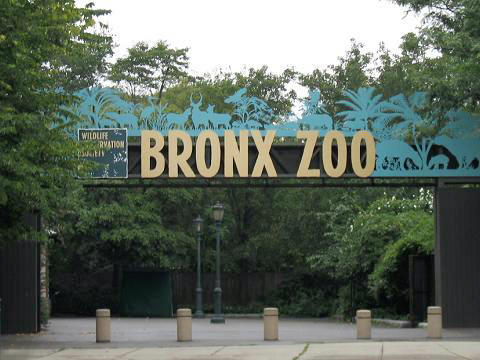
Photo: Peter Romano · Public domain · Wikimedia Commons
Pelham Bay Park is a public park in the Bronx, New York. Largest park in New York City, over 2,700 acres. The free Lokali audio guide runs 6 minutes.
✓ Published October 2026 · how we write these guides
Visitor facts
| Lokali audio guide | 6 min · free |
|---|---|
| Type | Park |
| Location | New York, United States |
| Coordinates | 40.8656, -73.8083 |
| Official website | nycgovparks.org |
| Languages | 50+, in the Lokali app |
The story
Listen first. Somewhere close by, wind moves through tall marsh grass with a dry, papery sound. Gulls call over the water. Far off, there is the low hum of a highway. Underfoot, the ground changes from paved path to sand to soft, damp earth. This is still New York City. It just does not feel like it.
Welcome to Pelham Bay Park, in the far northeast corner of the Bronx. It is the largest park in New York City, at well over 2,700 acres. That is more than three times the size of Central Park. Here is the first surprise. Most visitors to New York never come here at all. Many lifelong New Yorkers have never seen it either. So if you feel a little like an explorer today, you are not wrong.
The size is only part of the story. This park is not one landscape but many. There are salt marshes and tidal lagoons. There are old forests, rocky shorelines, and open meadows. There are golf courses, playing fields, a historic mansion, and a long crescent of public beach. Each part has its own character. As you walk, the park keeps changing around you — sometimes within a few hundred metres.
Long before any of this was a park, the land belonged to the Siwanoy, a Lenape-speaking people of the Long Island Sound shore. They fished these waters and gathered shellfish along the coves. In the seventeenth century, European settlers arrived. An Englishman named Thomas Pell signed a land agreement with Siwanoy leaders in 1654. The name Pell stayed with the land long after both he and the original agreement were gone.
That same period brought one of the darkest stories connected to this area. Anne Hutchinson, a religious dissenter banished from Massachusetts, settled nearby with her family. In 1643, she and most of her household were killed in a conflict with the local Siwanoy. The nearby Hutchinson River carries her name today. Locals also tie her story to Split Rock, a huge boulder cracked down the middle, near the park's edge. That link is tradition rather than firm record.
That split boulder points to something older than any human history here. Thousands of years ago, glaciers covered this region. When the ice melted, it dropped enormous stones across the landscape. Geologists call them glacial erratics — rocks carried far from where they formed. You can find many of them in the park, especially on Hunter Island. Some sit alone in the woods, as if someone placed them there on purpose.
The park also has a quiet place in the American Revolution. In October 1776, British troops landed near here, at a spot called Pell's Point. A small force of American soldiers fought a delaying action from behind stone walls. Their stand helped George Washington's army slip away from Manhattan toward safer ground. It was not a famous victory. But historians see it as one of the many small fights that kept the young army alive.
The park itself came much later. In the late nineteenth century, city leaders worried that New York would swallow every green space as it grew. In 1888, the city acquired this land as part of a plan for large parks in what was then still a rural part of the Bronx. It was a bet on the future. At the time, few people lived nearby. The crowds would come later.
And the crowds came, above all, for Orchard Beach. In the 1930s, under the powerful parks commissioner Robert Moses, the city reshaped this shoreline completely. Workers filled in water between islands and brought in huge amounts of sand to create a long, curved beach. Behind it rose a large pavilion and bathhouse in a clean, modern style. People soon gave the beach a playful nickname: the Riviera of the Bronx. On summer weekends, it still fills with families, music, and the smell of grilled food.
For a very different mood, walk north toward Hunter Island and Twin Island. Here the Kazimiroff Nature Trail loops through woods and along rocky shore. It is named after Theodore Kazimiroff, a Bronx historian and naturalist who fought to protect these places. The trail is quiet. The light comes through the trees in patches. On the shore, waves from Long Island Sound break against dark stone. It feels closer to coastal New England than to a city of millions.
This is also one of the best places in the city to see wildlife. The salt marshes support wading birds such as herons and egrets in warmer months. In winter, birdwatchers search the pine groves for roosting owls. If you see someone standing very still with binoculars, they may have found one. Please keep your distance and keep your voice low. Here is one more surprise. On some days, you may hear distant popping sounds. That is a police firing range on a nearby peninsula, not a reason for alarm.
Before you leave, look for the Bronx Victory Memorial near the southern part of the park. It is a tall column topped by a winged figure of Victory. It honours Bronx residents who served in the First World War. Few visitors expect a monument of this scale in such an open, green setting. Nearby, the Bartow-Pell Mansion stands as a calm stone house from the first half of the nineteenth century, with gardens that slope toward the water.
So pause for a moment where you are. Look at the water, or the trees, or the long line of the beach. This land has been a fishing ground, a battlefield, a country estate, and a city playground. All of those layers are still here, under your feet. As you walk away, listen again for the grass, the gulls, and that far-off hum. It is the sound of a wild place that the city decided to keep.
Key facts
What to look for
Practical tips
Common questions
Is there a free audio guide to Pelham Bay Park?
Yes — the Lokali app narrates Pelham Bay Park free of charge in 50+ languages. The guide runs about 6 minutes, covers the history, what to look for on site and practical tips, and works offline once downloaded.
Where is Pelham Bay Park?
Pelham Bay Park is in New York, United States, at 40.8656, -73.8083. Tap the map link on this page for directions from where you are.
What is Pelham Bay Park known for?
Largest park in New York City, over 2,700 acres. More than three times the size of Central Park.
What should you look for at Pelham Bay Park?
Large glacial boulders scattered across Hunter Island. The long curved shoreline of Orchard Beach. Winged Victory figure atop the Bronx Victory Memorial.
What should you know before visiting Pelham Bay Park?
Take the 6 train to its final stop, Pelham Bay Park. Walk the Kazimiroff Nature Trail for quiet woodland views.
When is the best time to visit Pelham Bay Park?
Bring binoculars for herons in summer, owls in winter.
On the map
Opens directions to Pelham Bay Park from your location.
More to see in New York



Hear Pelham Bay Park in your language
The full story, narrated, in 50+ languages. Download it before you go and it plays offline, at your own pace, with no ticket and no tour group.