
Churches and Convents of Goa
15.5024° N · 73.9117° E · World Heritage Site
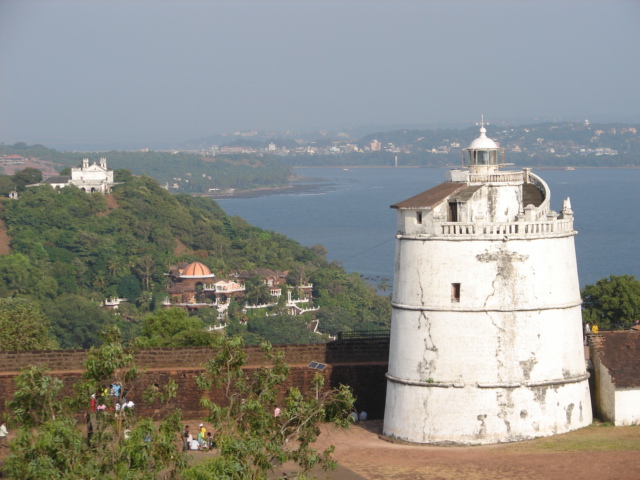
Photo: Bryce Edwards from Dunedin, New Zealand · CC BY 2.0 · Wikimedia Commons
Churches and Convents of Goa is an Indian World Heritage site. It is near Old Goa, India. Afonso de Albuquerque captured Goa for Portugal in 1510. The free Lokali audio guide runs 6 minutes.
✓ Published October 2026 · how we write these guides
Visitor facts
| Lokali audio guide | 6 min · free |
|---|---|
| Type | World Heritage Site |
| Location | Old Goa, India |
| Coordinates | 15.5024, 73.9117 |
| Languages | 50+, in the Lokali app |
The story
Start with the ground under your feet. The paths here are dusty and warm, and the stone around you is a deep rusty red. Palm fronds move overhead. Somewhere a bell rings, and the sound carries a long way across open lawns. It is quiet now. But this green, half-empty landscape was once one of the largest cities in Asia, and the capital of a seafaring empire.
You are standing in Old Goa, on the southern bank of the Mandovi River. The Portuguese commander Afonso de Albuquerque captured the city in 1510. For the next few centuries, this was the heart of Portuguese power in the East. Ships left here for Africa, China and Japan. Merchants, soldiers and missionaries filled the streets. Travellers of the time called it the Rome of the East.
Today, most of that city is gone. Houses, markets and palaces have disappeared into fields and forest. What survives are the churches and convents. Together, they form a UNESCO World Heritage Site, listed in 1986. UNESCO recognised them because they helped carry European church architecture, including the Baroque style, across Asia. Baroque, in short, means dramatic, decorated and theatrical design, full of gold and movement.
Look closely at the walls, and you will see the secret ingredient of this place. Much of it is built from laterite. This is a local red stone, soft when it is cut and harder once it dries in the air. It is porous, full of tiny holes. To protect it from the heavy monsoon rains, builders usually covered it with white lime plaster. So the white churches and the bare red ones are often made of the same stone.
The most visited building here is the Basilica of Bom Jesus. The name means Good Jesus, or the Infant Jesus. It was completed in the early seventeenth century by the Jesuits, a Catholic order famous for missionaries and schools. Notice how its front shows the red stone directly. Most of its plaster is gone. The result looks raw and warm, especially in the late afternoon light.
Inside the basilica lies the reason many pilgrims come. These are the remains of Saint Francis Xavier, one of the founders of the Jesuit order. He travelled from Goa across Asia as a missionary, and he died in 1552 on an island off the coast of China. His body was later brought back here. Believers say it showed little decay for a long time, and that story made Goa a place of pilgrimage.
His tomb has a surprising origin. It was a gift from Cosimo the Third de' Medici, the Grand Duke of Tuscany in Italy. Florentine craftsmen made it from coloured marble and jasper, and shipped it all the way to India. Above it, the saint rests in a silver casket. So here, in tropical India, you are looking at Italian stonework from Florence. Every few years, the remains are brought out for a public exposition, and huge crowds arrive.
Now turn toward the largest building on the site. This is the Se Cathedral, the seat of the archbishop. It is dedicated to Saint Catherine of Alexandria, because Albuquerque took the city on her feast day. The cathedral is long and white, with a calm, almost severe front. One of its two towers is missing. Locals say it collapsed in the late eighteenth century, and it was never rebuilt.
The surviving tower holds a famous bell, known as the Golden Bell, because of its rich tone. It is one of the largest bells in Goa. There is also a darker memory here. Goa had an Inquisition, a church court that tried people accused of heresy, beginning in the 1560s. According to popular tradition, this bell rang during its public trials. Treat that as a local story, but the Inquisition itself is well documented.
Next to the cathedral stands the Church of Saint Francis of Assisi, with a doorway carved in the older Manueline style. Manueline is a Portuguese style full of ropes, shells and sea symbols, from the age of discovery. Inside, the walls are covered in painted panels. Its former convent now holds the Archaeological Museum. There you can see portraits of the Portuguese governors who ruled from this city, a long line of stern faces.
A short walk away, you will find the Church of Saint Cajetan. It was built by an Italian religious order, the Theatines, and its design looks back to Saint Peter's Basilica in Rome. Look for the dome. Domes are rare among the churches here, so this one stands out. Further up the hill rise the ruins of the Church of Saint Augustine. Only one tall, broken tower remains, open to the sky, with birds nesting in its gaps.
Why is the city so empty? Over time, Old Goa suffered from repeated epidemics, including cholera and malaria. The river silted up, and trade moved elsewhere. Families left, and buildings fell into ruin. In the nineteenth century, the capital officially moved downstream to Panjim, the modern city of Panaji. The churches remained because the faithful kept using them. Many are still active places of worship, with Mass on Sundays.
Before you leave, stand still for a moment. Look at the red stone, softened by centuries of rain. Listen to the bells, the birds and the low voices of pilgrims. Many people here are not tourists at all. They are Goan Catholic families, praying in churches their ancestors knew. As you walk back toward the river, look at the empty fields. A whole city once stood there, and these quiet buildings are what it left behind.
Key facts
What to look for
Practical tips
Common questions
Is there a free audio guide to Churches and Convents of Goa?
Yes — the Lokali app narrates Churches and Convents of Goa free of charge in 50+ languages. The guide runs about 6 minutes, covers the history, what to look for on site and practical tips, and works offline once downloaded.
Where is Churches and Convents of Goa?
Churches and Convents of Goa is near Old Goa, India, at 15.5024, 73.9117. Tap the map link on this page for directions from where you are.
What is Churches and Convents of Goa known for?
Afonso de Albuquerque captured Goa for Portugal in 1510. Listed as a UNESCO World Heritage Site in 1986.
What should you look for at Churches and Convents of Goa?
Bare red laterite stone on the front of Bom Jesus. The missing second tower on the Se Cathedral. Marble and jasper panels on Saint Francis Xavier's tomb.
What should you know before visiting Churches and Convents of Goa?
Dress modestly with covered shoulders and knees for church visits. Visit Bom Jesus in late afternoon for warm light on stone.
When is the best time to visit Churches and Convents of Goa?
Visit Bom Jesus in late afternoon for warm light on stone.
On the map
Opens directions to Churches and Convents of Goa from your location.
More to see in Old Goa


Hear Churches and Convents of Goa in your language
The full story, narrated, in 50+ languages. Download it before you go and it plays offline, at your own pace, with no ticket and no tour group.