
National Gallery of Canada
45.4295° N · 75.6989° W · Museum
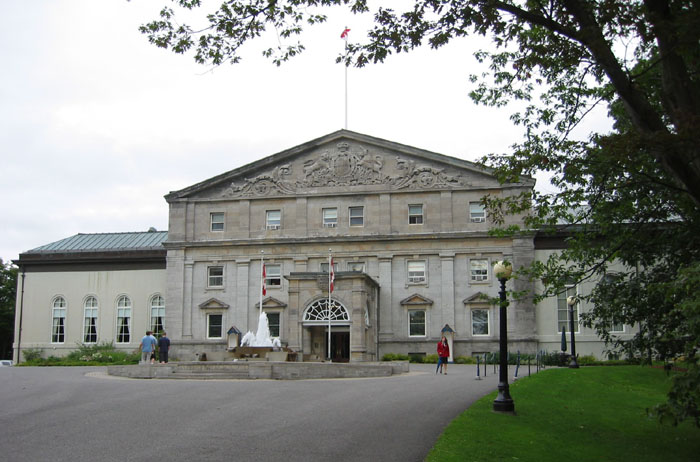
Photo: – Wladyslaw [Disk.] · CC BY-SA 3.0 · Wikimedia Commons
National Gallery of Canada is a museum of art in Ottawa, Canada. The National Gallery of Canada was founded in 1880. The free Lokali audio guide runs 7 minutes.
✓ Published October 2026 · how we write these guides
Visitor facts
| Lokali audio guide | 7 min · free |
|---|---|
| Type | Museum |
| Location | Ottawa, Canada |
| Coordinates | 45.4295, -75.6989 |
| Official website | gallery.ca |
| Languages | 50+, in the Lokali app |
The story
Stand at the foot of the building for a moment and listen. Traffic hums along Sussex Drive. Wind comes off the Ottawa River. Then you notice the light on the glass. The tall crystal pavilion catches the sky and throws it back, grey or blue or gold, depending on the hour. Under your feet there is cool stone. Above you there is almost nothing but air and glass. This is the National Gallery of Canada, and it was designed to make you look up.
Before you even reach the doors, something enormous stands guard on the plaza. It is a giant spider, its legs rising high above the heads of passers-by. This is Maman, by the French-American artist Louise Bourgeois. The title means mother. Walk underneath and look up into the body. You will see a sac holding marble eggs. Bourgeois linked the spider to her own mother, a patient weaver and repairer of tapestries. Many visitors see a monster at first. Bourgeois meant a protector.
The building behind the spider is the work of the architect Moshe Safdie. It opened in 1988, after the national collection had moved between several temporary homes for about a century. The gallery itself is much older than this building. It was founded in 1880, in the early years of the Canadian federation. For decades the collection sat in borrowed rooms, including space shared with other institutions. This granite and glass structure gave it a permanent home at last.
Now look across the river towards Parliament Hill. You can see the round, many-sided shape of the Library of Parliament. Then look back at the glass pavilion above the gallery entrance. The two shapes are related. Safdie designed the Great Hall as a modern echo of that Gothic Revival library. One is stone and full of books. The other is glass and full of light. They face each other across the city like a question and an answer.
Once inside, the most surprising part of the building is the way you climb. A long, gently sloping ramp runs beside a colonnade of glass and pillars. There are no steep stairs here, just a slow rise. As you walk, the windows frame the river, the cliffs and the copper roofs of Parliament. Safdie wanted the approach to feel like a procession. By the time you reach the Great Hall, you have already been looking at Ottawa for several minutes.
The Great Hall itself is a tall, open room of glass. It is used for events and gatherings, but it is worth a pause even when it is empty. Stand near the windows and look out over the water. On clear days, the view runs across to Gatineau, in Quebec, on the far bank. This is a reminder that the gallery sits on a border between two provinces, and between two languages. Every label inside appears in both English and French.
Here is a detail many visitors miss. Somewhere inside this modern building there is an entire nineteenth-century chapel. It came from the Rideau Street Convent, a Catholic school in Ottawa. When the convent was demolished in the early 1970s, people in the city campaigned to save the chapel interior. Its pieces were taken apart and stored. Later, they were rebuilt inside the gallery. Today you can walk into a room of carved wood, slender columns and a fan-vaulted ceiling, sitting quietly inside walls of concrete and glass.
The chapel has sometimes been used to show sound art. One well-known work shown there is The Forty Part Motet by the Canadian artist Janet Cardiff. It uses forty speakers, each playing a single voice from a choir. Walk between them and you can hear one singer breathe, then step back and hear the whole choir at once. Whether or not it is installed during your visit, the chapel is a good place to sit for a minute and simply listen to the room.
The heart of the collection is Canadian art. In the Canadian galleries, look for the painters often called the Group of Seven, along with Tom Thomson, who worked closely with them. In the early twentieth century, these artists travelled into the northern Ontario wilderness. They painted twisted pines, cold lakes and autumn hills in bold, flat colour. For many Canadians, these paintings shaped the idea of what their country looks like. Notice how often there are no people in the scenes at all.
The story on these walls is wider than the wilderness painters. The gallery holds a large collection of Indigenous art, from historic objects to contemporary works. In recent years, the museum has given these works a more central place in how it tells the story of art in Canada. As you walk, read the labels closely. Many name the nation or community an artist belongs to. The collection asks you to see Canadian art as many traditions side by side, not one single line.
The gallery also collects art from around the world, and one painting here once caused a national argument. It is Voice of Fire, by the American painter Barnett Newman. It is very tall and very simple — a red stripe between two blue stripes. When the gallery bought it around 1990, many people were angry. Politicians and newspapers asked why public money had gone to three stripes. Today it hangs quietly, and the argument has become part of its story. Stand close, then far away, and see how it changes.
When you need a break, look for the inner courtyards and the quiet corners where the building opens to the sky. Light falls differently here than in the galleries. The stone and glass let in the weather, so the mood of the museum shifts with the season. In winter, the glass can glow white with snow light. In summer, the courtyards feel bright and still. The architecture was designed to let you rest your eyes between rooms full of paintings.
As you step back outside, take one last look around. Maman is still standing on her thin legs. Across the street, the twin silver spires of Notre-Dame Cathedral Basilica rise over the market district. Behind you, the glass pavilion catches the light again. Walk a little way towards the river, and the gallery begins to look like part of the cliff itself. Notice how quiet it feels for a place so close to the centre of a capital... and how the city keeps appearing in its windows, as if it belongs in the collection too.
Key facts
What to look for
Practical tips
Common questions
Is there a free audio guide to National Gallery of Canada?
Yes — the Lokali app narrates National Gallery of Canada free of charge in 50+ languages. The guide runs about 7 minutes, covers the history, what to look for on site and practical tips, and works offline once downloaded.
Where is National Gallery of Canada?
National Gallery of Canada is in Ottawa, Canada, at 45.4295, -75.6989. Tap the map link on this page for directions from where you are.
What is National Gallery of Canada known for?
The National Gallery of Canada was founded in 1880. Architect Moshe Safdie designed the current building, opened 1988.
What should you look for at National Gallery of Canada?
Marble eggs held inside the spider's body above you. The fan-vaulted ceiling inside the reconstructed Rideau Chapel. Twisted pines and flat colour in Group of Seven paintings.
What should you know before visiting National Gallery of Canada?
Walk the long ramp slowly and watch the river views. Visit the Rideau Chapel and sit quietly for a moment.
On the map
Opens directions to National Gallery of Canada from your location.
More to see in Ottawa



Hear National Gallery of Canada in your language
The full story, narrated, in 50+ languages. Download it before you go and it plays offline, at your own pace, with no ticket and no tour group.