
Saint-Gervais-Saint-Protais
48.8556° N · 2.3544° E · Church
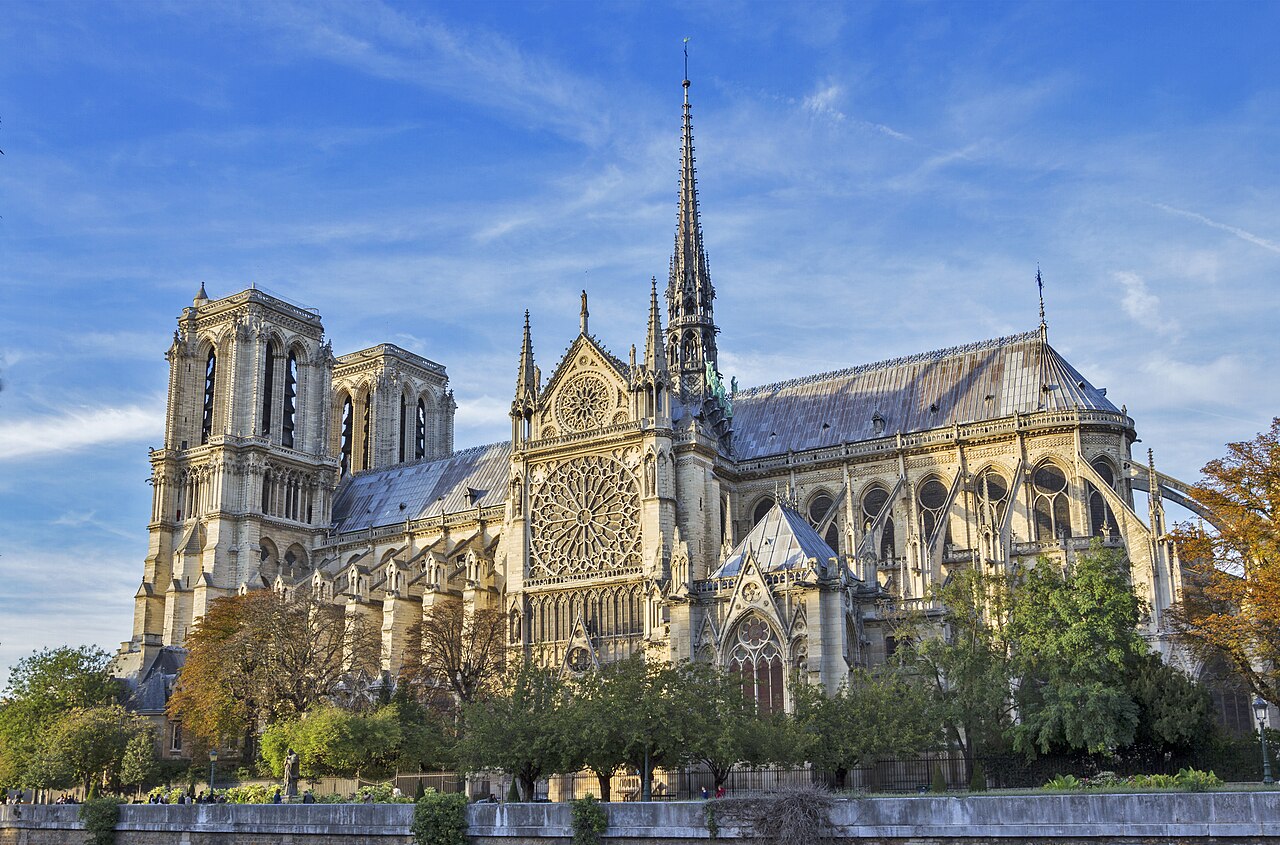
Photo: Arthur Weidmann · CC BY-SA 4.0 · Wikimedia Commons
Saint-Gervais-Saint-Protais is a church located in Paris, France. Named after Gervasius and Protasius, early Christian martyrs of Milan. The free Lokali audio guide runs 7 minutes.
✓ Published October 2026 · how we write these guides
Visitor facts
| Lokali audio guide | 7 min · free |
|---|---|
| Type | Church |
| Location | Paris, France |
| Coordinates | 48.8556, 2.3544 |
| Official website | paris.fraternites-jerusalem.org |
| Languages | 50+, in the Lokali app |
The story
Stand still for a moment on the small square behind the Hôtel de Ville. The traffic of the Right Bank thins out here. Pale stone rises in front of you, column upon column, and somewhere inside, if you are lucky, an organ is warming up. Listen for the sound of sandals on stone, or a chant in many voices. This is Saint-Gervais-Saint-Protais, one of the oldest parishes on this side of the Seine. It is a church most visitors walk past on their way to the Marais.
The ground under your feet matters. This square sits on a slight rise, a low mound that once kept early Parisians above the floods of the river. A church has stood on this spot since the early Middle Ages. The building you see today is much later, but it carries that old purpose. It is a place of gathering, raised a little above the water. It is set just far enough back from the river to feel sheltered.
The two names on the church belong to Gervasius and Protasius. According to Christian tradition, they were brothers, and some say twins. They were martyred in Milan during the Roman era. Their story became famous because of Saint Ambrose, the bishop of Milan. Late in the fourth century, he announced that he had found their remains. Their cult then spread across Europe. Paris is a long way from Milan, but these two Italian saints gave their names to this corner of the city.
Now look at the facade. It does not look like Notre-Dame, and that is the first surprise. Instead of pointed arches and gargoyles, you see classical columns stacked in three levels. At the bottom are the plain, sturdy columns of the Doric order. Above them are columns with scroll-shaped tops, called Ionic. At the top are the leafy, decorated Corinthian columns. This front was built in the early seventeenth century. It is often described as the first church facade in Paris to stack the three classical orders this way.
Scholars still debate who designed this front. It is usually linked to Salomon de Brosse, the architect of the Luxembourg Palace, though some credit others. Either way, the idea was new for its time. Ancient Rome had come to a Gothic city. Behind this facade, the interior tells a very different story. It is like a modern front door fitted onto an older house. Walk a few steps closer, and you can see where the new stone meets the older body of the church.
Inside, the building is late Gothic. The style is often called Flamboyant, from the French word for flame. The tracery in the windows curls and flickers upward like fire. Construction of this Gothic church began at the end of the fifteenth century. It continued for well over a century. That explains the mix you will notice. The structure is medieval in spirit, the front is classical, and the details come from every decade in between.
Look up as you walk down the nave. The vaults rise high and narrow, and the light falls in tall, cool columns. Much of the old stained glass was lost over the centuries. Some sixteenth-century panels still survive in the side chapels. They are worth seeking out slowly. In the chapel behind the main altar, look for the stone hanging from the centre of the vault. It is a carved pendant, which appears to float in the air. It shows the skill of late Gothic masons.
Here is the second surprise, and it is a matter for the ears. For around one and a half centuries, the organists of this church came from one family — the Couperins. The most famous was François Couperin, a composer at the court of Louis the Fourteenth. The family lived nearby and played this instrument across generations. The organ here is among the oldest in Paris. When it plays, you hear an instrument that carries sounds from the age of Versailles.
This church also carries a darker memory. On Good Friday in 1918, during the last year of the First World War, worshippers had gathered for the afternoon service. A shell from a German long-range gun struck the building. The gun was firing from more than one hundred kilometres away. Part of the vault collapsed onto the crowd below. Dozens of people were killed. It was one of the deadliest single strikes on Paris during the war. Look for the memorial inside that remembers the victims.
Today the church has a new life. Since the 1970s, it has been home to the Monastic Fraternities of Jerusalem. This is a community of monks and nuns who live and work in the city rather than in a remote abbey. Their sung prayers fill the nave at set times each day. The voices are simple and many-layered. If you arrive during an office, sit quietly at the back. Visitors are welcome to listen.
Step back outside and find the elm tree on the square. For centuries, an elm stood in front of this church. Locals say that people met under it to settle debts and disputes. Some say justice was handed out in its shade. An old French expression, roughly meaning wait for me under the elm, became a joke about waiting for someone who never comes. The tree you see now is a later replacement, but it marks the same old meeting place.
Now turn toward the narrow street running beside the church, rue François-Miron. Look up at the balconies of the old houses there. Some of the iron railings carry a small elm tree pattern. It is a quiet tribute to the tree on the square. Nearby, the half-timbered house fronts and slanting rooftops show how this corner looked before Paris was rebuilt with wide boulevards. It is a short walk, and few people slow down to notice it.
Before you go, stand once more in front of the facade. Notice how the three levels of columns lead your eye upward, toward the sky above the rooftops. Behind you, the city moves quickly toward the river and the town hall. Here, the stone holds still. Perhaps the organ is silent now, or perhaps the monks are singing again. Either way, as you walk away, listen for the moment the church sounds fade back into the noise of Paris.
Key facts
What to look for
Practical tips
Common questions
Is there a free audio guide to Saint-Gervais-Saint-Protais?
Yes — the Lokali app narrates Saint-Gervais-Saint-Protais free of charge in 50+ languages. The guide runs about 7 minutes, covers the history, what to look for on site and practical tips, and works offline once downloaded.
Where is Saint-Gervais-Saint-Protais?
Saint-Gervais-Saint-Protais is in Paris, France, at 48.8556, 2.3544. Tap the map link on this page for directions from where you are.
What is Saint-Gervais-Saint-Protais known for?
Named after Gervasius and Protasius, early Christian martyrs of Milan. Classical facade stacks Doric, Ionic and Corinthian columns.
What should you look for at Saint-Gervais-Saint-Protais?
Three stacked tiers of columns on the main facade. Flame-like curling tracery in the Gothic window frames. Carved stone pendant hanging from the Lady Chapel vault.
What should you know before visiting Saint-Gervais-Saint-Protais?
Time your visit for sung prayers to hear the monks. Sit quietly at the back during services and offices.
On the map
Opens directions to Saint-Gervais-Saint-Protais from your location.
More to see in Paris



Hear Saint-Gervais-Saint-Protais in your language
The full story, narrated, in 50+ languages. Download it before you go and it plays offline, at your own pace, with no ticket and no tour group.