
Tomb of the Unknown Soldier, Paris
48.8738° N · 2.2951° E · Memorial
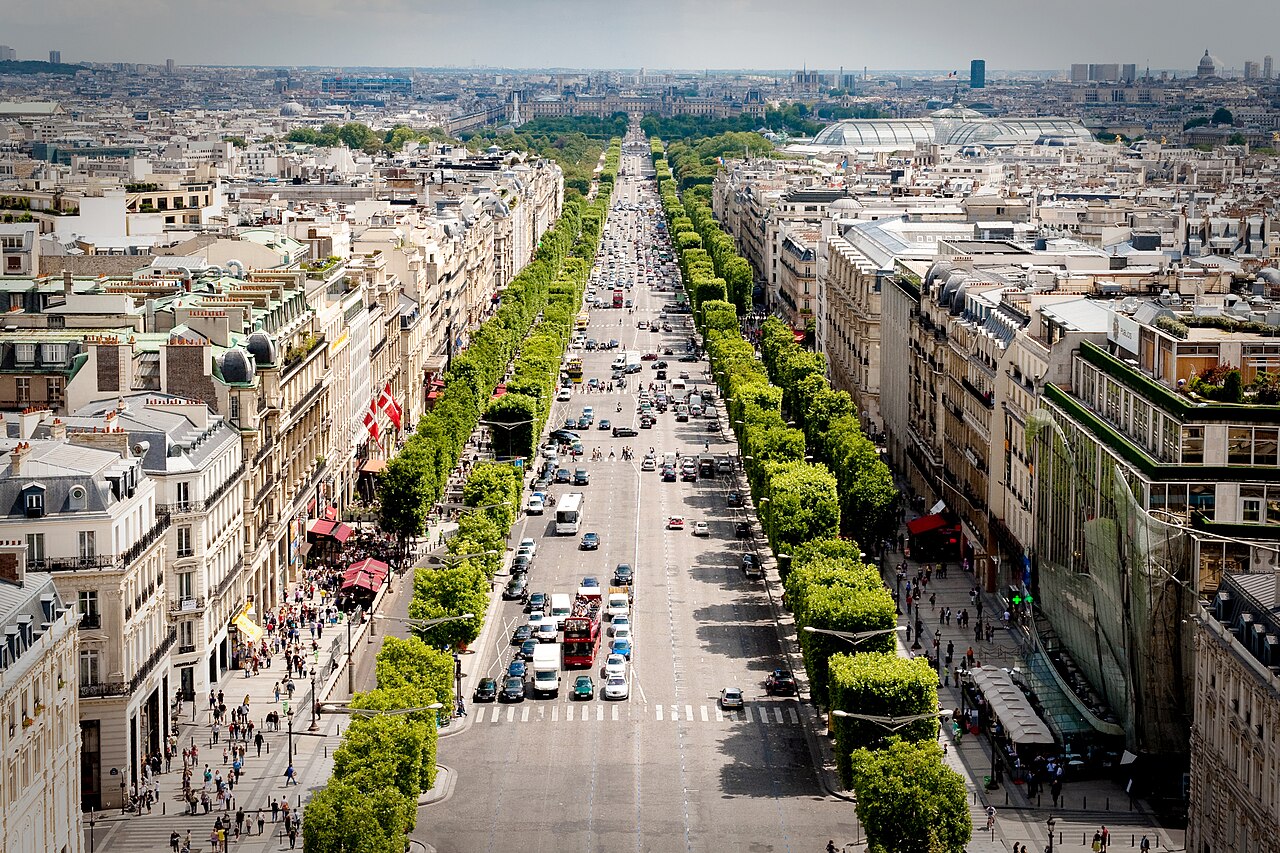
Photo: Zairon · CC BY-SA 4.0 · Wikimedia Commons
Tomb of the Unknown Soldier, Paris is a grave. It is in Paris, France. One unidentified French First World War soldier lies here. The free Lokali audio guide runs 6 minutes.
✓ Published October 2026 · how we write these guides
Visitor facts
| Lokali audio guide | 6 min · free |
|---|---|
| Type | Memorial |
| Location | Paris, France |
| Coordinates | 48.8738, 2.2951 |
| Languages | 50+, in the Lokali app |
The story
Stand still for a moment. All around you, traffic circles the great roundabout. Engines rumble, horns sound, scooters weave between buses. Yet here, beneath the vault of the Arc de Triomphe, the noise seems to fall away. At your feet lies a flat stone slab, set into the ground and framed in bronze. Beside it, a small flame burns in the open air. It moves in the wind that sweeps under the arch, and it never goes out.
This is the Tomb of the Unknown Soldier. Beneath this stone lies one French soldier from the First World War. Nobody knows his name, his age, or where he came from. That is the whole point. He was chosen so that every family who lost someone, and never found them, could believe this might be their son, their brother, their father. The inscription in French reads, in short: here lies a French soldier who died for his country, 1914 to 1918.
To understand why this tomb exists, imagine France in 1918. The war had killed well over a million French soldiers. Hundreds of thousands of them were never identified. Some were buried in mass graves. Others simply disappeared into the mud of the Western Front. For many families, there was no grave to visit. No place to bring flowers. The idea of one unknown soldier, honoured by the whole nation, answered that silence.
The choice itself was made at Verdun, the battlefield that became a symbol of French endurance. In November 1920, several coffins were brought to the citadel there. Each held an unidentified soldier from a different part of the front. A young soldier was asked to choose one. He placed a small bunch of flowers on a single coffin. That coffin travelled to Paris, and the others were buried at Verdun.
Here is a detail many visitors miss. The soldier did not go straight into the ground beneath this arch. He arrived in Paris on 11 November 1920, the second anniversary of the armistice. But he was laid to rest here only in January 1921, after some weeks of waiting. Some politicians had wanted him buried in the Panthéon, the resting place of great French figures. In the end, the arch won. A soldier from the trenches would lie under a monument to the army.
The flame came later. It was first lit in 1923. And here is the second surprise. The flame is not simply left to burn on its own. Every evening, veterans and members of remembrance associations gather here in a short, formal ceremony. They rekindle the flame and lay flowers. Veterans say this ritual has continued every single evening since 1923, even through the years of German occupation in the Second World War.
That ceremony is worth seeing if you can. It is quiet and simple. Flags are carried by older men and women, often wearing medals. Sometimes schoolchildren take part, or delegations from other countries. A bugle may sound. The people watching often fall silent without being asked. In a city famous for its noise and speed, it is one of the few daily moments when strangers stand together and say nothing.
Now look up. The arch above you is much older than the tomb. Napoleon ordered it in 1806, after his victory at Austerlitz, to honour his armies. He never saw it finished. Work stopped and started through changes of government, and the arch was only completed in the 1830s. Its designer was the architect Jean Chalgrin. So a monument to imperial glory became, a century later, a place of mourning.
That contrast is worth thinking about as you stand here. The walls of the arch carry the names of generals and battles from the Revolution and the Napoleonic era. The great carved groups on its pillars show soldiers marching off to fight. The most famous, on the side facing the Champs-Élysées, is by the sculptor François Rude. Parisians often call it La Marseillaise, after the national anthem. Above, glory. Below, one nameless man.
The tomb has also been a stage for history. When German troops occupied Paris in 1940, they paraded around this arch. Later that same year, on 11 November, students gathered here in defiance of the occupiers, a protest remembered as an early act of resistance. In 1944, after the liberation of Paris, Charles de Gaulle came here to honour the soldier. The great roundabout around you now carries his name.
Around the slab, look for the bronze plaques set into the ground. They mark other moments in French memory. One recalls de Gaulle's radio appeal from London in June 1940, calling on the French to keep fighting. Others honour soldiers of later conflicts. Over time, the tomb has come to stand for all French soldiers who died without a name, not only those of 1914 to 1918.
One practical note, before you go. Do not try to cross the roundabout on foot. It is one of the busiest junctions in Paris, with avenues pouring traffic in from every direction. Use the underground passage instead, which comes up right beside the arch. The tomb area under the vault can be visited without climbing to the top. If you do want the view from the roof, that is a separate visit with its own entrance.
Before you leave, look once more at the flame. Notice how small it is against the size of the arch. Notice the flowers, some fresh, some already fading. Listen to the traffic, still turning around you, as it does every hour of every day. Somewhere beneath your feet lies a man whose name nobody will ever know. As you walk back toward the passage, you carry a little of that silence with you.
Key facts
What to look for
Practical tips
Common questions
Is there a free audio guide to Tomb of the Unknown Soldier, Paris?
Yes — the Lokali app narrates Tomb of the Unknown Soldier, Paris free of charge in 50+ languages. The guide runs about 6 minutes, covers the history, what to look for on site and practical tips, and works offline once downloaded.
Where is Tomb of the Unknown Soldier, Paris?
Tomb of the Unknown Soldier, Paris is in Paris, France, at 48.8738, 2.2951. Tap the map link on this page for directions from where you are.
What is Tomb of the Unknown Soldier, Paris known for?
One unidentified French First World War soldier lies here. The soldier was chosen at Verdun in November 1920.
What should you look for at Tomb of the Unknown Soldier, Paris?
The French inscription carved into the tomb slab. The small flame burning in its bronze surround. Bronze plaques recalling de Gaulle's 1940 London appeal.
What should you know before visiting Tomb of the Unknown Soldier, Paris?
Use the underground passage instead of crossing the roundabout. Stay for the evening flame ceremony if you can.
When is the best time to visit Tomb of the Unknown Soldier, Paris?
Stay for the evening flame ceremony if you can.
On the map
Opens directions to Tomb of the Unknown Soldier, Paris from your location.
More to see in Paris



Hear Tomb of the Unknown Soldier, Paris in your language
The full story, narrated, in 50+ languages. Download it before you go and it plays offline, at your own pace, with no ticket and no tour group.