
Photo: João Carvalho · CC BY-SA 3.0 · Wikimedia Commons
Church of São Francisco is a church in Porto, Portugal. The stone church was built in the late fourteenth century. The free Lokali audio guide runs 6 minutes.
✓ Published October 2026 · how we write these guides
Visitor facts
| Lokali audio guide | 6 min · free |
|---|---|
| Type | Church |
| Location | Porto, Portugal |
| Coordinates | 41.1410, -8.6160 |
| Languages | 50+, in the Lokali app |
The story
Step off the cobbles and into the shade of the doorway. Your eyes need a moment. Outside, the light off the river is bright and white. Inside, the air is cool and still, and slowly the darkness turns to gold. It covers almost everything: the columns, the arches, the side chapels, the walls behind the altar. It is not paint. It is carved wood, coated in thin sheets of real gold leaf.
You are standing in the Church of São Francisco, in the old riverside quarter of Porto. From the outside, the building looks plain, even severe. It is a grey granite church in the Gothic style, with tall walls and a round rose window above the entrance. Nothing on the street prepares you for the interior. That contrast is the first surprise of this place, and it is worth noticing before anything else.
The story begins with the Franciscan friars, followers of Saint Francis of Assisi. Saint Francis taught a life of poverty and simplicity. His friars arrived in Porto in the thirteenth century, and they did not always find a warm welcome. The local bishop and other religious orders resisted them for years. Eventually the friars stayed, and the stone church you see today was built in the late fourteenth century, with royal support.
Look up at the structure itself, behind the gold. The bones of the church are Gothic, the medieval style of pointed arches, ribbed vaults and soaring vertical lines. In Porto, Gothic churches are rare, because so much was rebuilt in later centuries. Here, the original granite skeleton has survived. Try to imagine the space as the first friars knew it: bare stone, narrow windows, and long shadows. It would have felt very different.
Then the gold arrived. Over the seventeenth and eighteenth centuries, the interior was transformed with gilded woodwork, a Portuguese craft known as talha dourada, which simply means gilded carving. This was the Baroque age, a period of drama, movement and display in European art. Wealth from Portugal's overseas empire, including gold from Brazil, flowed into churches like this one. Carvers covered the walls with vines, grapes, birds, angels and twisting columns.
Here is the irony that many visitors miss. This is a church of the Franciscans, an order founded on poverty. Yet it became one of the most lavishly decorated interiors in the country. Much of the money came from wealthy merchant families, who paid for chapels where they could be remembered and buried. Locals sometimes say the church grew too rich for its own ideals. Whether or not that tale is true, the tension is real, and you can feel it standing here.
Find the large altarpiece known as the Tree of Jesse. It was carved in the early eighteenth century and it is one of the most admired works inside. The idea comes from the Bible. Jesse was the father of King David, and the tree shows the family line that leads, in Christian tradition, to Jesus. Follow the carved branches upward. Each figure sits on its own limb, and the tree climbs toward the Virgin Mary near the top.
Take a moment with the details, not just the overall glow. Look at how the light from the windows catches only part of the carving at any time. The gold seems to shift as clouds pass outside. Notice the small faces hidden in the foliage, and the way the columns twist like rope. This is woodwork made to be seen in candlelight, and even under modern lighting it keeps that quality of flicker and depth.
Now, a second surprise lies beneath your feet. Below the church and the neighbouring building are catacombs, where Franciscan friars and members of wealthy families were buried for generations. In parts of the crypt, numbered stone slabs line the floor and walls. At one point, you can look through a grate into an ossuary, a chamber filled with human bones. It is quiet down there, and cooler still. Many visitors find it the most moving part of the visit.
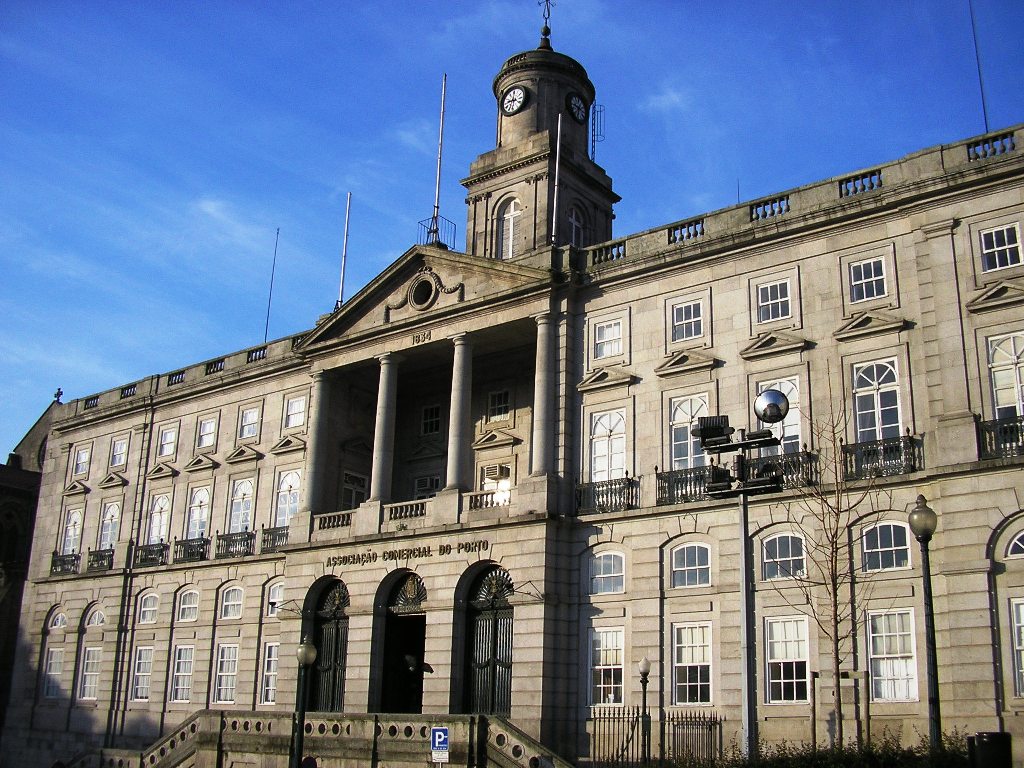
The building beside the church once belonged to a much larger Franciscan convent. In 1832, during the Portuguese civil war known as the Liberal Wars, Porto was under siege. A fire badly damaged the convent, and its cloisters were destroyed. Soon after, the religious orders in Portugal were dissolved. On the ruins of the old convent, the city's merchants built the Stock Exchange Palace, the grand building you can see right next door.
That history explains why this church feels different from a working parish today. It now operates mainly as a museum and a monument, rather than a place of daily worship. Visits usually include the church, the catacombs and a small museum of religious art. The church also sits inside the historic centre of Porto, which was listed as a UNESCO World Heritage Site in 1996, together with the riverside district around you.
Before you leave, step back outside and look at the main entrance again. The doorway is framed by a Baroque portal, added long after the Gothic walls were raised. Above it, the rose window still carries the medieval character of the original building. In one facade, you can read two very different centuries side by side: the plain faith of the friars and the confident wealth of the merchant city that followed them.
Now turn toward the river. You can hear the gulls, the traffic along the waterfront, perhaps music drifting up from the cafés below. The granite under your feet is the same stone used in the church walls. As you walk away, keep the image of that dark interior and its quiet gold in your mind. Porto often hides its richest rooms behind its plainest faces... and this church is one of the clearest examples.
Key facts
What to look for
Practical tips
Common questions
Is there a free audio guide to Church of São Francisco?
Yes — the Lokali app narrates Church of São Francisco free of charge in 50+ languages. The guide runs about 6 minutes, covers the history, what to look for on site and practical tips, and works offline once downloaded.
Where is Church of São Francisco?
Church of São Francisco is in Porto, Portugal, at 41.1410, -8.6160. Tap the map link on this page for directions from where you are.
What is Church of São Francisco known for?
The stone church was built in the late fourteenth century. Gilded woodwork was added mainly in the seventeenth and eighteenth centuries.
What should you look for at Church of São Francisco?
The round rose window above the main Gothic entrance. Carved branches climbing the Tree of Jesse altarpiece. Twisting rope-like columns covered in gold leaf.
What should you know before visiting Church of São Francisco?
Buy your ticket at the separate visitor entrance beside the church. Pause inside the door so your eyes adjust to the darkness.
On the map
Opens directions to Church of São Francisco from your location.
More to see in Porto


Hear Church of São Francisco in your language
The full story, narrated, in 50+ languages. Download it before you go and it plays offline, at your own pace, with no ticket and no tour group.