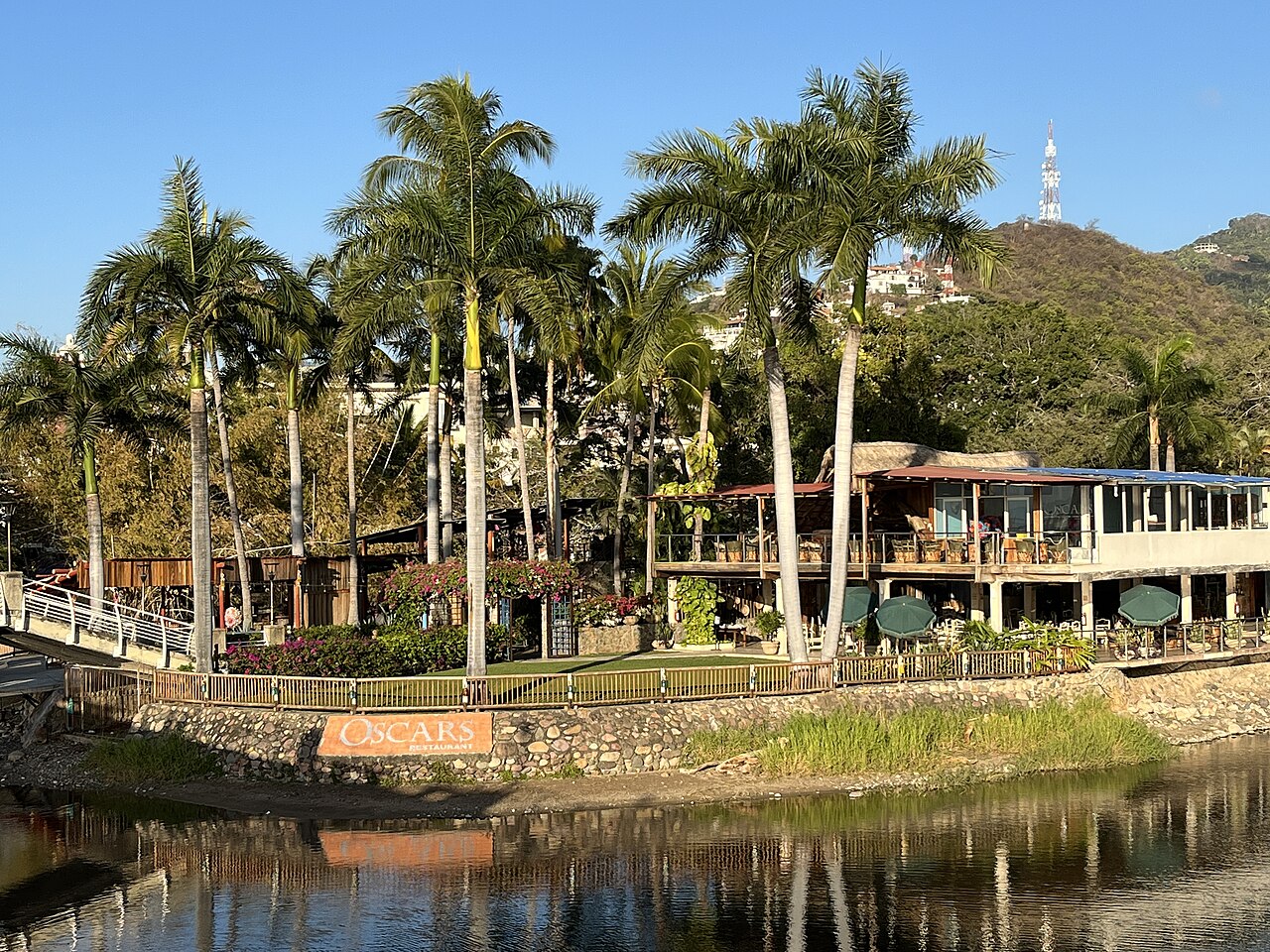
Río Cuale Island
20.6260° N · 105.2685° W · Park
Río Cuale Island is a small island in the Río Cuale river mouth, accessible by footbridge from Old Town. It is in Puerto Vallarta, Mexico. Most visitors spend 45–60 min here. The free Lokali audio guide runs 5 minutes.
✓ Verified August 2026 · how we write these guides
Visitor facts
| Time needed | 45–60 min |
|---|---|
| Lokali audio guide | 5 min · free |
| Type | Park |
| Best for | Local life |
| Location | Puerto Vallarta, Mexico |
| Coordinates | 20.6260, -105.2685 |
| Languages | 45, in the Lokali app |
The story
The river runs on both sides of you here, soft and steady. Trees lean overhead and filter the sun into green light. You can hear water moving over stones, and birds in the branches. The city is all around, yet it feels far away. This is the long island in the middle of the Cuale River.
The Cuale River comes down from the hills and runs through the center of Puerto Vallarta on its way to the sea. Partway through the town, the river splits in two and flows around a long, narrow island. This strip of land is the Isla Cuale. Footbridges cross to it from both banks.
The island is young, as land goes. It formed in 1926, when the river left behind a long bank of sand. In its early days it carried other names. Some called it Santa Clara Island. Others called it Children's Island, because the young of the town came here to play by the water.
For many years the island served plain and useful purposes. Its banks were a place to wash clothes and spread them to dry. The river gave water to the town. Children swam and played along the sand. Later, small markets grew here, where traders sold crafts and goods. The island was woven into the daily life of Puerto Vallarta.
The wider change came after 1964. That year the film The Night of the Iguana, made just south of the town, drew the world's attention to Puerto Vallarta. Visitors began to arrive in greater numbers, and hotels rose along the shore. Through the following years, the island slowly turned from a working riverbank into a place of art and culture.
Starting in the 1980s, artists and the local council reshaped the island. They built footbridges and laid cobbled paths. Studios and craft shops opened under the trees. Cafes and small galleries followed, tucked among the leaves. The island became a calm, green retreat in the middle of the busy town, shaded and cool even at midday.
One of the most visited spots on the island honors a filmmaker. A statue of John Huston, the director of The Night of the Iguana, sits here among the trees. It was put in place in 1988, to mark twenty-five years since the film was made. The sculptor Carlos Ramirez created it. The figure sits calmly, as if resting in the shade by the river.
Today the island is a center of culture for the town. The Vallarta Institute of Culture is based here. So is a small museum that tells the story of the region and its people. Classes, shows, and gatherings are held on the island through the year. Art and learning have become its main work.
Walk the length of the island and you pass under tall trees the whole way. Their roots grip the banks and their branches meet overhead. Iguanas often rest on branches and walls, still as carvings until they move. Market stalls sell clothing, art, and souvenirs along the central path. The sound of the river stays with you, soft beneath the voices of sellers and visitors.
The bridges that cross the river are part of the island's character. Some are solid and wide. Others are narrow suspension bridges that sway a little underfoot. From the middle of a bridge you can look down the length of the river, framed by green banks and the rooftops of the town.
At the wide lower end of the island, near the sea, the river opens and slows. Restaurants sit close to the water, their tables set under the trees. You can eat in the shade and watch the current pass below. Birds wade in the shallows on thin legs. The air is cooler here than in the streets, moved by the breeze that follows the river.
The island changes with the seasons of the river. In the dry months the Cuale runs low and clear, and sandbanks show along its edges. In the rains it rises and races, brown and strong, and the island stands firm against the higher water. It is, after all, a child of the river itself.
Cross one of the bridges and stop in the middle. Below you the Cuale keeps moving, just as it did when this island was only a bank of sand. Listen to the water. In the center of a town that has grown and changed so much, this narrow green island holds onto a slower and older kind of time.
Key facts
What to look for
Practical tips
Common questions
How long do you need at Río Cuale Island?
Plan 45–60 min. That is the time most visitors spend at Río Cuale Island. The free Lokali audio guide adds about 5 minutes of narration you can listen to as you walk, so it fits inside your visit rather than adding to it.
Is there a free audio guide to Río Cuale Island?
Yes — the Lokali app narrates Río Cuale Island free of charge in 50+ languages. It covers the history, what to look for on site and practical tips, and it works offline once downloaded.
Where is Río Cuale Island?
Río Cuale Island is in Puerto Vallarta, Mexico, at 20.6260, -105.2685. Tap the map link on this page for directions from where you are.
What should you know before visiting Río Cuale Island?
Cross the swaying suspension bridge over the river.
What is Río Cuale Island known for?
The island formed from river sand in 1926.
What is the best time to visit Río Cuale Island?
The island is quieter in the early afternoon.
On the map
Opens directions to Río Cuale Island from your location.
More to see in Puerto Vallarta



Hear Río Cuale Island in your language
The full story, narrated, in 50+ languages. Download it before you go and it plays offline, at your own pace, with no ticket and no tour group.