Musée de la Civilisation
46.8122° N · 71.2011° W · Museum
Musée de la Civilisation is a museum in Quebec, Canada. Modern museum in the lower old city exploring Quebec's cultural identity through interactive exhibits on indigenous heritage, colonialism, and contemporary life. Most visitors spend 2–3 hours here. The free Lokali audio guide runs 5 minutes.
✓ Verified August 2026 · how we write these guides
Visitor facts
| Time needed | 2–3 hours |
|---|---|
| Lokali audio guide | 5 min · free |
| Type | Museum |
| Best for | Editors' pick |
| Location | Quebec, Canada |
| Coordinates | 46.8122, -71.2011 |
| Languages | 45, in the Lokali app |
The story
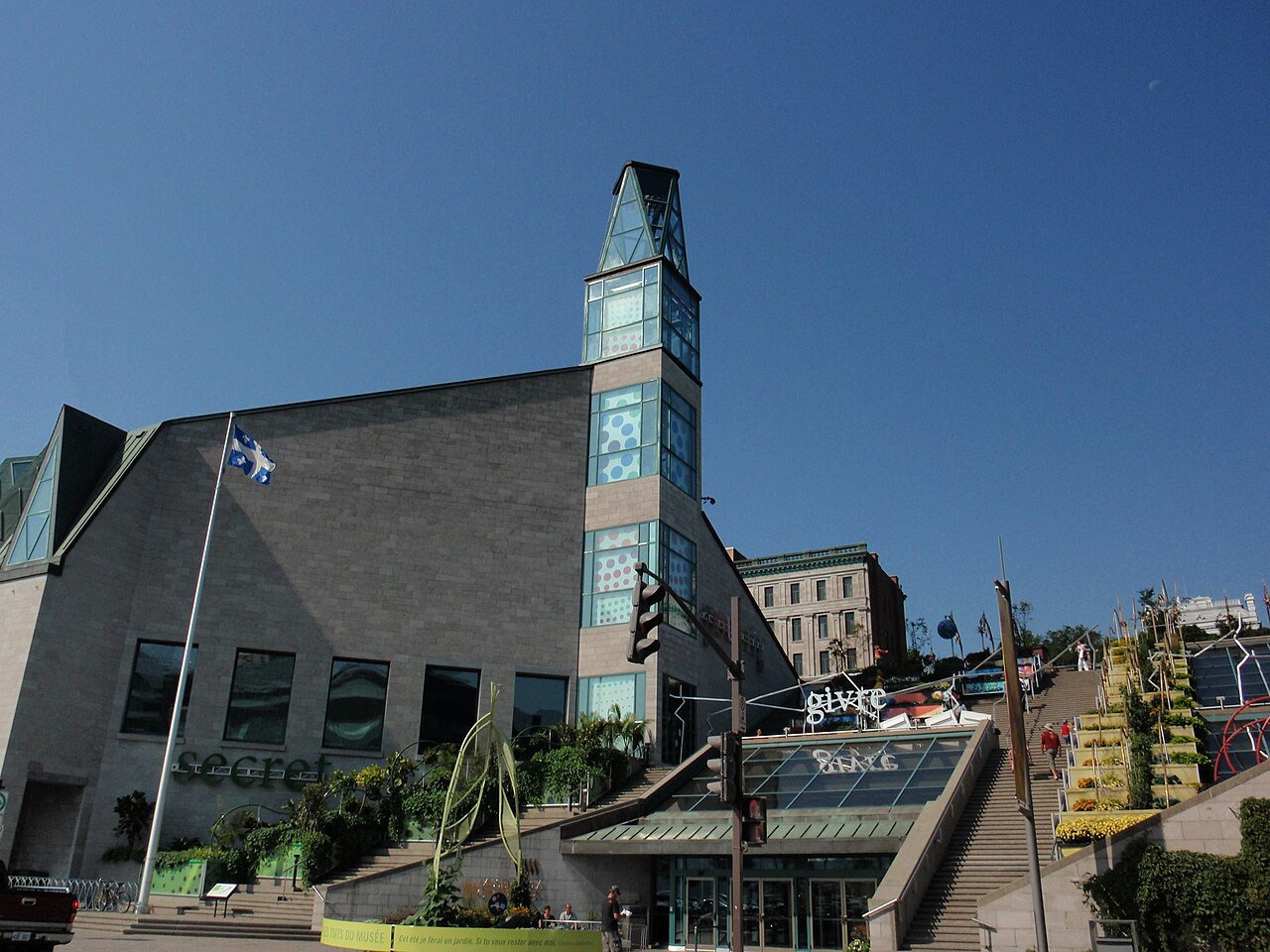
You walk along the old port, where stone buildings meet the river. Then a wall of glass and pale stone rises in front of you. A tall metal shape points toward the sky above the roof. The building looks modern, yet it sits among much older ones. You have reached the Musée de la Civilisation, the Museum of Civilization.
The museum stands in the lower part of old Quebec City, close to the Saint Lawrence River. This area was once the heart of trade in the city. Ships docked here, and goods moved through the narrow streets nearby. The museum now brings new life to this old quarter. Visitors fill streets that once belonged to merchants and sailors.
The building opened in 1988. A well-known architect named Moshe Safdie designed it. He had a hard task. He needed to place a large modern museum among small, old, protected buildings. His design fits the new structure carefully between and around them. The result respects the old town while still looking clearly of its own time.
The museum is not only new. It wraps around older buildings from earlier centuries. One of them is a house from the eighteenth century. Inside, you can move from bright modern halls into rooms with old stone walls. The new and the old stand side by side. This mix is part of what makes the building worth seeing on its own.
As the name suggests, this museum is about people. Its exhibits explore how human beings live together. They look at culture, history, ideas, and daily life. Some show the story of this region and its people. Others come from far away, and from many different peoples around the world. A few exhibits stay in place for many years. Others last only a few months before they change. Together they give a wide view of human life.
The displays here change often. The museum holds both permanent exhibits and temporary ones. This means a visit next year may be very different from a visit today. It is a good idea to check what is showing before you arrive. There is almost always something new to return for.
The museum was built with all visitors in mind. The exhibits often invite you to touch, to listen, and to take part, not only to look. Children and adults can both find something here. Screens, objects, and sound work together to tell each story. Families with young children often spend a whole afternoon inside.
Some of the most important displays tell the story of the first peoples of this land. They lived here long before Europeans arrived. The museum has worked with these communities to share their history and their living culture in their own voice. These exhibits treat that culture as present, not only as part of the past.
Take time to notice the building itself as you move through it. Light falls from above into open spaces. Stairs and walkways connect the levels. From some windows you can see the river and the rooftops of the old town outside. The building guides you gently from one area to the next.
The area around the museum rewards a short walk. Narrow streets, old squares, and the waterfront are all close by. Many visitors join a trip to the museum with a walk through the old port. The two fit well together in a single afternoon. Cafés and small shops sit only steps from the door.
Plan to spend at least two hours inside. Wear shoes you can walk in, because there is a lot of ground to cover across the floors. There is usually a place to leave coats and bags near the entrance. A café and a shop are also on site, so you can rest partway through.
The museum welcomes visitors from around the world. Details are offered in more than one language, and staff are used to helping travellers. You can move through at your own speed, and there is no single right path. Some people read every label, while others simply wander and look. Either way works well here. The cafe is a good place to pause and think about what you have seen. Allow extra time if you like to read closely.
Before you leave, pause in one of the open halls. This museum asks a simple question in many forms. How do people live together, and how have they always done so? You carry that question with you back out into the streets, where the answer is still being written.
Key facts
What to look for
Practical tips
Common questions
How long do you need at Musée de la Civilisation?
Plan 2–3 hours. That is the time most visitors spend at Musée de la Civilisation. The free Lokali audio guide adds about 5 minutes of narration you can listen to as you walk, so it fits inside your visit rather than adding to it.
Is there a free audio guide to Musée de la Civilisation?
Yes — the Lokali app narrates Musée de la Civilisation free of charge in 50+ languages. It covers the history, what to look for on site and practical tips, and it works offline once downloaded.
Where is Musée de la Civilisation?
Musée de la Civilisation is in Quebec, Canada, at 46.8122, -71.2011. Tap the map link on this page for directions from where you are.
What should you know before visiting Musée de la Civilisation?
Check current exhibits before you visit; displays change often.
What is Musée de la Civilisation known for?
The Museum of Civilization opened its doors in 1988.
What is the best time to visit Musée de la Civilisation?
The permanent collection on Québécois society is thorough and thoughtfully curated.
On the map
Opens directions to Musée de la Civilisation from your location.
More to see in Quebec


Hear Musée de la Civilisation in your language
The full story, narrated, in 50+ languages. Download it before you go and it plays offline, at your own pace, with no ticket and no tour group.