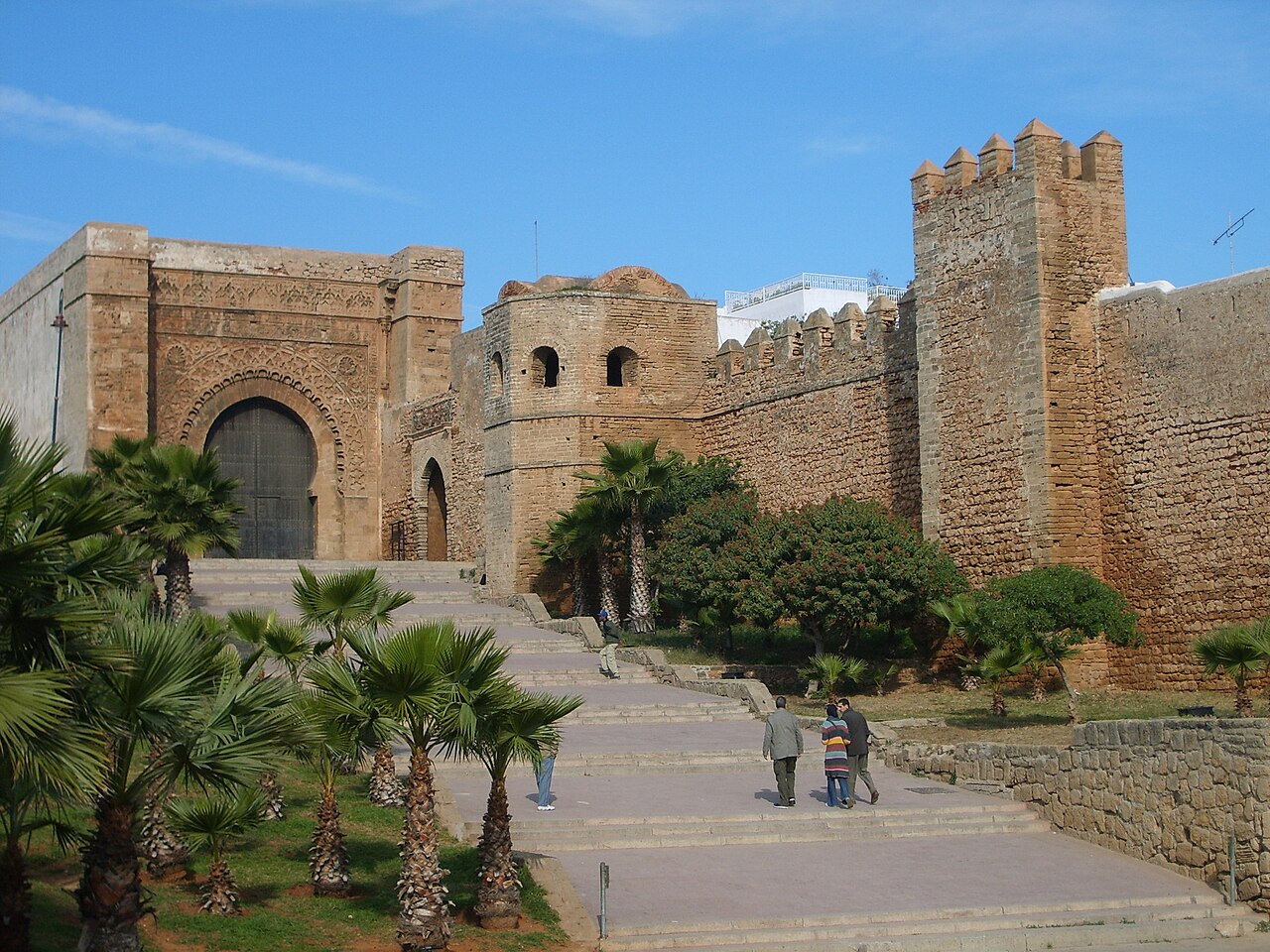
Kasbah of the Udayas is a 12th-century fortified settlement perched above the Bou Regreg River, featuring blue-and-white washed streets, traditional riads, and sweeping views over the Atlantic. It is in Rabat, Morocco. Most visitors spend 1–2 hours here. The free Lokali audio guide runs 5 minutes.
✓ Verified August 2026 · how we write these guides
Visitor facts
| Time needed | 1–2 hours |
|---|---|
| Lokali audio guide | 5 min · free |
| Type | Fortress |
| Best for | Editors' pick |
| Location | Rabat, Morocco |
| Coordinates | 34.0209, -6.8416 |
| Languages | 45, in the Lokali app |
The story
Walk up the hill toward the great gate and pause. The walls around you are painted in two colors. The lower halves are deep blue. The upper halves are bright white. A cat naps in a doorway. Somewhere close the sea is moving. You have reached the oldest corner of Rabat. Few cars come here. Mostly there are footsteps and voices.
This place is called the Kasbah of the Udayas. A kasbah is a fortified citadel, a walled stronghold built to guard and to rule. This one sits on a rocky point. Below it, the Bou Regreg river meets the Atlantic Ocean. From the start, whoever held this height could watch the water in every direction. Ships could not pass into the river without being seen from these walls.
The story goes back to the middle of the twelfth century. Around the year 1150, an Almohad ruler named Abd al-Mumin built a citadel here. He placed a palace and a mosque inside the walls. He even had a canal dug to bring fresh water to the site. The fortress rose on the ground of an older religious outpost.
A later Almohad sultan made it grander. Yaqub al-Mansur ruled from 1184 to 1199. He planned a whole new imperial capital around this point. As part of that plan he raised a monumental gate for the kasbah. Today we call it Bab Oudaia. It was built between the years 1195 and 1199.
Stand before that gate and look up. It is one of the finest gateways in all of Almohad and Moroccan building. The stone is carved in bands of arches and patterns. There is no wooden door to draw the eye. The beauty lies entirely in the cut stone, layer upon layer around the opening. Take your time here. The longer you look, the more small shapes appear in the stone.
Step through into the narrow lanes. This is where the blue and white walls begin. The houses press close together. The streets twist and climb and fall. People live here still. The kasbah is not only a monument. It is a real neighborhood, with homes, doorways, flowerpots, and washing lines. Move gently and keep your voice low, because this is somebody's street.
The colors have a practical side as well as a beautiful one. White paint reflects the strong sun and helps keep the rooms below cooler. The blue is said to bring a sense of calm and coolness to the eye. Together they have become the signature look of this old quarter by the sea. Many visitors say the blue is the thing they remember most.
Follow the lanes and they will lead you toward the water. The kasbah ends at a wide viewing terrace above the river mouth. From here you can see the city of Sale across the Bou Regreg. You can see the open Atlantic. Small boats cross back and forth between the two banks all through the day. Gulls turn in the air above the waves. The light off the water is bright and clean.
Inside the walls there is also a quiet garden. It is laid out in the Andalusian style, with straight paths, shaped hedges, and fruit trees. The air there smells of orange blossom in spring. The sound of the streets fades away. It is a cool, shaded place to rest in the middle of the stone. Find a bench, sit, and let your eyes follow the neat rows of green.
There has long been a tradition of mint tea here. Cafes near the terrace serve it sweet and hot in small glasses. People sit for a long time, looking out at the water. There is no hurry at all. Watching the river and the sky is part of the visit, not a break from it.
The name Udayas comes from a tribe that was once settled in the kasbah to defend the city. Over the centuries the fortress changed hands and changed purpose many times. It guarded against pirates and rivals. It has served as a barracks, as a palace, and as a home. Each age left its mark, and yet the old shape of the walls held firm.
In 2012, the kasbah was recognized as part of the UNESCO World Heritage site of Rabat. That honor covers the walls, the gate, the garden, and the old houses inside. It protects not only the stones, but the whole living character of the place.
Before you leave, find a spot on the terrace and stop. Feel the wind off the ocean. Listen to the water below and the soft sound of the town behind you. People have stood on this exact height for almost nine hundred years, watching the same river meet the same sea.
Key facts
What to look for
Practical tips
Common questions
How long do you need at Kasbah of the Udayas?
Plan 1–2 hours. That is the time most visitors spend at Kasbah of the Udayas. The free Lokali audio guide adds about 5 minutes of narration you can listen to as you walk, so it fits inside your visit rather than adding to it.
Is there a free audio guide to Kasbah of the Udayas?
Yes — the Lokali app narrates Kasbah of the Udayas free of charge in 50+ languages. It covers the history, what to look for on site and practical tips, and it works offline once downloaded.
Where is Kasbah of the Udayas?
Kasbah of the Udayas is in Rabat, Morocco, at 34.0209, -6.8416. Tap the map link on this page for directions from where you are.
What should you know before visiting Kasbah of the Udayas?
Start uphill at the great gate and walk down toward the water.
What is Kasbah of the Udayas known for?
An Almohad citadel was built here around 1150.
What is the best time to visit Kasbah of the Udayas?
Arrive late afternoon when tour groups thin out.
On the map
Opens directions to Kasbah of the Udayas from your location.
More to see in Rabat


Hear Kasbah of the Udayas in your language
The full story, narrated, in 50+ languages. Download it before you go and it plays offline, at your own pace, with no ticket and no tour group.