
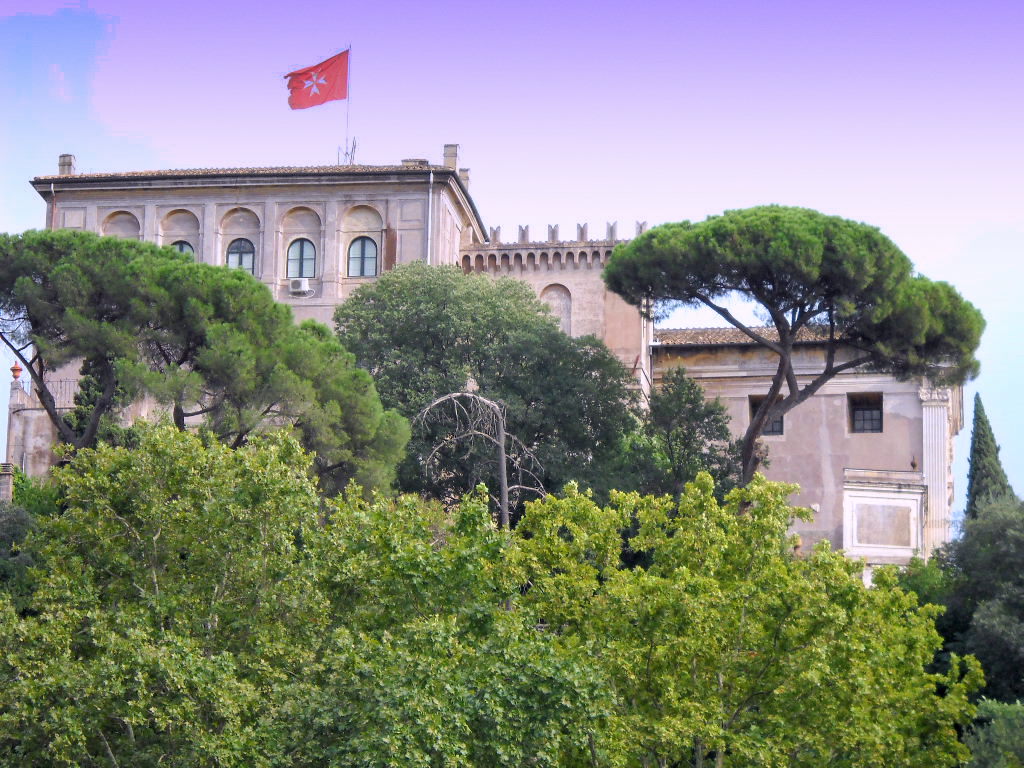
Photo: Livioandronico2013 · CC BY-SA 4.0 · Wikimedia Commons
Porta San Paolo is a building in Rome, Italy. Part of the Aurelian Walls, begun in the 270s. The free Lokali audio guide runs 7 minutes.
✓ Published October 2026 · how we write these guides
Visitor facts
| Lokali audio guide | 7 min · free |
|---|---|
| Type | Fortification |
| Location | Rome, Italy |
| Coordinates | 41.8767, 12.4815 |
| Languages | 50+, in the Lokali app |
The story
Listen first. Trams grind around the square, scooters whine past, and buses sigh at the kerb. Then, in the middle of all that motion, stand two round brick towers and a pale stone arch. They have not moved for well over a thousand years. Put your hand near the wall if you can. The bricks are thin, flat, and warm in the sun. Many of them were laid by Roman builders. This is Porta San Paolo, one of the old gates of Rome.
The gate belongs to the Aurelian Walls. These are the great defensive walls that Emperor Aurelian began in the 270s, at a time when Rome felt threatened by invaders from the north. For centuries the city had not needed walls at all. Its empire was its defence. But the third century was a time of crisis, and Rome finally drew a hard line around itself. The walls you see here ran for many kilometres around the city.
In Roman times this gate had a different name. It was the Porta Ostiensis, because the road through it led to Ostia. Ostia was Rome's port at the mouth of the Tiber River. Grain, oil, and wine came up this road to feed the capital. Today the same route is called the Via Ostiense. When you look south through the arch, you are looking down a road that carried supplies to a city of perhaps a million people.
So why the new name? Further down that road stands the Basilica of Saint Paul Outside the Walls. Christian tradition places the tomb of the apostle Paul there. Over the centuries, pilgrims walked through this gate on their way to his shrine. Slowly the old Roman name faded. The gate became Porta San Paolo, the Gate of Saint Paul. The road changed its purpose, but people kept walking along it.
Now look closely at the structure itself. The gate did not reach its present form in one moment. Early in the fifth century, under Emperor Honorius, the walls were raised and strengthened. More repairs came in later centuries. Notice the difference between the two sides. From inside the city, you can see two arches side by side. From outside, there is a single arch. That difference shows the gate's long history of rebuilding.
Here is a detail many visitors miss. This gate was not only a defence. It was also a place where Rome was defeated. In the sixth century, during the long wars between the Byzantine Empire and the Goths, Gothic forces under their king Totila entered Rome. According to the historian Procopius, they came in through this gate, after guards on the wall let them in. So a wall built to keep enemies out became, at one point, their way into the city.
Now turn and look beside the gate. You cannot miss it — a tall white pyramid, sharp and smooth against the sky. This is the Pyramid of Cestius. It was built in the late first century before Christ as the tomb of a Roman official named Gaius Cestius. At that time Egypt had just come under Roman control, and Egyptian styles were fashionable in Rome. The pyramid is older than the walls by almost three centuries.
So why did it survive? When Aurelian's builders laid out the walls, they did something practical. Instead of knocking down large existing structures, they often built them into the new line of defence. The pyramid became part of the wall. That decision almost certainly saved it. Many grand Roman tombs were later stripped for stone. This one was protected, because it was useful. A rich man's vanity project became a piece of military engineering.
The second surprise is much more recent. In September 1943, Italy announced an armistice with the Allies, and German forces moved to take control of Rome. Italian soldiers and ordinary citizens tried to stop them. Some of the fiercest fighting took place right here, around this gate. The resistance did not hold, and Rome was occupied for months. But Romans still remember it. Look for the memorial plaques on and near the walls. They honour the people who fought here.
Today, the gate has a quieter job. Inside the towers is a small museum about the Via Ostiense. It holds a model of ancient Ostia, along with objects connected to the road and the port. The rooms are narrow and the stairs are old, so it feels different from Rome's large museums. You climb inside the gate itself. Through small windows, you can see the traffic below and understand the wall as a building, not just a backdrop.
The area around the gate is worth a slow walk. Just behind the pyramid is the Non-Catholic Cemetery. Here, foreigners who died in Rome were buried, among them the English poets John Keats and Percy Bysshe Shelley. It is a calm place of cypress trees and cats. To the west is Testaccio, a working-class neighbourhood famous for its food markets and traditional Roman cooking. There, an artificial hill grew from millions of broken ancient oil jars.
Take a moment to notice how modern life flows around this old gate. The metro station opposite is called Piramide, after the tomb. Trains for the coast leave from a station nearby, still heading towards Ostia, as people did two thousand years ago. Commuters hurry across the square without looking up. To them, the gate is simply part of the journey home. In Rome, that is often how ancient things survive — they become ordinary.
Before you leave, stand still for a moment and look at the towers once more. Look at the line where the old brick meets later stone. Look at the pyramid's white face beside them, and the busy road running through the arch. Soldiers, pilgrims, merchants, invaders, and resistance fighters have all passed this point. Now it is your turn. As you walk away, listen to the trams again. They are travelling the same route the grain carts once followed.
Key facts
What to look for
Practical tips
Common questions
Is there a free audio guide to Porta San Paolo?
Yes — the Lokali app narrates Porta San Paolo free of charge in 50+ languages. The guide runs about 7 minutes, covers the history, what to look for on site and practical tips, and works offline once downloaded.
Where is Porta San Paolo?
Porta San Paolo is in Rome, Italy, at 41.8767, 12.4815. Tap the map link on this page for directions from where you are.
What is Porta San Paolo known for?
Part of the Aurelian Walls, begun in the 270s. Originally called Porta Ostiensis, after the road to Ostia.
What should you look for at Porta San Paolo?
Two arches inside versus a single arch outside. Thin, flat Roman bricks in the tower walls. The white pyramid built into the wall line.
What should you know before visiting Porta San Paolo?
Walk through to compare the inner and outer sides. Visit the small Via Ostiense museum inside the towers.
On the map
Opens directions to Porta San Paolo from your location.
More to see in Rome


Hear Porta San Paolo in your language
The full story, narrated, in 50+ languages. Download it before you go and it plays offline, at your own pace, with no ticket and no tour group.