
Photo: Messapi · CC BY 4.0 · Wikimedia Commons
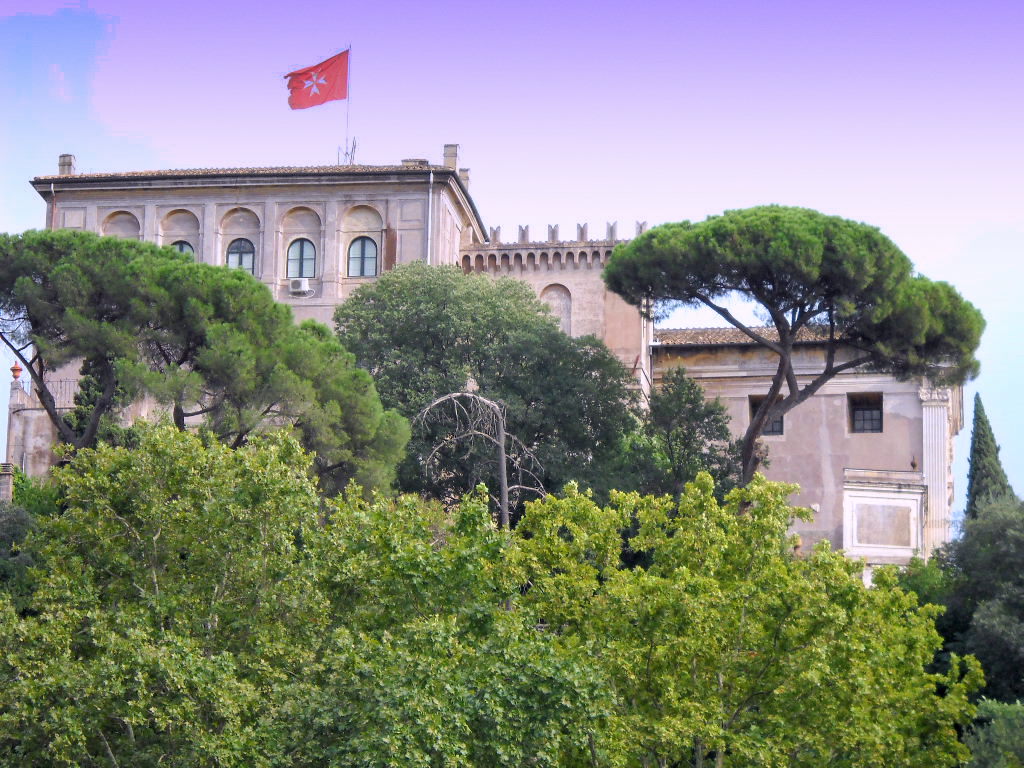
San Francesco a Ripa is a church in Rome, Italy. Saint Francis is said to have stayed here in Rome. The free Lokali audio guide runs 7 minutes.
✓ Published October 2026 · how we write these guides
Visitor facts
| Lokali audio guide | 7 min · free |
|---|---|
| Type | Church |
| Location | Rome, Italy |
| Coordinates | 41.8852, 12.4732 |
| Official website | sanfrancescoaripa.com |
| Languages | 50+, in the Lokali app |
The story
Push open the heavy door and the noise of Trastevere drops away almost at once. The air inside is cool and smells faintly of old stone and candle wax. Your footsteps carry across a broad, quiet nave. Outside, scooters were rattling over cobbles. In here, the loudest sound may be a friar's sandals on the marble floor. Let your eyes adjust for a moment. The light is soft and uneven, and that is part of the story you are about to hear.
You are standing in San Francesco a Ripa, a church on the southern edge of Trastevere. The name of the district means "across the Tiber". For centuries this was the working side of Rome, home to sailors, dockers, tanners and craftsmen. The word "Ripa" means riverbank. It points to the old river port of Ripa Grande, a few minutes' walk from here. Boats coming up the Tiber from the sea unloaded their goods along that stretch of the river.
This church is tied to one famous visitor. According to Franciscan tradition, Saint Francis of Assisi stayed here when he came to Rome in the early thirteenth century. At that time there was a hospice on this site, a modest refuge for pilgrims and the sick. Francis was the son of a wealthy cloth merchant who gave away everything to live in poverty. His followers became the Franciscan order. Friars of that order still care for this church today.
Here is the first detail many visitors miss. The small room where Francis is said to have slept still survives inside the friary. It is known as the cell of Saint Francis. Tradition holds that he used a stone as his pillow, and a stone kept there is shown as that relic. Treat it as a pious tradition rather than a documented fact. Even so, the room is simple and quiet, and it carries the weight of eight centuries of prayer.
Now look around the nave itself. The church you see is not the medieval building Francis knew. It was largely rebuilt in the late seventeenth century, in the Baroque style. Baroque was the dramatic art of that age, full of movement, rich marble and theatrical light. The facade facing the piazza is calm and fairly plain. The real drama waits inside, in the side chapels lining the nave.
Walk slowly toward the left side of the church, near the end closest to the altar. Look for a chapel that glows more brightly than the others. Inside lies a marble woman on a bed, her head thrown back and her hands pressed to her chest. This is the Blessed Ludovica Albertoni, carved by Gian Lorenzo Bernini. Bernini was the greatest sculptor of Baroque Rome. He created this work late in his long life, when he was already in his seventies.
Who was Ludovica? She was a Roman noblewoman who lived in the fifteenth and early sixteenth centuries. After her husband died, she joined the lay branch of the Franciscans. She spent her family fortune on the poor of Trastevere, this very neighbourhood. Romans remembered her as a woman of deep charity and intense prayer. Bernini shows her in the moment of death, which believers understood as her final union with God.
Step closer and look at the marble. Bernini makes hard stone behave like cloth. The folds of her gown twist and crumple as if she has just moved. Her fingers press into the fabric over her heart. Below her, a second layer of drapery spills over the edge of the tomb. It is carved from a darker, patterned stone. That contrast makes the white figure seem to float above it.
The second surprise is the light. Notice that you cannot easily see where it comes from. Bernini placed hidden windows at the sides of the chapel. Daylight falls onto the figure from out of view, like a spotlight in a theatre. On a bright day the effect is strongest. On a grey afternoon it is gentler, and the figure seems to rest in shadow. Either way, the lighting was designed as carefully as the stone.
Above the sculpture hangs a painting by Giovanni Battista Gaulli, known as Baciccio. He was a close collaborator of Bernini. The painting shows the Virgin Mary with the Christ Child and Saint Anne. It works together with the sculpture below it. Painting, marble, coloured stone and hidden light combine into one scene. Baroque artists loved this kind of unified effect, where every art form serves a single moment.
Take a little time with the rest of the church as well. The other chapels hold paintings, tombs and memorials of Roman families who wanted to be buried near this Franciscan community. Many visitors walk straight to Bernini and then leave. If you linger, you will notice worn floor slabs, faded inscriptions and small votive offerings left by local people. This is still a working parish church, not a museum.
That everyday life is worth respecting. You may see an elderly parishioner praying in a pew, or a friar preparing for Mass. Keep your voice low and your phone quiet. If a service begins, sit quietly or step outside for a while. Remember that this neighbourhood was once poor and working-class. Ludovica's charity was aimed at people much like the families whose grandchildren still worship here.
When you step back into the piazza, look at the streets around you. To the south lies the area of Porta Portese, an old city gate near the river. On Sunday mornings a large flea market fills the streets there. Toward the river stands the long, heavy bulk of the former hospice of San Michele, once a vast charitable institution. The whole quarter grew up around the docks, the river and the people who worked them.
Before you go, turn once more toward the church door. Somewhere inside, light is still falling quietly on a marble woman who gave her fortune to this neighbourhood. Around you, Trastevere carries on with its usual noise. Listen for the scooters, the voices and the clink of cups at a nearby bar. Then walk on slowly, knowing that this quiet corner holds one of Bernini's most personal works.
Key facts
What to look for
Practical tips
Common questions
Is there a free audio guide to San Francesco a Ripa?
Yes — the Lokali app narrates San Francesco a Ripa free of charge in 50+ languages. The guide runs about 7 minutes, covers the history, what to look for on site and practical tips, and works offline once downloaded.
Where is San Francesco a Ripa?
San Francesco a Ripa is in Rome, Italy, at 41.8852, 12.4732. Tap the map link on this page for directions from where you are.
What is San Francesco a Ripa known for?
Saint Francis is said to have stayed here in Rome. Bernini carved Blessed Ludovica Albertoni in his seventies.
What should you look for at San Francesco a Ripa?
Hidden side windows lighting Ludovica's marble figure. Crumpled marble folds that look like real cloth. Dark patterned stone drapery spilling below the white figure.
What should you know before visiting San Francesco a Ripa?
Ask the friars politely about visiting Saint Francis's cell. Come on a sunny day for the best chapel lighting.
On the map
Opens directions to San Francesco a Ripa from your location.
More to see in Rome



Hear San Francesco a Ripa in your language
The full story, narrated, in 50+ languages. Download it before you go and it plays offline, at your own pace, with no ticket and no tour group.