
Santa Maria della Vittoria
41.9047° N · 12.4943° E · Church
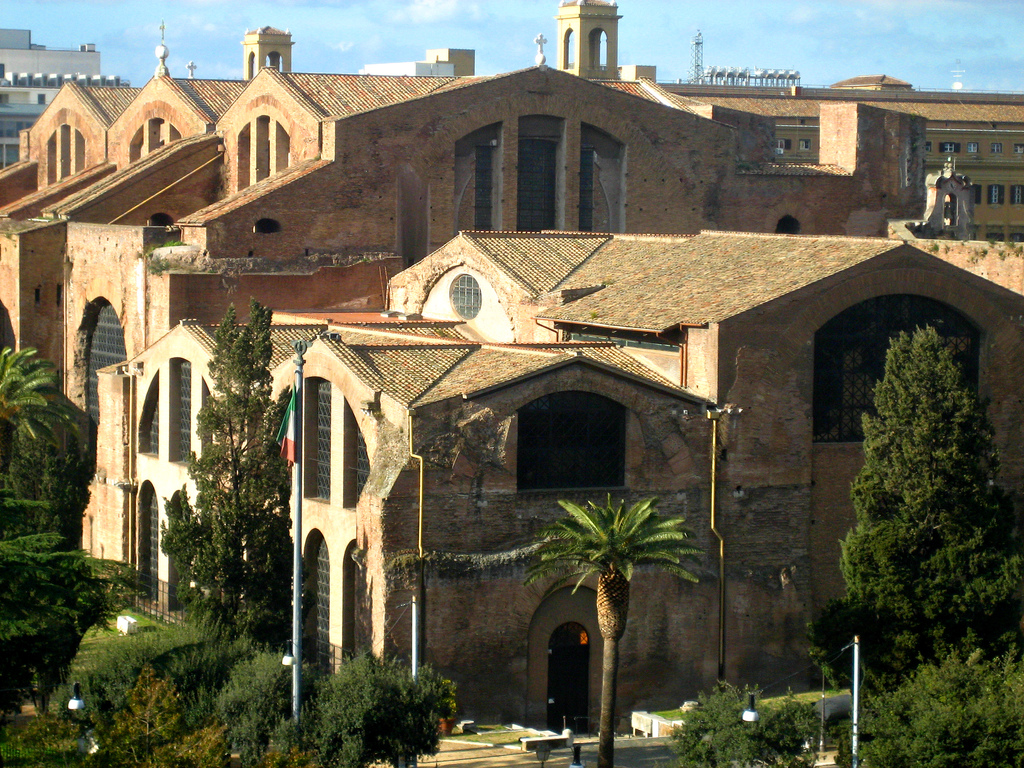
Photo: Architas · CC BY-SA 4.0 · Wikimedia Commons
Santa Maria della Vittoria is a church in Rome. Carlo Maderno designed the church in the early 1600s. The free Lokali audio guide runs 7 minutes.
✓ Published October 2026 · how we write these guides
Visitor facts
| Lokali audio guide | 7 min · free |
|---|---|
| Type | Church |
| Location | Rome, Italy |
| Coordinates | 41.9047, 12.4943 |
| Official website | carmelitanicentroitalia.it |
| Languages | 50+, in the Lokali app |
The story
Step in from the traffic of Via Venti Settembre, and the noise drops away almost at once. The air inside is cool and smells faintly of wax and old stone. Your eyes need a moment. Then the colour arrives. There is deep red marble, honey-gold stucco, veined green and black stone, and gilding that catches every scrap of light. This is a small church. But very little of its surface has been left plain.
From the street, you might walk past it. The facade is calm and orderly, built of pale travertine, and it sits almost shoulder to shoulder with the church of Santa Susanna next door. Across the square stands the Moses Fountain, with water pouring from its arches. Nothing outside prepares you for the interior. That contrast is part of the experience. Rome often keeps its richest rooms behind quiet doors.
The church was built in the early seventeenth century for the Discalced Carmelites. They were a reformed branch of the Carmelite order, and the name means barefoot. The architect was Carlo Maderno, the same man who designed the long facade of Saint Peter's Basilica. Here he worked on a much smaller scale. He built a single nave with chapels down each side. The plan is simple. It lets the eye travel straight toward the altar.
There is a curious story about the facade. During work on the site, diggers found an ancient Roman statue. It was a reclining figure now known as the Sleeping Hermaphroditus. The statue was given to Cardinal Scipione Borghese, one of the great art collectors of his day. In return, the cardinal paid for the new facade. So the front of this Christian church was funded, in part, by a pagan sculpture pulled from the earth beneath it.
The name of the church came later, and it came from a battlefield. The building was first dedicated to Saint Paul. Then, in 1620, Catholic forces won the Battle of White Mountain, near Prague. This was an early clash of the Thirty Years' War, which divided Catholic and Protestant Europe. A Carmelite friar had carried a damaged image of the Virgin Mary with the army. Many credited the victory to it. The image came to Rome, and the church became Saint Mary of the Victory.
That original image is no longer here. A fire in the nineteenth century destroyed it, along with part of the decoration. What you see at the high altar today is a replacement. Even so, the story of the battle shaped the whole interior. Look up and around, and you will notice how much of the decoration speaks of triumph — of faith winning out, in the language of seventeenth-century Rome.
Now turn to the left side of the nave, near the altar. This is the reason most visitors come. It is the Cornaro Chapel, designed by Gian Lorenzo Bernini, the great sculptor and architect of Baroque Rome. The Baroque was a style of drama, movement and emotion. Bernini made this chapel around the middle of the seventeenth century for Cardinal Federico Cornaro. Bernini himself was proud of it. Many people still consider it among his finest work.
At the centre is the Ecstasy of Saint Teresa. Teresa of Ávila was a sixteenth-century Spanish nun and mystic, and she founded the Discalced Carmelites — the order of this very church. In her own writing, she described a vision. An angel pierced her heart with a golden spear tipped with fire. She wrote that the pain was intense, and yet the sweetness was so great that she did not want it to end. Bernini turned that moment into marble.
Look closely at the figures. Teresa leans back on a cloud, her eyes half closed, her mouth open. Her heavy robe falls in deep, restless folds. The angel stands over her with a light, almost playful smile, holding the arrow. Behind them, rays of gilded bronze stream down from above. And here is a detail many people miss. There is a hidden window above the sculpture. Daylight falls through it and lands on the marble, so the light itself becomes part of the scene.
Now look to either side of the chapel. Bernini carved members of the Cornaro family, seated in what look like theatre boxes. They lean forward, talk among themselves, and gesture. Some seem to look toward the vision, and some do not. It is a remarkable idea. Bernini turned the chapel into a small stage, with an audience watching. And when you stand in front of it, you become part of that audience too.
Before you leave the chapel, glance down at the floor. Set into the marble are images of skeletons. They appear to rise or pray, as if they are looking up from below. They are reminders of death and of the hope of resurrection, a common theme in churches of this period. Above, the vault carries painted clouds and figures. So the chapel moves from death at your feet to heaven over your head, with Teresa held in between.
The church has also found a newer audience. Dan Brown's novel Angels and Demons used it as one of its settings, and some visitors arrive because of the book. The story is fiction. But it sends people through this door, and many of them stay longer than they planned. Remember that this is still a working church. People come here to pray. Keep your voice low, and dress with shoulders and knees covered.
Take a final moment where you stand. Notice how the light shifts on Teresa's face as clouds pass over Rome outside. Notice the quiet, and the cool of the marble floor. When you step back out onto the street, the traffic will return, and the fountain will still be splashing across the square. But behind this plain front, the angel is still lifting his arrow — and the light is still falling, just as Bernini planned.
Key facts
What to look for
Practical tips
Common questions
Is there a free audio guide to Santa Maria della Vittoria?
Yes — the Lokali app narrates Santa Maria della Vittoria free of charge in 50+ languages. The guide runs about 7 minutes, covers the history, what to look for on site and practical tips, and works offline once downloaded.
Where is Santa Maria della Vittoria?
Santa Maria della Vittoria is in Rome, Italy, at 41.9047, 12.4943. Tap the map link on this page for directions from where you are.
What is Santa Maria della Vittoria known for?
Carlo Maderno designed the church in the early 1600s. Renamed after the Catholic victory at White Mountain in 1620.
What should you look for at Santa Maria della Vittoria?
Gilded bronze rays streaming down behind Saint Teresa. Hidden window above the sculpture lighting the marble. Cornaro family figures leaning out of theatre boxes.
What should you know before visiting Santa Maria della Vittoria?
Give your eyes a minute to adjust to the dim interior. Cover shoulders and knees before entering the church.
On the map
Opens directions to Santa Maria della Vittoria from your location.
More to see in Rome


Hear Santa Maria della Vittoria in your language
The full story, narrated, in 50+ languages. Download it before you go and it plays offline, at your own pace, with no ticket and no tour group.