
Eberbach Abbey
50.0425° N · 8.0467° E · Museum
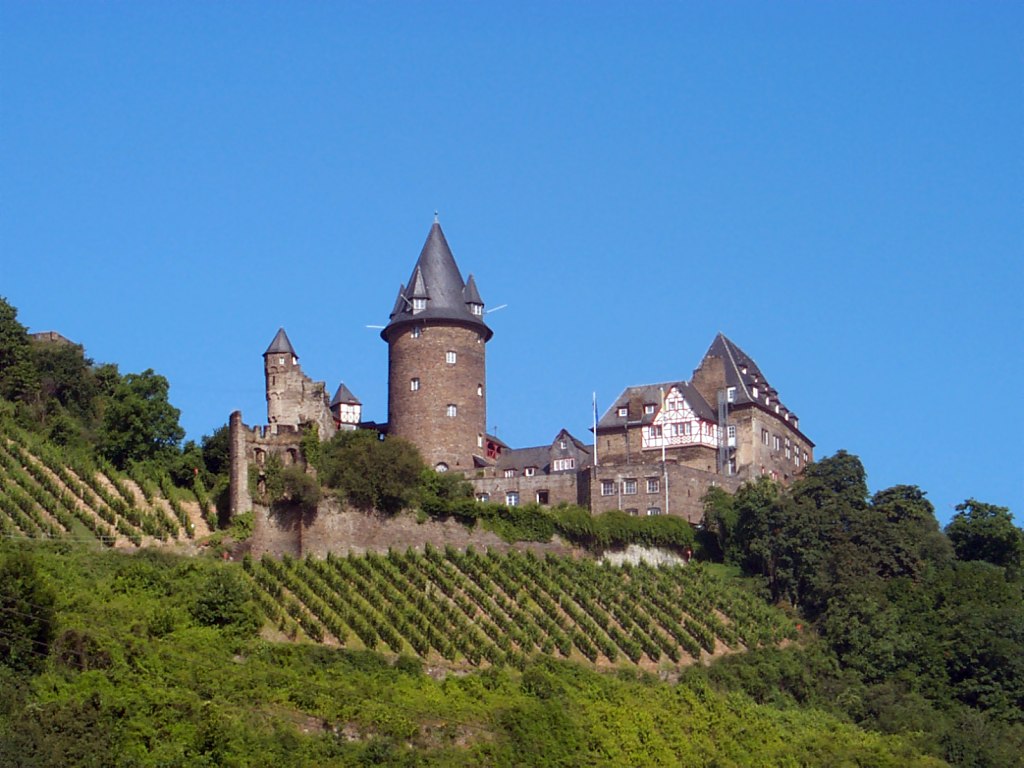
Photo: Fritz Geller-Grimm · CC BY-SA 2.5 · Wikimedia Commons
Eberbach Abbey is a former monastery in the Rheingau. Cistercian monks from Clairvaux arrived here in 1136. The free Lokali audio guide runs 6 minutes.
✓ Published October 2026 · how we write these guides
Visitor facts
| Lokali audio guide | 6 min · free |
|---|---|
| Type | Museum |
| Location | Rüdesheim am Rhein, Germany |
| Coordinates | 50.0425, 8.0467 |
| Official website | kloster-eberbach.de |
| Languages | 50+, in the Lokali app |
The story
Listen first. Water runs somewhere below the walls, a small stream moving through the valley. Gravel crunches under your shoes. The air is cool here, even in summer, and it carries a faint smell of damp stone and old wood. Around you, wooded hills fold in close and hide the Rhine from view. This quiet was the point. You are standing in a valley the monks chose because it felt like the end of the world.
Welcome to Eberbach Abbey, in the green hills of the Rheingau, a short drive from Rüdesheim. For centuries this was one of the most powerful monasteries in Germany. It was a place of prayer, and it was also a wine business with an astonishing reach. Today you can walk through almost all of it. The church, the dormitory, the cellars and the old wine presses still stand.
The story begins in the early twelfth century. The Archbishop of Mainz wanted a monastery in this valley. Other religious communities tried first, and they did not last. Then, in 1136, a group of Cistercian monks arrived from Clairvaux, in France. They were sent by Bernard of Clairvaux, the most influential churchman of his age. The Cistercians were a strict order. They valued silence, simple buildings and hard physical work.
The name has its own story. In German, Eber means a wild boar. Legend has it that a boar marked out the place where the abbey should stand, scratching the ground with its tusks. It is a charming tale, and locals still tell it. A plainer explanation also exists. The stream here was simply known as the boar's brook. Either way, look out for the animal. It appears in emblems and decorations around the site.
Now walk into the basilica. The first thing you notice is what is missing. There are almost no paintings, no gold, no crowded altars. The Cistercians rejected decoration because they believed it distracted the mind from God. What remains is pure structure. Thick pillars, round arches, pale stone and light from high windows. This is Romanesque style, the heavy, rounded building style of Europe before the pointed Gothic arch. The church was consecrated in the late twelfth century.
Stand still in the nave for a moment. Your footsteps echo. A cough travels to the far end. This acoustic is one reason the church is now used for concerts, especially during the Rheingau Music Festival in summer. Imagine choir monks here before dawn, singing the night office in near darkness. Their day began in the small hours and followed a fixed rhythm of prayer, work and reading. Very little about it was comfortable.
Up the stairs from the cloister you reach the monks' dormitory. This is one of the great rooms of medieval Germany. It is a long Gothic hall with ribbed vaults, and the floor rises slightly towards the far end. Here is a detail many visitors miss. The monks slept together in this one open space, fully clothed, so they could rise quickly for prayer. There were no private rooms. Privacy was not part of the Cistercian life.
The abbey had two kinds of members. Choir monks prayed and studied. Lay brothers did most of the heavy labour in the fields, workshops and vineyards. At its height, Eberbach housed a large community, with the lay brothers far outnumbering the choir monks. The two groups lived side by side but apart. They had separate rooms, separate entrances, and even separate places in the church. That division shaped the whole plan of the buildings around you.
And then there is the wine. The monks planted vines across the slopes of the Rheingau and became some of the most skilled winemakers of the Middle Ages. Their most famous vineyard is the Steinberg, just above the abbey. They enclosed it with a long stone wall, which still stands. Eberbach wine travelled by boat along the Rhine to markets far away. The abbey grew rich on it, and wine became the engine of its power.
Here is a second surprise. In the cellars below, the monks kept their finest wines in a special store known as the Cabinet cellar. Wines from this reserve were treated as especially valuable. Many historians link this cellar to the German wine term Kabinett, which you still see today on bottles of fine Riesling. So a word on a modern wine label may trace back to a locked room in this abbey.
The lay brothers' refectory, where they once ate in silence, now holds a collection of old wooden wine presses. They are huge, built from dark beams and massive screws. Look at the size of the timbers. Pressing grapes was slow, heavy work that needed many hands. The abbey's wine tradition has never really stopped. Today the site belongs to the Hessian state wine estates, and you can still taste wines from these slopes here.
The monastic life ended in 1803, when the abbey was dissolved during the great wave of secularisation in Germany. The buildings passed to the state of Nassau. In the nineteenth century, parts of the abbey served as a prison and as an institution for the mentally ill. Much was damaged or lost in this period. Restoration came later. In the 1980s, the abbey found a new kind of fame. It was used as a filming location for The Name of the Rose, starring Sean Connery.
Before you leave, walk back into the cloister garden, or simply stop in the courtyard. Look at the roofs, the patched stone, the small windows. Listen again for the stream. For almost seven hundred years, people here lived by the bell, the season and the harvest. As you head out, notice the vineyards on the hills around you. The work the monks started in this valley is still going on.
Key facts
What to look for
Practical tips
Common questions
Is there a free audio guide to Eberbach Abbey?
Yes — the Lokali app narrates Eberbach Abbey free of charge in 50+ languages. The guide runs about 6 minutes, covers the history, what to look for on site and practical tips, and works offline once downloaded.
Where is Eberbach Abbey?
Eberbach Abbey is near Rüdesheim am Rhein, Germany, at 50.0425, 8.0467. Tap the map link on this page for directions from where you are.
What is Eberbach Abbey known for?
Cistercian monks from Clairvaux arrived here in 1136. Bernard of Clairvaux sent the founding community.
What should you look for at Eberbach Abbey?
The bare stone walls of the undecorated basilica. Ribbed Gothic vaults along the long monks' dormitory. Massive wooden wine presses in the lay brothers' refectory.
What should you know before visiting Eberbach Abbey?
Arrive early to walk the basilica before tour groups. Bring a warm layer for the cool cellars and church.
When is the best time to visit Eberbach Abbey?
Arrive early to walk the basilica before tour groups.
On the map
Opens directions to Eberbach Abbey from your location.
More to see in Rüdesheim am Rhein



Hear Eberbach Abbey in your language
The full story, narrated, in 50+ languages. Download it before you go and it plays offline, at your own pace, with no ticket and no tour group.