
Imperial War Museum Duxford
52.0931° N · 0.1294° E · Museum
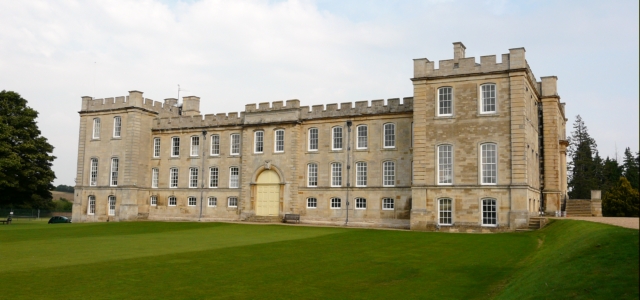
Photo: IxK85 · CC BY-SA 3.0 · Wikimedia Commons
Imperial War Museum Duxford is Britain's largest aviation museum. It is near Saffron Walden, United Kingdom. First RAF station to receive the Spitfire in 1938. The free Lokali audio guide runs 7 minutes.
✓ Published October 2026 · how we write these guides
Visitor facts
| Lokali audio guide | 7 min · free |
|---|---|
| Type | Museum |
| Location | Saffron Walden, United Kingdom |
| Coordinates | 52.0931, 0.1294 |
| Official website | iwm.org.uk |
| Languages | 50+, in the Lokali app |
The story
Listen for it first. Somewhere across the grass, an engine coughs, catches, and settles into a deep, uneven rumble. The wind carries the smell of aviation fuel and cut grass. Above you stretches a wide, flat Cambridgeshire sky. This is Imperial War Museum Duxford, a short drive from Saffron Walden. It is not only a museum. It is a working airfield, and on many days, old aircraft still take off from the same ground where pilots once ran to their machines.
Duxford began life as a Royal Air Force station at the end of the First World War. Look for the older hangars along the edge of the airfield. Their long, curved roofs and timber frames belong to that first era of military flying. Hangars of this age are now rare in Britain, and several here are protected as historic buildings. When you walk inside one, notice how the roof trusses cross overhead like the ribs of a boat.
Here is a detail many visitors miss. In 1938, Duxford became the first RAF station to receive the Supermarine Spitfire, the small, fast fighter that later became a symbol of British defiance. The pilots of Number 19 Squadron were among the very first people in the world to fly it in regular service. So this field is not just a place where Spitfires are displayed. In a real sense, it is where the Spitfire story in the RAF began.
Two years later, in the summer of 1940, the Battle of Britain was fought in the skies over southern England. Duxford sat on the northern edge of that fight, guarding the approach to London and the Midlands. The squadron leader Douglas Bader, who flew despite losing both legs in an earlier crash, operated from here. He championed the so-called Big Wing, a tactic of gathering several squadrons into one large formation. Historians still debate how well it worked.
To understand how the battle was managed, find the Operations Room. It has been restored to look as it did in 1940. A large map table fills the centre of the room. Imagine young women of the air force standing around it, moving wooden markers with long poles as reports of enemy aircraft arrived by telephone. Above them, controllers watched and gave orders to the pilots. It is a quiet room now... but every marker on that table once meant lives in the air.
In 1943, the airfield changed hands. The United States Eighth Air Force took over, and American fighter pilots of the 78th Fighter Group arrived. They flew heavy P-47 Thunderbolts first, then the sleek P-51 Mustang. Their job was to escort bombers deep into occupied Europe. For a few years, this corner of rural England was home to young men from Texas, Ohio and California. Many of them never returned home.
That American chapter is honoured in the American Air Museum, the large building with a low, curving roof at the far end of the site. It was designed by the architect Norman Foster and opened in 1997. The curve of the roof is not just for style. It had to be wide and high enough to shelter one of the largest aircraft in the collection — a B-52 Stratofortress, an American bomber from the Cold War. Its wings stretch almost from wall to wall.
Inside the same hall, look for a long, black aircraft that seems almost unreal. This is an SR-71 Blackbird, an American spy plane built to fly higher and faster than anything sent to stop it. Its dark skin and sharp, flattened shape still look modern decades after it was designed. Nearby, outside the entrance, a wall of engraved glass panels carries images of aircraft. They remember the many Americans who served from British bases and did not come back.
Walk on to the AirSpace hangar, and you will find another surprise. Among military aircraft stands a Concorde, the supersonic passenger jet built jointly by Britain and France. This one was an early development aircraft, used for testing before Concorde entered airline service. You can step aboard and see how narrow the cabin really was. Many visitors expect luxury and find something closer to a slim tube, with small windows and a low ceiling.
Duxford also holds a large collection of land vehicles. In the Land Warfare hall, tanks, trucks and artillery from many decades sit in scenes that show where they were used. The scale is different here. An aircraft looks graceful from a distance, but a tank up close looks heavy, brutal and very loud, even when it is silent. Children often find this hall the most memorable, because they can stand right beside the tracks and see how tall the wheels are.
After the war, the RAF kept Duxford for jet fighters, but the station closed in 1961. For some years, the airfield stood empty and its future was uncertain. Then the Imperial War Museum began to use it for storing and restoring aircraft, and the site slowly opened to the public. One strange episode came during this quiet period. A film crew making the 1969 film about the Battle of Britain used Duxford, and for one scene they deliberately blew up an old hangar.
Look toward the end of the runway, and you will see something else unusual. The M11 motorway runs right across the line where the runway once continued. When the motorway was built in the 1970s, the runway was shortened to make room. Today pilots taking off or landing here must account for that line of traffic. It is a very modern reminder that this historic airfield sits inside a busy, changing landscape, not in a sealed past.
Before you leave, stand for a moment near the edge of the grass. Watch the open space where so many aircraft have rolled and lifted into the air. Notice the old control buildings, the low hangars, and the windsock moving in the breeze. If an engine starts up behind you, let it pull your attention to the sky. These sounds have carried across these fields for more than a century, and they still do.
Key facts
What to look for
Practical tips
Common questions
Is there a free audio guide to Imperial War Museum Duxford?
Yes — the Lokali app narrates Imperial War Museum Duxford free of charge in 50+ languages. The guide runs about 7 minutes, covers the history, what to look for on site and practical tips, and works offline once downloaded.
Where is Imperial War Museum Duxford?
Imperial War Museum Duxford is near Saffron Walden, United Kingdom, at 52.0931, 0.1294. Tap the map link on this page for directions from where you are.
What is Imperial War Museum Duxford known for?
First RAF station to receive the Spitfire in 1938. Douglas Bader flew from Duxford during the Battle of Britain.
What should you look for at Imperial War Museum Duxford?
Curved timber roof trusses inside the oldest hangars. Map table with plotting markers in the Operations Room. B-52 wingspan almost filling the American Air Museum.
What should you know before visiting Imperial War Museum Duxford?
Allow most of a day; the site spreads across a whole airfield. Wear comfortable shoes for long walks between the hangars.
When is the best time to visit Imperial War Museum Duxford?
Visit the American Air Museum early, before it fills up.
On the map
Opens directions to Imperial War Museum Duxford from your location.
More to see near Imperial War Museum Duxford



Hear Imperial War Museum Duxford in your language
The full story, narrated, in 50+ languages. Download it before you go and it plays offline, at your own pace, with no ticket and no tour group.