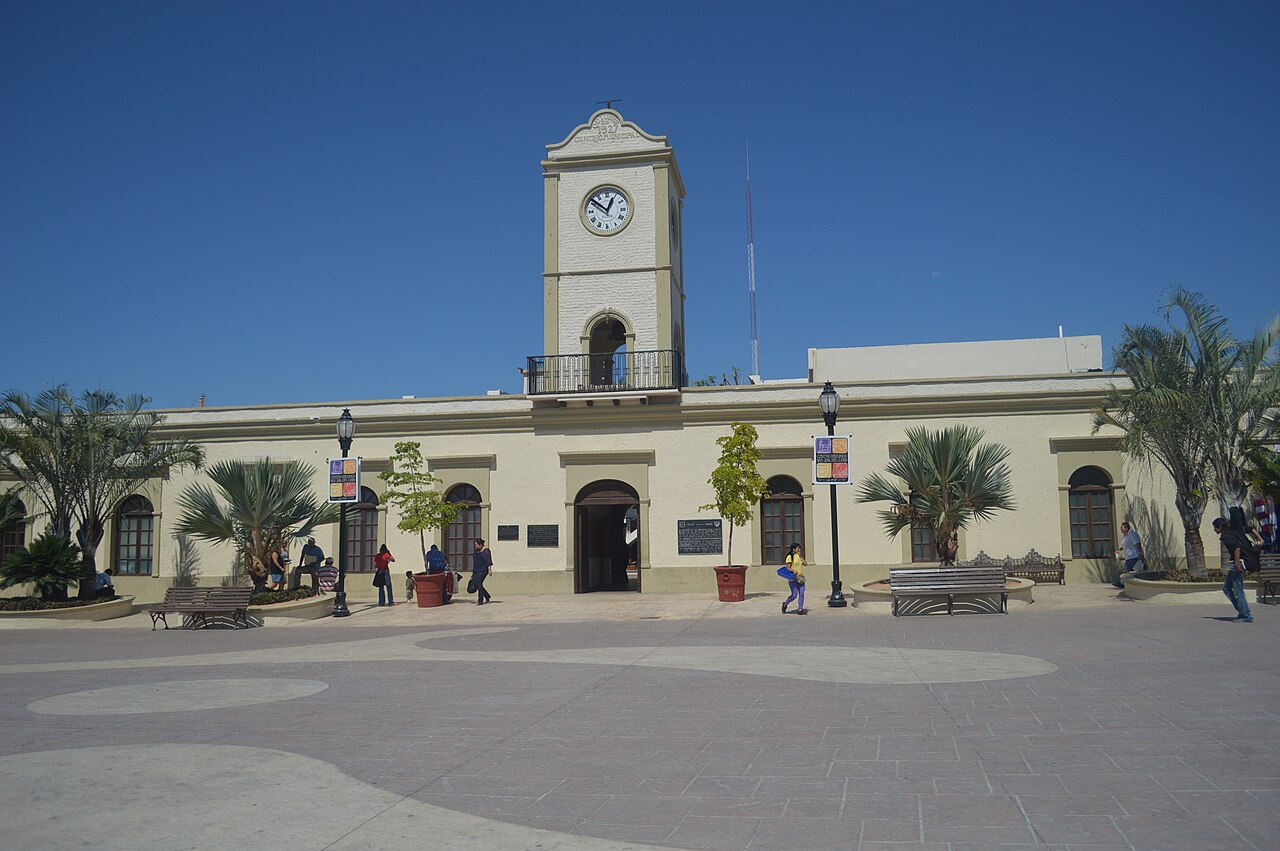
San Jose del Cabo Town Square
23.6345° N · 109.7089° W · Square
San Jose del Cabo Town Square is the heart of San Jose del Cabo, this colonial-era plaza is ringed by whitewashed buildings, galleries, and restaurants. It is in San José del Cabo, Mexico. Most visitors spend 30–60 min here. The free Lokali audio guide runs 5 minutes.
✓ Verified August 2026 · how we write these guides
Visitor facts
| Time needed | 30–60 min |
|---|---|
| Lokali audio guide | 5 min · free |
| Type | Square |
| Best for | Editors' pick |
| Location | San José del Cabo, Mexico |
| Coordinates | 23.6345, -109.7089 |
| Languages | 45, in the Lokali app |
The story
Church bells ring across a small square. Doves scatter from the towers, circle once, and settle again in the laurel trees. Under the trees, iron benches sit in deep shade. A white gazebo stands at the center, bright in the sun. This is Plaza Mijares, the main square of San José del Cabo, and the heart of the old town.
Every Mexican town keeps its life in a square like this. The plan is Spanish and colonial: a church, a square, and the town wrapped around them. Here, the church faces the plaza from one side. Shops, cafes, and the city offices stand nearby. School children cross in the morning. Families arrive in the evening. Music plays on weekends. If you want to understand the town rather than the resorts, start here.
The plaza carries a soldier's name. José Antonio Mijares was a young lieutenant in the Mexican navy. In 1847, during the war between Mexico and the United States, American forces occupied this port town. Mexican soldiers and local ranchers fought to take it back.
Mijares led an attack on the occupied garrison in November of that year. He was killed in the fighting. The struggle for the town continued into 1848, with a long siege before American ships brought relief to the garrison. When the war ended, Baja California remained part of Mexico, and the town remembered its fallen lieutenant. His name marks this plaza and the main boulevard beside it.
The town itself is much older than that war. San José del Cabo began as a Spanish mission in 1730, founded beside the freshwater estuary nearby. Farms and orchards followed the water. Ships called at the bay for water and supplies, and the plaza grew into the town's marketplace. By the nineteenth century, this was a quiet farming town of sugarcane, mangoes, and cattle, with its plaza at the center.
Look across the square at the church. Its two towers rise above the trees. It stands where the mission stood, and it is still the parish of Saint Joseph, the town's patron. The church has its own long story, told in a separate guide. From the plaza, notice how the whole square arranges itself around it.
Walk the edges of the plaza. The gazebo at the center works as a bandstand during festivals. Nearby, large letters spell out the town's name, a favorite spot for photographs. The surrounding buildings are low, one and two stories, with thick walls and bright paint. Many date from the nineteenth and early twentieth centuries.
On the boulevard side, look for the Palacio Municipal, the city hall, with its shaded courtyard. Government offices have stood near this square since the town's early days. City hall, church, market, plaza: the old Spanish town plan survives here, piece by piece, under the tourism of the present.
The plaza changes with the clock. In the morning, it is quiet. Shopkeepers sweep their doorways, and the benches belong to old men and pigeons. In the heat of the afternoon, the shade matters more than anything. At sunset, the square fills. Children chase each other around the gazebo. Vendors sell ice cream and sweet bread.
On Thursday evenings from November through June, the nearby streets hold the Art Walk. Galleries open late, and the crowd flows between the plaza and the gallery district one block away. Painters stand beside their work, and music drifts from open doorways. The square becomes a meeting point, full of slow walkers and conversation.
In March, the town honors its patron saint. The feast of Saint Joseph brings processions, music, dancing, and food stalls around the plaza. Fireworks end the nights, and the square smells of grilled corn and sugar. These celebrations are older than any hotel on the coast. For a few days, the square shows what the town has been for almost three centuries.
Resorts and golf courses now surround San José del Cabo, and cruise passengers pass through by the busload. The plaza absorbs it all without changing its pace. Waiters still set tables in shaded courtyards. Bells still mark the hours. The town square remains a place to sit rather than a place to rush.
Find a bench and stay a while. Watch the light move across the church towers. Listen to the mix of Spanish and English, sandals and church bells. A square like this holds a town's memory: a mission, a battle, a saint's day, ten thousand quiet evenings. For a few minutes, its memory includes you. Then let the bells send you on your way.
Key facts
What to look for
Practical tips
Common questions
How long do you need at San Jose del Cabo Town Square?
Plan 30–60 min. That is the time most visitors spend at San Jose del Cabo Town Square. The free Lokali audio guide adds about 5 minutes of narration you can listen to as you walk, so it fits inside your visit rather than adding to it.
Is there a free audio guide to San Jose del Cabo Town Square?
Yes — the Lokali app narrates San Jose del Cabo Town Square free of charge in 50+ languages. It covers the history, what to look for on site and practical tips, and it works offline once downloaded.
Where is San Jose del Cabo Town Square?
San Jose del Cabo Town Square is in San José del Cabo, Mexico, at 23.6345, -109.7089. Tap the map link on this page for directions from where you are.
What should you know before visiting San Jose del Cabo Town Square?
Come in the evening when families fill the square.
What is San Jose del Cabo Town Square known for?
Named for Lieutenant José Antonio Mijares, killed in 1847.
What is the best time to visit San Jose del Cabo Town Square?
Visit early morning or at sunset when the light is golden and the square is quieter.
On the map
Opens directions to San Jose del Cabo Town Square from your location.
More to see in San José del Cabo



Hear San Jose del Cabo Town Square in your language
The full story, narrated, in 50+ languages. Download it before you go and it plays offline, at your own pace, with no ticket and no tour group.